
By Toby Tomkinson
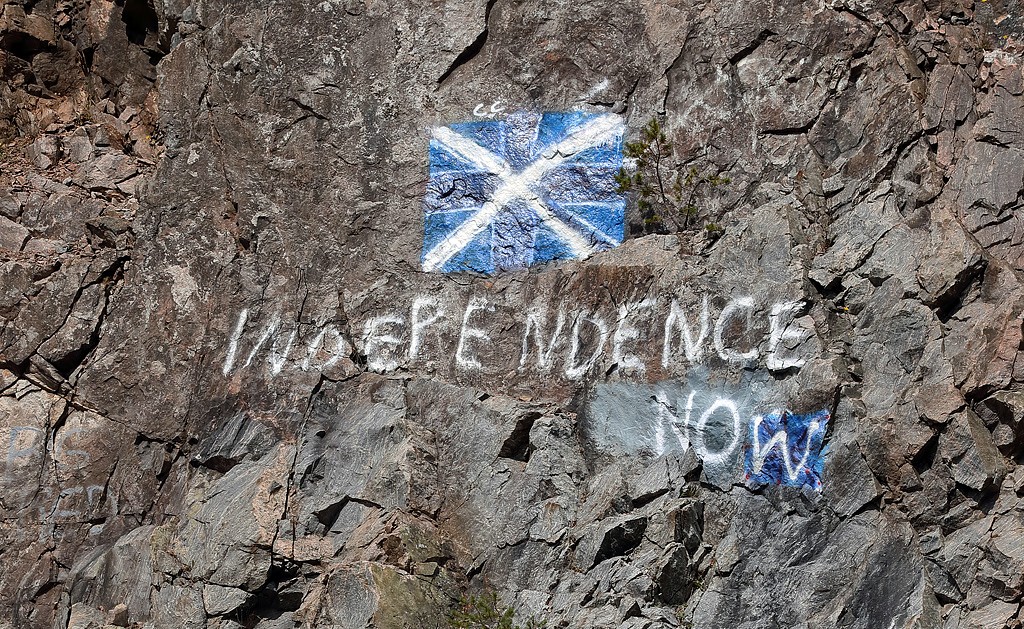
Since 2014, the year Scotland voted to remain in the United Kingdom, much has changed. Downing Street has seen 7 prime ministers and 4 elections. It has seen the fall of UKIP and the rise of Reform UK in its place. Yet a look at the deep north of the British Isles has shown a political sphere relatively unchanged in comparison. During the mid-2026 elections in the UK, amidst the tumultuous end to Keir Starmer’s premiership, Scotland went to the polls. In an election which was the first since the resignation of popular first minister Nicola Sturgeon and the short-lived reign of her successor Humza Yousaf. After 20 years of rule under the SNP, high profile scandals, a collapse in Westminster success and a massive bounce in Labour support, it seemed that the dominant position the SNP held would finally dissipate, yet two years later they would come out on top for the fifth election in a row. Some have pointed to Reform UK’s splitting of the vote as the cause. Others have claimed it could be localised to Scottish Labour being coupled to Keir Starmer and his unpopularity, even after the then-incumbent leader of Scottish Labour called for his resignation. Another reason could be the failure of the electoral system to achieve proportionality. Either way, the SNP under John Swinney have been granted a victory which only deepens the divide between Scotland and Westminster and emboldens Scotland’s long-lasting nationalist movement.
In recent months, polling on Scottish Independence has suggested that public opinion is tighter than ever. Some polls show a strong lead for the nationalists, such as a poll by Survation which showed that 49% were in favour of independence while only 42% opposed. Another poll conducted around the same period by YouGov showed 40% in favour while 45% opposed, suggesting the complete opposite. Even more confusingly, A second YouGov poll showed that there was only 1% between those in favour and against. At the very least, the contradicting data suggests one thing. That independence is more relevant to Scots than ever. John Swinney, First Minister of Scotland, proclaimed that Andy Burnham will be the last prime minister of the United Kingdom, a statement which is undoubtedly a sign of confidence on the part of the leader of Scotland’s largest nationalist party. The signing of a declaration with the nationalist leaders of Wales and Northern Ireland also signals a desire among Scotland’s nationalist leaders to bring an independence referendum to the table within a few years.
Yet, in Westminster, this enthusiasm is not reflected. During a Prime minister’s questions session, Prime Minister Andy Burnham stated that a Scottish independence referendum would be allowed following similar rules to Northern Ireland in which a referendum would occur if there were a clear consensus. Shortly after, he told John Swinney that an independence referendum was off limits. Burnham’s predecessor, Keir Starmer, suggested in 2020 that a pro-independence majority would require Westminster to consider the case, and that the issue was a question for Scotland. In 2025, he completely rejected the possibility of an independence referendum while he was leader. The resolve of the government suggests very little leeway on the issue for the remaining years of this parliament, much to the chagrin of John Swinney.
Burnham has moved to work closer with devolved institutions such as the Scottish Government. A recent meeting between John Swinney and Andy Burnham has relaxed tensions, but was only focused on local governance and devolution. A possible path forward for Burnham and his aims to protect the union may be found by looking at where the SNP and independence gets the most support. In 2014, the most pro-independence areas of Scotland were found across the central belt, in places known for their deprivation. In the 2026 election, the SNP dominated the central belt. In Glasgow Southside and Edinburgh Central, the Scottish Greens, the only other major pro-independence party, gained their first ever constituency seats. In 2014, Glasgow, West Dunbartonshire, North Lanarkshire, and Dundee were the only areas to vote in favour of independence. These are also some of the most deprived areas in Scotland. Edinburgh and the North-East of Scotland were some of the most pro-union regions. These are also some of the most affluent in the UK. So too does age show a trend. The youth of Scotland, who notably believe that they are set to inherit a future worse than that their parents had, are much more ardently in favour of independence than the oldest age groups are. This may be of greater concern to unionists, who now face a reality that over the next decade their support may lessen as those within these age groups pass away. Looking further afield, it also may be worth looking at the rise of Reform UK. Nigel Farage’s populist right-wing party has seen the majority of its support concentrated in the North-East of England and the “Red wall”, both once stalwart in their support for Labour and similarly to the central belt, suffering intensely from deprivation. Clacton and Great Yarmouth, both won by Reform UK in 2024, also house some of the most deprived areas in England. This would correlate strongly with research which found that people who are confronted with struggling institutions and perceive their government to be ineffective, often pick the option which is seen as the outsider to this environment. It is of consideration that Reform and the SNP have catalogued similar people among their voters. More boldly, it suggests that what propelled both parties to success is not the ideology they represent but the distance from whoever is currently seen as the cause of failure. If Burnham’s optimistic view and ability to distance himself from his predecessors can be replicated in Scotland, it may be enough to convince Scots to move away from independence and consider the offered alternative.
What also should be considered is how independence is challenged. None of the major parties have been able to unite the unionist voters against the SNP since their initial victory in 2007. The Scottish Conservatives have the second lowest number of MSPs. Reform UK’s strong debut is partly overshadowed by one MSPs choice to quit the party and sit as an independent alongside falling support across the UK. Scottish Labour has consistently lost support in Scotland with them losing seats every Scottish Parliament election since 1999. Michael Marra was elected as their new leader in September and has suggested a new direction for the party, but the odds are stacked against him. The Burnham bounce, which saw a sharp rise in support for Labour, has not manifested nearly as strongly in Scotland. What benefits the nationalist movement is its unity, with the SNP dominating electorally. While unionists have historically recorded greater vote shares, the inability to unify a significant portion of the vote is causing them harm and allowing the nationalists a stronger voice.
Yet so too is time tough for the SNP. The 2026 result was their worst in terms of vote share since 2007. They suffered a wipeout in the 2024 general election reducing them from domination in Scotland to only holding a handful of seats. Aberdeen South was recently won by the Conservatives from the SNP, providing them their first by-election victory in Scotland since 1973. Yet this decline does not match the strong numbers the nationalists show in the polling on independence. It then appears that independence has decoupled from the SNP’s own popularity. This is strengthened when it is considered that Ipsos polling showed that those who support independence have been willing to vote for Scottish Labour and Reform UK. This shows signs that the independence movement may have evolved from a policy position of the SNP to an independent political position. For unionists, this is as much a danger as it is an opportunity. If the unionist parties can utilise this willingness to cross the divide it could win back the nationalist vote and strengthen the case for the union. However, if the independence movement truly has achieved a distinction from the SNP, it would be decreasingly sensitive to the political environment surrounding the SNP.
Beyond the party politics, however, the viability of Scottish independence is still heavily questioned. Which currency Scotland uses is often brought up, with the SNP’s commitment to the EU meaning that the Euro must be adopted. This is an issue, as nationalist leaders have opposed this, including John Swinney. The viability of the economy is also something that needs clarified. In 2014, the SNP ran with emphasis on the North Sea oil and gas, but with the fields now heavily depleted, the argument has begun to show age. The SNP had opposed the development of the North Sea fields in 2023, yet in recent days has signalled a change by opposing Westminster’s proposed ban on further development. For many too the question of culture is one that cannot be resolved. Many who have a home in Scotland have migrated from other parts of the nation, making up 10.4% of the population. The history across the UK is also deeply intertwined. Historians note the outsized role Scots played in colonialism. Scotland also contributed to the world wars through the critical shipbuilding industry or the many soldiers who gave their lives. In modern times, Faslane hosts the UKs nuclear weapons and Glasgow is due to host the next European Championship with England, Ireland, and Wales. Independence may reverse a co-operation which has fuelled Scotland through the ages, and harm the shared culture developed by Scotland and the rest of the United Kingdom.
Nobody can know with certainty how the independence debate will end. For many, the dream of independence from Westminster may finally solve the frustrations which have irked them for many years. For others, Scotland will emerge stronger as a part of the union, reaping the benefits of the co-operation that provided the world’s largest empire. Either way, no matter who it is that occupies Downing Street, a change in policy seems necessary if they wish to maintain the union. The inability to weaken the independence movement after the 2014 referendum is a strong sign that Westminster is failing to impress upon many Scots. If people are willing to end that relationship, it suggests that Westminster is not seen as a beacon of success, but a hindrance to Scotland’s development. For the independence movement, they are still yet to prove that the Scotland they dream of is more than just a fiction. As the North Sea fields enter the final phase of their life, a new source of income must be found if Scotland is to go on its own. While times change and the world moves forward, it seems that for a few more years the question will endure on.
The views expressed in this article are the author’s own and may not reflect the opinions of The St Andrews Economist.
Image Credit: Wikimedia Commons
