
By Matthew Payne
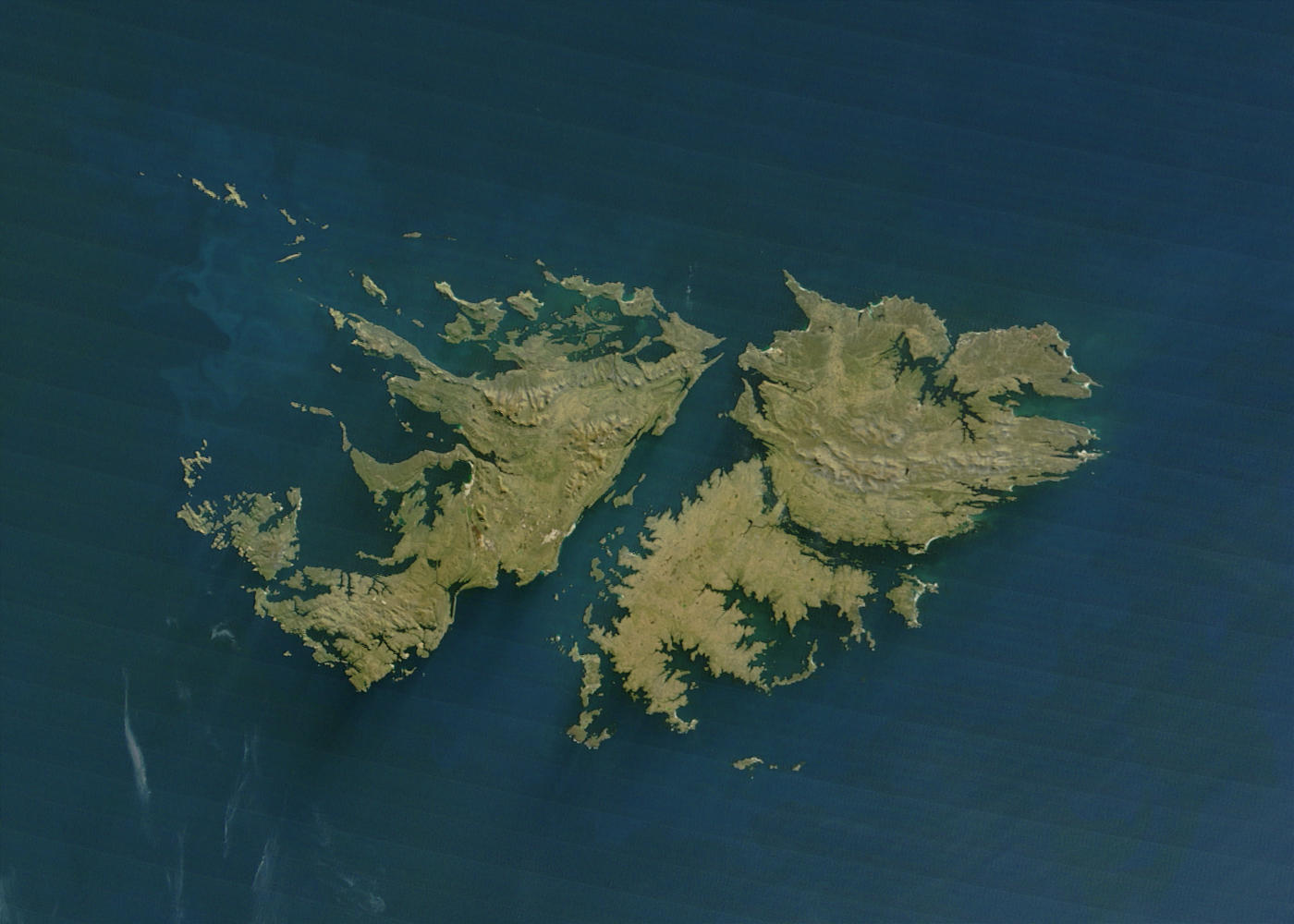
In 1592, English explorer John Davis spotted some rocky islands sticking out of the windy South Atlantic. Given the climate and the nature of the terrain, maybe they reminded him of home? (Except with more penguins). The first recorded landings on the islands did not occur for another century, when another Englishman, John Strong set foot onto these homely rocks. From that point, The Falkland Islands were born. Over the next century, minor skirmishes for control over the islands, involving the British, French and Spanish were frequent, eventually leading to the British and Spanish co-inhabiting the islands in 1771, before the British subsequently left due to economic reasons in 1774. In 1820, the Buenos Aires government landed and claimed the islands, before being attacked by an American raid in 1831. Following this, The United Kingdom retook the Islands and removed Argentina in early 1833.
Since this time, the islands have been the property of Great Britain. This ownership is still not recognised by the Argentinians however, leading to major tensions between the nations and eventually an Argentine invasion, beginning a war in 1982. The conflict cost 907 lives in total, including 3 civilian Falkland Islanders. The war ended in British victory. However, this has not halted the Argentine claim: to this day the islands are claimed by their government. The soon-to-be opened Sea Lion oil field, operated by Navitas Petroleum and Rockhopper Exploration, seems to be the last straw for the Argentine President Javier Milei. Is oil drilling and exploration a step too far for Argentina to tolerate and could this potentially lead to The Falklands costing yet more life?
April 2nd, 1982. Argentine soldiers land and take the relatively undefended Falkland Islands, or as so-called by Argentina: “Las Malvinas”. Margaret Thatcher wasted no time in sending a military taskforce to the islands. A vast array of Her Majesty’s Armed Forces were sent to take back these Isles: “The Falkland Islands and their dependencies remain British territory” – Margaret Thatcher, 1982. The war lasted 74 days. This conflict became a source of grit and pride for the Thatcher government. Prior to the Falklands war, Margaret Thatcher was the least popular Prime Minister since modern polling began, the war drastically changed this, giving her a significant boost in popularity. Thatcher was a widely despised figure by many, in large part due to her harmful actions towards industries such as mining and shipbuilding. Yet love her or hate her, there cannot be any doubt that she was a fierce and formidable leader: The Iron Lady. Would a more feeble Prime Minister have buckled in the face of such a threat to the Nation? Over four decades later however, many Brits make the argument; ‘Why should I care about two small Islands 8000 miles away’, and whilst entitled to have these opinions they are, the right to self-determination and against annexation should not be approached in such a manner. A March 2013 referendum with 92% turnout showed that 99.8% of Islanders would choose to stay British, as fellow citizens we cannot ignore such a clear outcome.
Tensions between The United Kingdom and Argentina have been rising, especially since the approval of the Sea Lion oil field, with Argentina’s foreign ministry calling the field: “illegitimate.” The potential of reduced backing and a change to The United States’ position on The Falklands have also helped the Argentine cause. Hard-right Argentine President Javier Milei has not helped to defuse tensions, claiming the oil field is: “The illegal plundering of our resources”. Earlier this year England and Argentina met in the World Cup semi-final. A close match ended in a 2-1 victory for the Argentines; however, this alone did not satisfy the Argentine appetite for angering the English. During the post-match celebrations on the pitch, multiple players held a hand-painted banner reading: ‘Las Malvinas Son Argentinas’ which, when translated to English reads: The Falklands are Argentine.
Sea Lion would be The Falklands’ first commercial oil venture, with the initial barrels arriving in 2028. The economy of the islands is worth roughly £300m a year, with the majority of this coming from their fishing industry. As such, this oil could be vastly lucrative for the islands. The Falkland Islands already have a very healthy economy, with their citizens enjoying a GDP per capita of over £86,000. For comparison, the GDP per capita of The United Kingdom itself is approximately £42,000. The Falklands government view the oil as a means to further expand this wealth. The field is planned to be licensed for 35 years; it is estimated that in this time the field would bring in approximately £4 billion to the island. Lucrative does not begin to describe the vast economic benefits that this would project onto the islands; through finance, industry and income diversification, the oil field would be positively transformational to the island. As an internally self-governing territory, The Falkland Islands run their own finances. The Falklands government plans to use part of the income from the oil field to create a sovereign wealth fund, aiding the Islands’ economic security.
Whilst The Falkland Islands are a British territory, they are self-governing in almost every aspect, with the notable key exceptions of Defence and Foreign Policy. The Falklands government approved and will gather the benefits of the Sea Lion oil field. This includes corporation tax on Navitas and Rockhopper, but also a 9% royalty on the market value per barrel of oil sold. These benefits may come with legal, political and potentially even military challenges – as such it may constitute a national security issue for The United Kingdom. The Sea Lion oil field also requires the sign-off of the British government, which is has. This act shows that The United Kingdom continues to support the interests of The Falkland Islands.
Across the pond from Number 10, support for the British ownership of The Falkland Islands may not be what it was in the 1980s. Perhaps, due to their similar right-wing inclinations, Trump and Milei get on like a house on fire, leading to speculation that Trump’s opinion on the Falklands may shift from the traditional pro-British stance adopted by The United States. These worries were exacerbated when Trump made clear to a British journalist: “your country was not there to help me” – following Keir Starmer’s’ refusal to aid in the Iran war. While this was a firm line in the sand, showing that Britain is not at the beck and call of The United States, it may backfire if the situation gets fiery in the Falklands. Will The United Kingdom have the same conviction it had in the 1980s if push comes to shove in the Falklands? Would we be willing to fight again? The British government could have denied the Sea Lion oil field but instead decided to grant it. Is there an argument that The United Kingdom is testing how far is too far for Argentina?
Debate over oil and gas exploration in The North Sea has been a hot button issue across The United Kingdom for a long time and this debate has only gotten louder during the past year. Arguments over the recent approval of gas field Jackdaw and the lack thereof, thus far, for oil field Rosebank have caused a significant stir in the media. Prior to the Burnham government, there had been an outright ban on new exploration licences in The North Sea, brought in by the then Energy Secretary (now Foreign Secretary) Ed Miliband. There are significant environmental differences between Rosebank and Sea Lion. The emissions data surrounding Rosebank are far more ironclad than that of Sea Lion, largely due to the recently imposed environmental requirements placed upon North Sea developments. This came into effect after a United Kingdom Supreme Court decision called the Finch Judgement. This, alongside the public interest and mass scrutiny surrounding the project has created such vast data surrounding Rosebank that is simply not available from Sea Lion.
Sea Lion’s scope 1 emissions, greenhouse gases released directly from sources owned or controlled by the company, would be at least double that of Rosebank. The Sea Lion oil field would produce around 25-35kg of carbon dioxide per barrel of oil produced, whereas Rosebank would only produce 12kg of carbon dioxide; according to this data, the emissions of Sea Lion could range anywhere from double to triple that per barrel of Rosebank. During their lifetimes, Rosebank could produce anywhere from 300 to 500 million barrels of oil, similarly Sea Lion would produce around 300 million barrels, but with significantly higher production emissions and at a far greater cost to the environment. It should also be noted that there is potential for a second phase of drilling on the Sea Lion oil field, which could double, or even triple oil production, taking the quantity produced from approximately 300 million barrels, to anywhere from 530 million to 917 million barrels. The Sea Lion oil field could potentially become a vast producer of oil, far eclipsing its initial 300 million barrels.
Thus far, a large proportion of Argentina’s aggressive action has been legal, in September an Argentine judge granted an interim injunction to a group called ‘Malvinas Veterans’ Center La Plata’, ordering all drilling, subsea installations and commercial production to be halted on environmental grounds. This has not been enforced and seems to be a purely symbolic move against Sea Lion. It is unlikely that Rockhopper and Navitas will cooperate with Argentina.
There has been a buildup in Argentine military presence in the area alongside the legal action, including increased funding for a new naval base in Tierra del Fuego, alongside purchases for new F-16 fighters. These actions look to be a threatening signal towards The United Kingdom. If Argentina did resort, or threaten to resort, to military action, would the current British government fight back? Does The United Kingdom even have the defensive firepower to do so? Alarm bells have been consistently raised over military funding by Defence Secretaries for years, from both Labour and Conservative cabinet members, including the now Chancellor of the Exchequer John Healey. This is an alarm that has still not been sufficiently answered. However, in comparison to the Argentine military, Britain still holds a clearly better hand.
Legal challenges will assault the Sea Lion oil field up until drilling begins and potentially even after. Whether any of these lawsuits will be fruitful for Argentina in blocking Sea Lion is yet to be seen, although a clear path to blocking production looks to be very challenging for the Argentines. The Hamburg Tribunal is the International Tribunal for the Law of the Sea; they settle disputes over maritime rights and maritime law, under which Sea Lion is being challenged. Argentina has taken The United Kingdom to international court over the Sea Lion oil field and is aiming to block the project. The United Kingdom has stated that it will abide by any decision taken by The Hamburg Tribunal. A provisional decision will be taken Saturday 28th November. If the right to drill the Sea Lion oil field is not delayed by the tribunal and drilling goes ahead as planned, then the limits of Andy Burnham’s anti-Thatcherism could be challenged, might they have something in common after all?
The views expressed in this article are the author’s own and may not reflect the opinions of The St Andrews Economist.
Image Credit: Wikimedia Commons
