
By Anna Pisanu
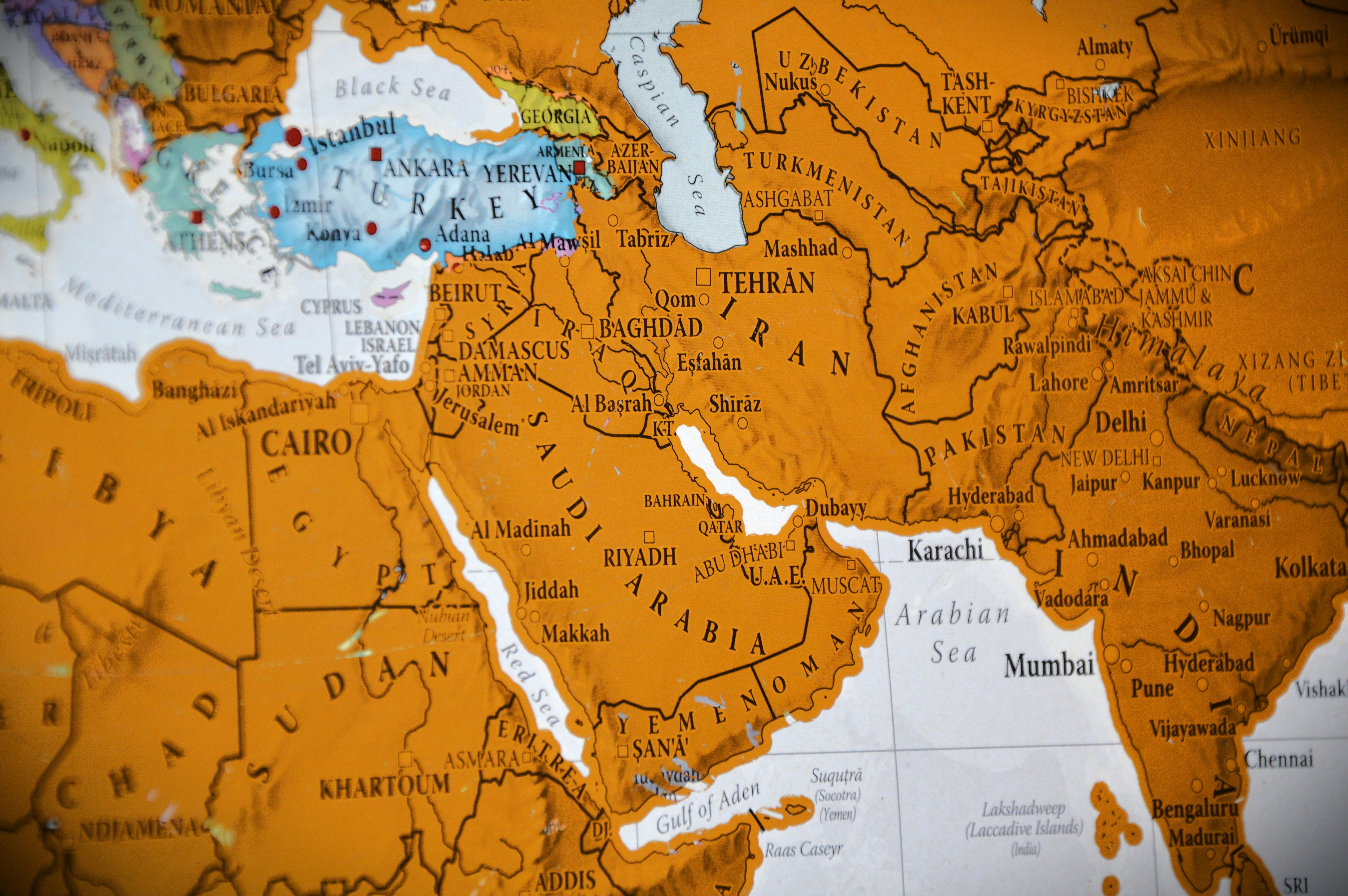
The Iran-US war that commenced in late February 2026 has led to incredible regional instability and global fervour. From this terror, a new conception of what security and mobilisation could look like for the middle east has emerged. Put bluntly, it is a vision of what the Arab world could look like with diminished US influence. On August 7th, 2026 the Mecca Joint Defence Agreement was signed by Turkish President Recep Tayyip Erdogan, Saudi Crown Prince and Prime Minister Mohammed bin Salman and Pakistani Prime Minister Shehbaz Sharif. The three Sunni powers united in the holy site of Mecca to sign a mutual defence pact, emulating NATOs framework of collective deterrence, where an armed attack on any of the three countries would be treated as an attack on all. Turkish Foreign Minister Hakan Fidan expressed that “with this agreement, the process of testing a new security and cooperation architecture in our region has begun”. While Mohammed bin Salman described the agreement’s aims as “to strengthen regional stability, shield it from the repercussions of tensions and conflicts, and coordinate efforts”.
The trilateral agreement draws three major regional powers into alliance, as they all bring different strengths to the table and offer complementary capabilities. As one analysis put it, “Saudi Arabia offers capital, geographic position, political weight, and a substantial defence market”. Saudi economic might is underpinned by its exports and market management. Saudi Arabia remains regarded as the world’s most important oil exporter, through ARAMCO and as the de facto leader of OPEC. Saudi Arabia exported 6 million barrels of crude per day in September, in line with the kingdom’s 2025 monthly average, according to Kpler. However, the Iranian oil crisis revealed the resilience of the Saudi economy since the launch of the Vision 2030 reform agenda. Mazen Bunyan, Chief Executive Officer and Head of Coverage at Standard Chartered Saudi Arabia said that “Strong domestic demand and continued progress in implementing the Kingdom’s economic diversification agenda are providing a solid foundation for future growth.”
Geographically, the kingdom is reassessing its dependence on Hormuz and reorienting policy towards the Red Sea. Chatham House observes that Saudi Aramco is “currently transporting around 4 million barrels per day of crude by pipeline from east to west and exporting it via the Yanbu terminal on the Red Sea”. This gives Saudi Arabia a strategic advantage over the other Gulf states, whose exports remain tied to the Strait of Hormuz.
In addition, Türkiye, a NATO member, ranks as the most powerful military force in the MENA region and the ninth strongest army in the world. Türkiye has 481,000 active-duty troops and a defence budget of approximately $27.34 billion. Turkiye has emerged as a major drone producer. According to Baykar’s published figures, the company generated $2.2 billion in export revenue in 2025, with international sales accounting for 88 per cent of its total revenue. It also reported export contracts for the Bayraktar TB2 with 36 countries, demonstrating the importance of Turkey’s defence relationships. Turkish drones have strengthened Ankara’s ability to project power and reduced its dependence on foreign procurement, as over 80% of its military needs are now produced domestically. Thus, Türkiye’s advanced military-industrial base offers Saudi Arabia and Pakistan credible security guarantees. Speaking at the Opening Ceremony of the National Security Conferences 2026, when referring to national identity and security, Erdoğan outlined that “we define ourselves as a soldier-nation, and security ranks first in the hierarchy of needs for our people.”
Pakistan is the only majority-Muslim nation confirmed to have nuclear weapons, with an estimated stockpile of around 170 warheads. Beyond nuclear deterrence, Pakistan also offers impressive strategic advantages, both diplomatic and geographical . For example, the China-Pakistan Economic Corridor (CPEC), launched in 2015, is a massive bilateral project that integrates the Pakistani economy into wider South Asian agreements and further aligns the two nations. Furthermore, Pakistan is one of Beijing’s closest defense partners, For example, Pakistan’s JF-17 fighter aircraft, which serves as the backbone of its air force, was jointly developed by the Pakistan Aeronautical Complex and China’s Chengdu Aircraft Industry Group. Thus, Pakistan offers a window to a regional superpower: China.
The Houthi attacks on Saudi Arabia provided the first significant test of the Mecca Joint Defence Agreement. On 18 September 2026, the Financial Times reported that Pakistan’s army chief, Field Marshal Asim Munir, “asked Iran’s leaders to help stop Houthi attacks against Saudi Arabia and the kingdom’s energy infrastructure, referencing Islamabad’s commitments to the kingdom without making specific threats.” However, Pakistan’s approach remained cautious. Islamabad sought to reassure Saudi Arabia of its commitment while avoiding a direct confrontation with Iran, with which it also maintains important diplomatic and economic relations.
Yet, the situation then escalated from diplomatic signalling to practical implementation.
On 5 October, Saudi Arabia, Pakistan and Türkiye activated the Mecca pact for the first time, in response to attacks on Saudi targets by the Iran-backed Houthis. Türkiye’s parliamentary ratification, with 279 votes in favour and 119 against, reflects political divisions over the agreement, while its existing NATO commitments raise questions over potential conflicts of interest in allocating its military resources and obligations between NATO and the Mecca pact. The pact shows a clear willingness of regional collectivity surrounding security, but its effectiveness remains uncertain, particularly whether its members would prioritise mutual defence over their individual strategic interests as the three nations face fundamentally different primary adversaries. However, the attacks on Saudi Arabia show that confrontation could now elicit a coordinated response from additional regional powers.
There has been speculation surrounding the pact’s further expansion as “discussions are currently under way to evaluate Syria’s entry into the Mecca alliance,” said Syrian foreign minister al-Shaibani said during a session on regional security at the Manama Dialogue conference in Bahrain. Syria is reportedly considering joining the trilateral alliance, suggesting that regional states increasingly view collective security arrangements as alternatives to traditional external guarantees.Beyond Syria, pivotal members that could tip the scales of the pact would be Egypt and Iran. Egypt’s participation would strengthen the alliance’s regional influence, while Iran’s inclusion would transcend longstanding sectarian divisions, bringing the arrangement closer to China’s vision of a holistic regional security structure. Parliament Speaker Numan Kurtulmus told reporters in Ankara that “Iran can join this agreement too, we hope it will become much stronger with the participation of other regional countries”.
Nevertheless, this is a new development and it is unclear whether the pact will expand beyond its original three members. The announcement of activation should not be confused for proof that a fully integrated trilateral military force had been established or that all three states are participating directly in combat. Parliamentary delays could also reduce their capacity to coordinate military action.
Riyadh sought Washington’s help against the Houthis to launch air strikes against the Iran-backed group but the US declined to participate. This rejection has added further strain to Washington’s relationship with Riyadh, which has already been put under pressure by US conduct in its war with Iran. “MBS will not forget this,” said retired Lieutenant General Karen Gibson, former director of intelligence at US Central Command. Tension between Saudi Arabia and the US is inevitable as Washington steps away from its historic role as the Gulf’s primary security partner, leaving a newly volatile and unstable relationship.
An interesting lens to follow is China’s involvement in the pact, as it aligns with Beijing’s longstanding preference for Middle Eastern regional security structures being less dependent on external powers. Yun Sun, senior fellow and director of the China Program at the Stimson Center said that China “has been calling for a regional organic security arrangement that is more independent from US influence”. Furthermore, In 2021, Chinese Foreign Minister Wang Yi proposed a five-point initiative for Middle Eastern security, advocating collective security, regional cooperation and reduced external interference. Although China has not yet publicly endorsed the pact, its emergence may still serve Beijing’s strategic interests
The Mecca Agreement’s first implementation serves as evidence of a joint regional effort, but also reveals the limitations of an emerging security architecture not yet fully detached from the historic American security umbrella. Following its activation, Pakistan provided reconnaissance support while Saudi forces continued to conduct combat operations against the Houthis. Nevertheless, Türkiye’s military contribution remains unclear, raising questions on uneven commitments to collective defence commitments and their operational implementation. Members of the Mecca pact have clearly shown willingness to improve regional coordination and military capabilities, moving steadily towards a new epoch of security.
The Mecca Agreement shows a potential shift towards a more diversified Middle Eastern security order, with states striving to obtain regional stability. Yet, reliance on American security guarantees and unresolved questions over military coordination suggest that regional independence in regard to defence remains elusive, as the Mecca pact members remain within America’s sphere of influence, which sets US hegemonic foreign policy objectives at the core of Middle Eastern affairs.
The views expressed in this article are the author’s own and may not reflect the opinions of The St Andrews Economist.
Image Credit: Unsplash