
By Ella Williams
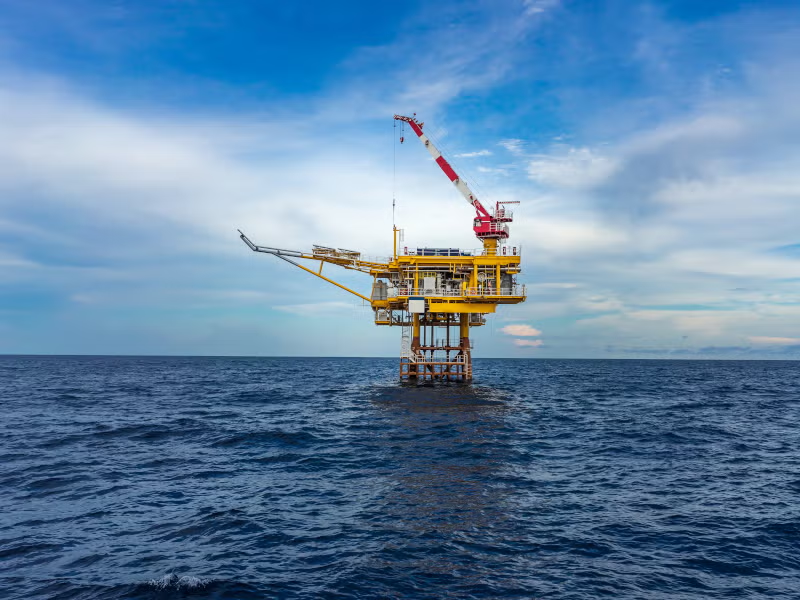
Last month, the Burnham-led Labour administration officially cleared production consent for the Jackdaw gas field. Located in the North Sea, off the coast of Aberdeen, the gas field has existing infrastructure and licences to explore for gas. Despite facing much pushback from climate change activists and from MPs within Labour, Andy Burnham has gone forward with the plans to open the fields, hoping that it will serve as a “signal that the country remains committed to producing, building and manufacturing”.
Supporting a Domestic Pipeline vs Imported Energy
Currently, the UK imports more than 40% of its energy and has been consistently importing more oil and gas than it has been exporting since 2021. The graph on the right in Figure 1 shows the reduction in UK gas production and the increase in imports of liquefied natural gas (LNG) and pipeline gas since 2000. Pipeline gas is typically imported from Norway, whereas LNG is primarily imported from the US.

Imports of LNG must go through a very energy-intensive process for transportation, from cryogenic cold energy storage (CES) at temperatures ranging from -160°C to -70°C, in addition to long-distance transportation and regasification1. Further, LNG imports have higher upstream carbon intensity due to purification and liquefaction2, requiring large amounts of energy just to store and transport the gas door to door, but also to transform the gas back into a viable gaseous state necessary for use.

According to a report produced through the Economic Statistics Centre of Excellence (ESCOE), the UK’s carbon footprint is often much larger than reported. Territorial emissions only report the greenhouse gases released within the UK borders and therefore do not include significant pieces of the UK’s carbon footprint from international flights and shipping, in addition to emissions associated with producing and procuring imports from overseas. The consumption-based emissions account (CBA) includes emissions associated with the UK and UK-registered businesses. According to figures in this report, the CBA is consistently above reported territorial emissions, and the portion of UK imported CBA rose from 34% to 61% in 2022. The UK therefore isn’t reducing its emissions; rather, it’s just shifting them elsewhere along the supply chain.

The difference between a domestic pipeline and imported energy for the UK’s carbon footprint is therefore face-value production emissions. Using this consumption metric, the UK is forced to take responsibility for the role it plays in carbon emissions no matter how geographically detached it feels. Therefore, the logical step is to choose the most carbon-conservative option, while balancing the strategic imperatives of energy security and energy affordability, which would be a domestic pipeline and production. In addition to reducing transportation logistical costs and emissions, the British government would be in the position to control extraction. This hands-on approach would not only force national responsibility for energy production but also allow a controlled and conscious use of resources within the UK’s borders. According to OEUK, “Jackdaw will be among the lowest-emission developments in the UK North Sea, with production emissions around half the UKCS average and approximately eight times lower than imported liquified natural gas (LNG)”. A domestic pipeline frees the UK from being at the mercy of geopolitical crises impacting international supply and demand and grants greater autonomy focused on domestic needs, in addition to environmental pressures surrounding the decarbonisation of the North Sea.
Britain’s Infrastructure
Having been first discovered in 2005, the Jackdaw gas field has had various phases of construction already completed. In 2023, the steel jacket3 was anchored to the North Sea seabed, followed by the export pipeline in 2024 and the topside platform in 2025. Following the recent decision to re-approve the field, after the final system checks and tests are completed, the first gas is able to quickly enter the British national grid because the structural work is already completed. With the infrastructure already in place and production well drilling completed in early 2026, the field is readily poised for production. It would be a miscarriage of a £2.1 billion investment into British energy and of the potential revenues and energy security that would come from the project, if calls to end the project and all future production were satisfied.

The North Sea is home to an impressive network of pipelines. Once processed at the preexisting Shearwater hub, the gas from Jackdaw is sent to the Scottish mainland through the Fulmar Gas Line (FGL) and Forties Pipeline system, a Shell-Esso Gas Associated Liquids (SEGAL) pipeline network, to the St Fergus Gas Plant in Aberdeenshire.
Another initiative that takes advantage of the vast network of pipelines is the Acorn Project. The Acorn Project is a CO2 transportation and storage system that reuses existing oil and gas infrastructure to capture CO2 in permanent geological storage beneath the North Sea. The project repurposes established infrastructure for the transportation of CO2. In a statement prepared by Shell U.K. Ltd. and Genesis Oil and Gas Consultants Ltd. regarding the Jackdaw Field development, it was said:
Economic and Energy Security
Unsurprisingly, there has been much support from the energy industry in addition to workers off the east coast of Scotland. The project itself is predicted to support over 800 jobs and generate around £1.4 billion in tax revenues by 2029, with an increase to £3.6 billion by 2034, boosting the UK economy by providing domestic jobs, increasing tax revenues and reducing the cost of energy in the UK, which will in turn help existing UK businesses and attract further foreign direct investment that is currently avoiding the UK because of very high energy prices.
This development would also make the nation less vulnerable to energy shocks caused by global crises and geopolitics. The blockade of the Strait of Hormuz caused gas prices to skyrocket in addition to increasing concerns around fuel shortages in Europe. Similar concerns arose in 2022 after Russia’s invasion of Ukraine, which resulted in strict sanctions across Europe. Energy security shifted as the reliance on cheap Russian pipeline gas ended and the continent scrambled for alternative suppliers. Political shocks weaken energy security, leaving households vulnerable to supply issues in addition to day-to-day inflationary changes. Without a resilient energy supply chain, you lack the ability to cushion the impact of political crises for impacted households. It is clear the Jackdaw project is unlikely to reduce household energy bills in the foreseeable future, because gas prices are dictated by the global market price. However, energy security is important for protecting households’ standard of living in addition to promoting investment in the UK from technology to manufacturing.
The Chancellor announced the establishment of a new Energy Wealth Fund which will “use tax revenues from North Sea oil and gas to invest in renewable and low carbon energy projects and support the green transition”. The energy transition is an expensive endeavour, and the Jackdaw project will provide an injection of funds into the process. The success of the energy transition is based on a combination of lower-carbon fossil fuel options and renewable energies. One of the biggest enemies to the energy transition is the assumption that the use of fossil fuels must end immediately. This opinion ignores the strategic imperative of energy security and the fact that the economic growth the UK economy needs will require more and cheaper energy. It also misses the nuance that the transition can in fact be advanced by switching from high-emitting to lower-emitting fossil fuels, with natural gas emitting about 40% less CO2 than coal and 20-30% less CO2 than oil, while in parallel the significant investments in infrastructure and new renewable energy production continue to ramp up contribution from even cleaner sources.
The approval of the Jackdaw gas field is an important step forward for the British energy sector. It signals an acknowledgement of necessary energy security and economic strength while supporting a long-term conversation about a green energy transition. The UK is establishing itself once again as a viable player and signalling the beginning of a stronger energy future.
- The process of converting LNG from a liquid to a gas so it can be fed into gas pipelines, power plants or industrial networks. ↩︎
- The process of making or becoming a liquid, or the state of being a liquid. ↩︎
- A tall, vertical, welded-steel-lattice substructure that rests on the seabed to support an offshore drilling or production platform. ↩︎
The views expressed in this article are the author’s own and may not reflect the opinions of The St Andrews Economist.
Image Credit: NS Energy