
By Ellie Tamir-Hoehn
Introduction of Flock into American Society
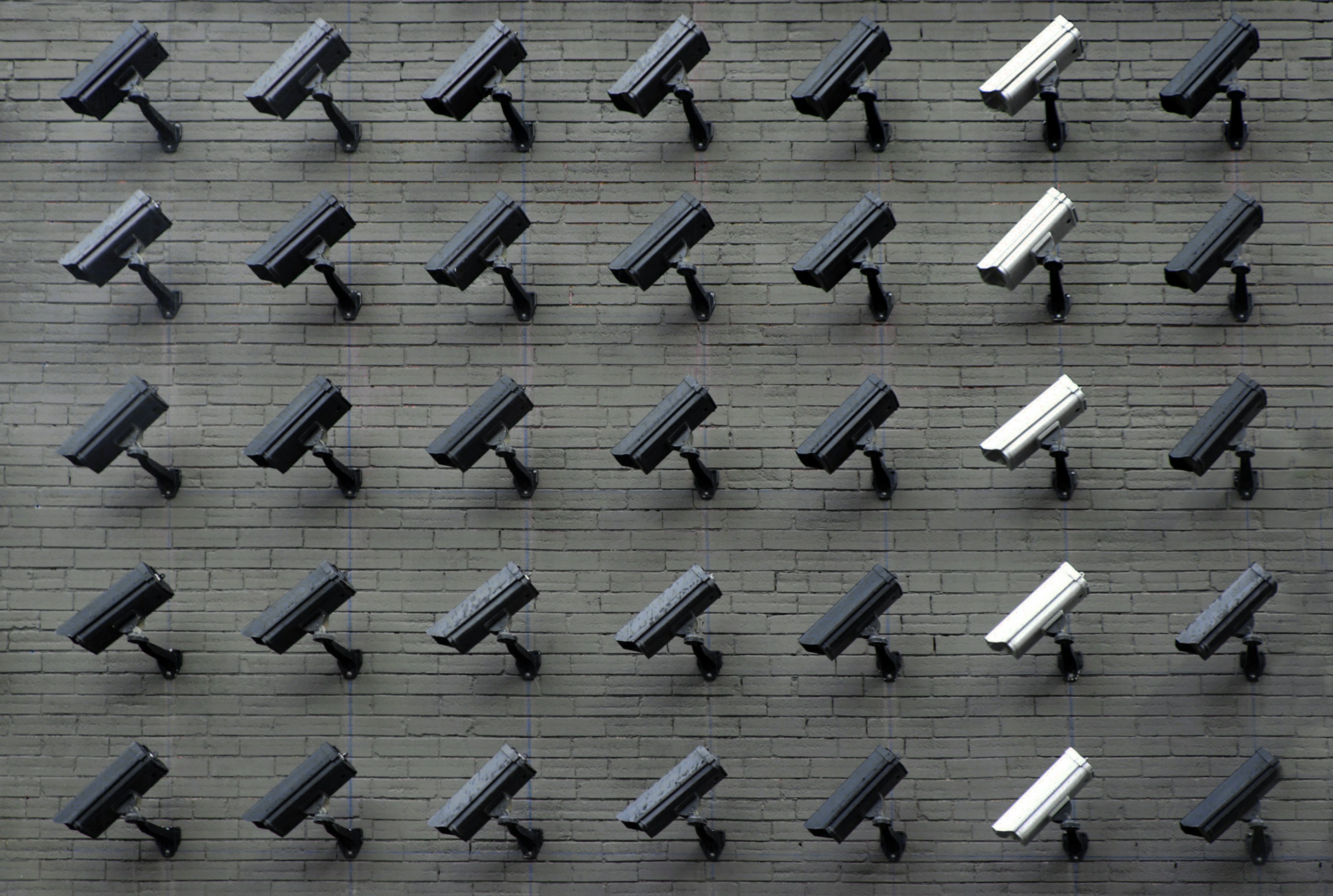
Recently, the United States’ Federal Bureau of Investigation (FBI) has bought and placed mass surveillance systems, including Flock cameras, across the country. In May 2026, the FBI requested permission to place automatic license plate readers (ALPRs) in order to acquire information for crime-solving purposes. However, the utilization of such cameras offers unconscionable, constant surveillance. This would violate the privacy of citizens and, if misused, would compromise the ethicality of monitoring systems.
Flock cameras’ original purpose was to scan the make, model, and license plate of every passing car to then make that information readily available to local law enforcement and government agencies. However, Flock’s original goal of ALPR scanning has shifted toward a mission of solving crime. Flock states that their cameras now have the ability to help solve crimes ranging from murder to package theft. However, there has been consistent misuse and misidentification due to Flock cameras’ input into investigations.
How Flock Works
When a Flock camera is installed, it will work 24/7. As a car passes by, the camera will take 28-100 photos at a time and hone in on important aspects of the vehicle, such as any bumper stickers, color, and license plate, which will then be sent to Flock processing. Once processed, law enforcement can search through the Flock database to search the local areas using witness descriptions to find qualities about the car rather than only a license plate. As long as the person entering information excludes facial recognition, the user has jurisdiction to search for whatever they can to find a specific car, person, etc.
Recently, Flock has further developed their technology by creating pan-tilt zoom (PTZ) video cameras. This camera differs from a typical plate reader in its ability to record video, rather than only produce images. As Flock rolls out this new type of camera, any argument that Flock is used strictly for license plate reading is struck down. These cameras can pan, tilt, and zoom in on people who pass by and can do so well enough to read what a person is doing on their phone. These video surveillance cameras are being placed across the United States without permits or concern for citizen privacy.
However, VIDIZMO, an up-and-coming AI company that can implement facial recognition, has been boasting about its technology, which can input FlockOS footage and translate footage to offer facial recognition. Now, with the addition of VIDIZMO, Flock users can download this software to incorporate facial recognition into their cameras. Flock has consistently asserted that they do not currently use, and do not plan to ever use, facial recognition in their cameras. While Flock and VIDIZMO have not yet integrated any of their respective technologies, the CEO of VIDIZMO has been outspoken about his desire to collaborate further. If this technology undergoes enforcement, it could detect and classify age, race, and gender. This indicates a rising commonality in the tech space where, when a company sets boundaries, another attempts to cross the boundaries in order to attain differentiability and support.
Misuse of Flock Cameras
Despite the company’s assertion about the positive aspects of crime-solving capabilities, there has been an expanding list of incidents regarding the misuse of Flock cameras. With law enforcement agencies partnering with Flock, Americans have their information stored without citizens’ consent or knowledge in databases open to any law enforcement officer with a Flock contract. This has led to a variety of incidents corroborating the negative consequences of surveillance.
One incident includes Texan authorities using Flock cameras to identify a woman whom they believed to have self-administered an abortion. This led to a nationwide search and a review of footage from 83,000 Flock cameras across state lines. Surveilling an individual across state lines where abortion is legal to inflict punishment is an inappropriate use of cameras, and is unfortunately not an outlier.
Another example of the misuse of Flock cameras includes local cops researching and stalking individuals without a warrant or basis. A local department was enabling US Immigration and Customs Enforcement (ICE), a department within US Homeland Security, to tap into their research database to access data to enforce their violent immigration services. Flock itself does not have a contract with ICE, but ICE is nevertheless utilizing their technology for immigration containment. Furthermore, local cops abused the Flock system by using it for personal gain. There have been numerous recorded incidents, including a recent report in Kentucky, of using the system to search for and stalk ex-girlfriends over 2000 times. The increasing lack of privacy with the rise of digital surveillance is changing the understanding of what appropriate restrictions look like and how the lack thereof enables local police to abuse the system.
What We Can Do About It
There is an ongoing conversation about how Flock cameras should be used and whether governmental agencies should use them. Some argue that Flock cameras are unavoidable and that citizens should therefore accept a new system of authority throughout the United States. In doing so, there have been increasingly large efforts by different organizations such as Deflock to lobby for the abolition of Flock surveillance. With the evolution of Flock cameras, concerns about their reliability and safeguards have sparked conversation about the ethics of surveillance.
The views expressed in this article are the author’s own and may not reflect the opinions of The St Andrews Economist.
Image Credit: Unsplash