
By Sarah Caldwell
Iceland says No
On August 29, Iceland held a referendum on whether to resume European Union accession negotiations. With an 82.6% turnout, Icelanders voted 52.8% to 47.2% against resuming accession talks, indicating they wanted to keep Iceland’s status as a member of the European Economic Area but not become a full member of the European Union.
The vote was largely divided between citizens of the capital city, Reykjavik, and the rest of the island, which is inhabited mostly by farmers and fishermen. These rural groups formed the ‘no campaign’ to vote against accession, aiming to protect national sovereignty and the island’s fishing industry (which accounts for 15% of GDP and 40% of exports) from the EU Common Fisheries Policy.
Supporters of reopening talks, among them Prime Minister Kristrún Frostadóttir, argued that EU membership would offer an extra layer of security for a geographically isolated nation in the age of Trump and Putin. Brussels, for its part, was eager to welcome Iceland, drawn by its wealthy population and its strategic position in an increasingly contested Arctic.
With one of the highest per capita incomes in Europe, Iceland has little need for EU structural funds to build infrastructure or raise living standards. Meaning that membership would not have benefited its citizens in the way it might other EU candidates such as Moldova, Georgia, or Ukraine.
Ultimately, accession would not have changed much for the small island nation as it stands now, having already adopted 75% of EU law and directives into national law and maintaining free movement of people, goods, services and capital across the Atlantic. This is not, however, a good look for the EU, which is trying to drive momentum for enlargement against the tide of populism, defense concerns, and budget polarisation.
Canada says Yes
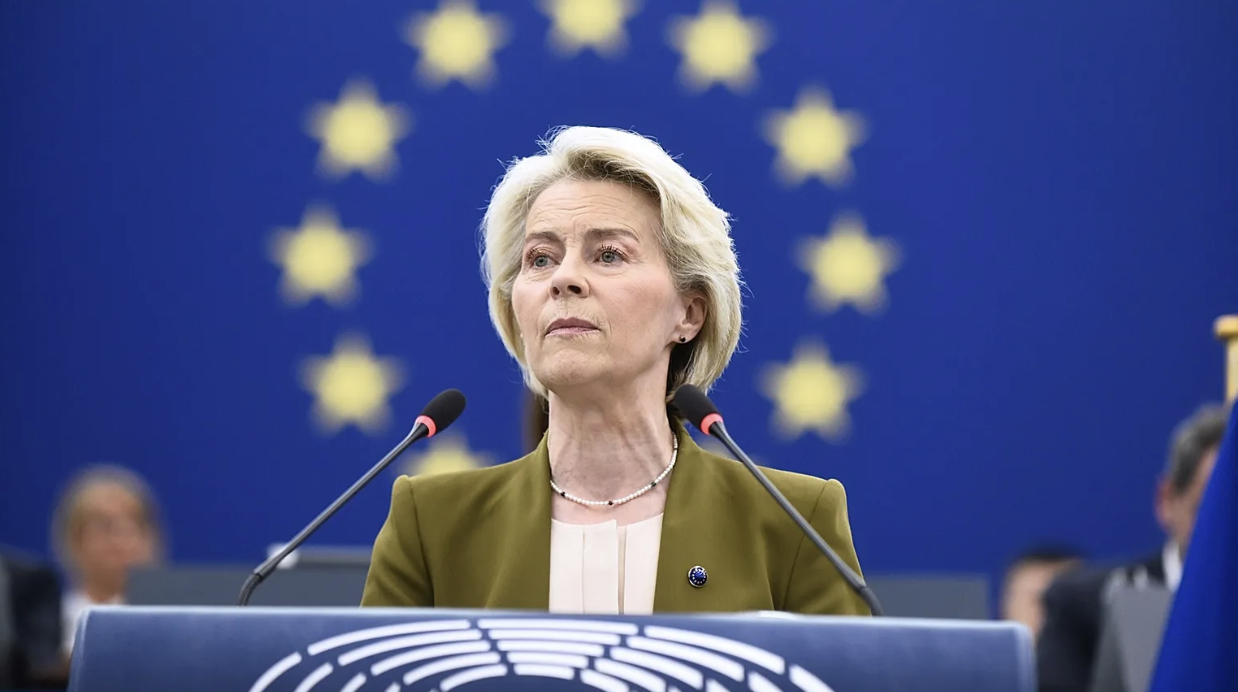
Earlier this month, European Commission President Ursula von der Leyen proposed making Canada an Associate Member of the EU during her State of the European Union Address. Canadian Prime Minister Mark Carney welcomed the proposal with fervent gratitude in his address to parliament.
The exact implications of associate status, which does not currently exist under EU law, will have to be ‘built from scratch.’ Still, both leaders identified tighter integration in defense industrial bases, a tech and AI alliance, energy security, and making the Arctic a joint project as potential common goals. Carney also noted that Canada and Europe could strengthen their “strategic autonomy” through “deep co-operation in the full range of strategic capabilities, including critical minerals”.
The proposition comes at an opportune moment for the North American nation which is caught up in a problematic trade war with the United States. Negotiations are seeking to end the US’ 50% tariffs on $20 billion of Canadian goods and Canada’s dollar-for-dollar retaliatory tariffs, which broke down in August after both sides refused to make concessions.
The Canadian economy has not yet collapsed under US tariffs, but growth has been moderately limited, particularly in demand, prompting Carney to seek new trade agreements abroad. The European Union was the natural first choice. Even so, many EU leaders criticize the ambiguity of the relationship and how quickly it was conceptualized.
A Canada-EU summit is expected next month to address these concerns and iron out the details of the new agreement. Yet, it would take a referendum in Canada and changes to the EU’s fundamental treaties would be needed to make such a status a reality, both of which are unlikely to happen any time soon.
Germany says Maybe?
Also this month, three separate state elections shook the German political climate with historically high turnout and radically new outcomes. The results will have serious implications for the country’s chancellor, Frederick Merz, as well as Germany’s significant influence within the European Union.
First, in rural Saxony-Anhalt, the Bundesnachrichtendienst (Germany’s equivalent of the CIA)- linked “certified right-wing extremist” party, Alternative for Germany (AfD), won its first-ever election with a stunning 43.8% of the vote against five other parties. Gridlock has now formed as the AfD landed three seats short of a majority, and no other party has agreed to form a coalition with them. The center-left Social Democratic Party (SPD) is now calling for a four-party counter-coalition, but the move would also be unprecedented.
In Mecklenburg-Western Pomerania, the AfD also came first with 38.2% of the vote. Still below the threshold for majority rule, incumbent Minister-President Manuela Schwesig, a Social Democrat, will likely form a government with the Greens and Die Linke. Die Linke (The Left) is a democratic socialist party descended from the Socialist Unity Party (SED), the communist party that ruled East Germany until 1989.
Finally, in Berlin, the same Die Linke, led by Elif Eralp this time, won with 25.7% of the vote. Eralp’s campaign focused on affordability and the promise of widespread rental property expropriations, which appealed strongly to her party’s very young, urban, and diverse voter base. Even still, die Linke may struggle to form a coalition with the Greens and SPD because of the party’s toxic status. In recent weeks, they have been accused of anti-semitism and the presence of the head of a prominent organized ‘crime clan’ at their election-night celebration caused further skepticism.
For Chancellor Merz and the Christian Democratic Union, the outlook is bleak. The CDU and SPD, Germany’s long-dominant centrist parties, once routinely won a combined 80 percent of the vote; this was the first state election since 1949 in which they failed to win seats. Already facing historically low approval ratings, Merz may now see these results end his chancellorship, and with it the political stability Germany has enjoyed since helping found what became the European Union under the 1992 Maastricht Treaty.
Who needs who more?
As the European Union braces for more far-right Eurosceptic candidates seeking election in France, Italy, Spain, and Poland this year, it needs allies more than ever. The bloc must figure out how to respond to China’s trade threat to the EU economy, ease the burden of climate rules on struggling businesses, and maintain support for Ukraine.
The EU must also quickly make ends meet for a €2 trillion multiannual financial framework proposed in 2025 and set to take effect in 2028. The legislation, which is supposed to reach a formal agreement by the end of the year to be adopted in time, is facing intense backlash from Germany, Denmark, Finland, the Netherlands, and Austria (major net contributors), who are demanding that the budget be reduced by €700 billion.
The current plans heavily prioritize competitiveness, defense, security, and research, alongside a €100 billion dedicated fund for Ukraine support, as the continent grapples with ongoing wars around the globe and the Trump administration’s increasing demand that Europe fund and build its own defense measures.
Ultimately, the EU will need more supporters if it hopes to keep the fight for integration and solidarity alive, and Mark Carney may not be enough. If the promise of European military protection is not enough to entice Iceland and if Merz falls to a more extremist party in Germany, Von der Leyen and her colleagues will lack both momentum and stability as they try to fight through the biggest challenges of our time.
The views expressed in this article are the author’s own and may not reflect the opinions of The St Andrews Economist.
Image Credit: Euronews