
By Charlotte Corcoran
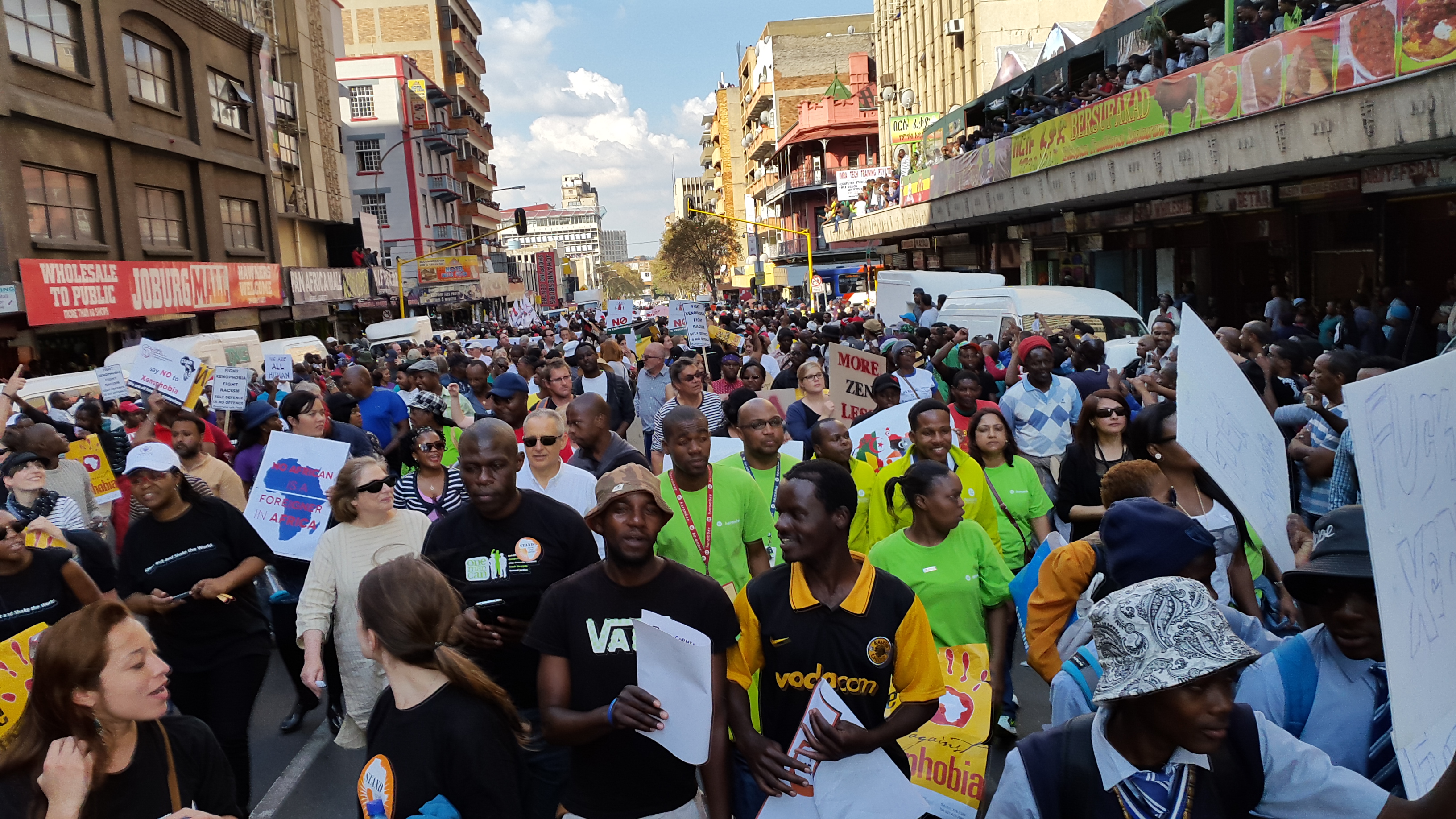
South Africa, a country long seen by African migrants as a place of hope and opportunity, is now turning against the very people who made it what it is today. Those who relocated to post-apartheid South Africa to escape poverty, war, or in search of job opportunities have recently become a convenient scapegoat for many of the nation’s problems, including high crime rates, unemployment, and strained public resources. Over 160,000 foreign nationals have departed South Africa between May and June 2026 as mass demonstrations violently escalated amidst calls for migrants to return to their native countries. President Cyril Ramaphosa has neither outwardly supported nor condemned these movements, deepening tensions between his country and other African nations as critics argue whether this is a form of immigration enforcement or state-legitimized xenophobia.
The recent anti-migrant demonstrations in South Africa are not the first of their kind. The first large-scale protests, held in Johannesburg, Pretoria, and Durban, occurred in 2008 and resulted in 62 deaths. Between 2015 and 2019, there was an increase in harassment against Nigerians in particular, culminating in the rise of Operation Dudula by the early 2020’s. Meaning “Force Out” in Zulu, Operation Dudula became a political movement campaigning under the motto “South Africans First”, rapidly gaining public support despite government pushback due to its unlawful tactics. Since 2024, there has been a greater emergence of similar groups such as March and March, which feed off citizens’ mounting socioeconomic frustrations.
March and March, a self-described “grassroots movement for stricter immigration enforcement, border control, citizen job/service priority, and government accountability”, led by Jacinta Ngobese-Zuma, media-savvy former Durban radio presenter. March and March has distinguished itself from past movements like Operation Dudula by primarily using peaceful means of protest, being well-funded, gaining legitimization through mainstream South African media coverage, and engaging directly with the government. Last spring, the growing movement issued an ultimatum: All undocumented immigrants had until June 30, 2026 to leave. Without a sufficient exodus, March and March vowed to lead protests every Thursday for the following six months, with one spokesperson, Sandile Dube, saying that “we can only stop when every South African job is occupied by a South African”.
South Africa has spent over $18.5 million deporting and repatriating tens of thousands of people, demanding several governments to simultaneously organize coordinated voluntary repatriations for their nationals. Ramaphosa recently requested reimbursement for these efforts from Nigeria, Ghana, Ethiopia, and Malawi, prompting significant pushback from these nations. Ghana, in particular, affirmed that “the evacuation of all our compatriots was fully funded by the government of Ghana and our Ghanaian partners”, and instead demanded legal compensation for the xenophobic violence carried out against its citizens in South Africa.
Despite South African efforts to increase anti-immigrant enforcement, March and March has vowed to keep marching until every undocumented migrant has left the country, regardless of the campaign’s impact on the country’s economy and standing across the continent. On July 16, a demonstration in Johannesburg turned violent by the afternoon as protestors broke down doors and vandalized buildings as police reportedly stood by. March and March publicly disavowed the violence, insisting it is a law-abiding movement, but reports of fear mongering, threatening to torch the buildings of landlords who house foreign tenants, and looting of migrant-owned businesses regardless of legal status, have increased dramatically in the recent months. Amidst the rallying cries of “Abahambe!” (“they must go”), the human toll of this movement has been greater than ever as over 700 people have been killed in xenophobic incidents since the end of Apartheid, and increasing numbers are fleeing the country out of fear for their lives.
Blaming foreigners for elevated unemployment and crime rates is low-hanging fruit for politicians and a shrinking middle class fearful of job losses amidst an economy growing by barely 1%. The foreign-born population of South Africa makes up only about 3.9% of the total population, bearing the blame despite being integral to the country’s history and economy. Spaza shops, in particular, are the cornerstone of the economy; they are interwoven into urban neighborhoods, stay open all hours, sell affordable items, and are entirely black-owned. These shops contribute just over 5% to South Africa’s GDP and circulate money through the local economy as a linkage between manufacturers, wholesalers, and transporters. Many of these spaza shops have been looted or shuttered out of fear for the owners’ safety. March and March reflects a false narrative frequently plastered over social media in South Africa: fellow African citizens bring crime, dirt, decay, don’t pay taxes, and exhaust social services. Regardless of how little evidence there is to show for these claims, the common sentiment reflected by March and March has prayed on the fears of the South African middle class to increase its xenophobic agenda.
President Ramaphosa has performed a questionable balancing act in the last few months, condemning violence while avoiding appearing to capitulate to protester demands. While openly meeting and shaking hands with two protest leaders and calling for pan-African cooperation on migration, he condemned all violence against foreigners within South African borders. On August 17, he issued a formal apology to Mozambican President Daniel Chapo at the SADC Summit for the violence carried out against its citizens within South Africa while maintaining the government’s framing of the issue as “illegal migration”. Shortly before, Ghanaian President Mahama called for an ICC investigation and AU intervention to the violence exhibited against foreign nationals within South African borders. Ghana and Nigeria are establishing a register of claims that would enable the Ministry to pursue legal and diplomatic processes for compensation on behalf of affected Ghanaians who lost businesses, investments and other property during the xenophobic attacks.
Black South Africans only gained full citizenship at the end of Apartheid in 1994, after which the South African economy and infrastructure was built on imported labor from neighboring states. The new state system failed to fully address the equity gaps left behind from Apartheid, and the black and immigrant populations held a precarious sense of national belonging. March and March leader, Ngobese-Zuma, assured the audience at a recent press conference that “South Africa will be great again. It just needs all of us to rise and defeat our enemy”, rallying supporters to turn against their neighbors to rid the country of all undocumented migrants. One scholar, Fezokuhle Mthonti, has recontextualized the vigilante-esque campaigns of groups like March and March as “a part of a wider victimization of the poor working classes in a country that has abandoned them”. She notes that Black South Africans and migrants have been trying to “eke out an existence together” in the face of state inaction, making this kind of xenophobic violence more intimate as neighbors turn against each other. “What we are seeing” she stresses, “is the same logic that was used to divide South Africans being repackaged around xenophobia”.
With local government elections set for November 4, 2026, March and March has explicitly planned to “increase the tempo of agitation” ahead of the vote. The political fragility of the ANC after 30 years in power has allowed for populist parties to gain ground by scapegoating migrants. While these groups are forming out of longstanding racial and ethnic biases, turning their grievances toward other marginalized communities has been an easier scapegoat rather than demanding accountability from the government to change their socioeconomic conditions. Overall, the high economic toll exacerbating growing regional tensions and nationwide diplomatic fallout due to these xenophobic movements will come to a head in the upcoming election in which the world will see if this national ethnocentrism will be rewarded for its violent efforts.
The views expressed in this article are the author’s own and may not reflect the opinions of The St Andrews Economist.
Image Credit: Wikimedia Commons
