
By Sarah Caldwell and Lily Bolash
‘It’s beginning to look a lot like Russia’: This winter, regions of the United States have not only experienced extremely low temperatures, but frequent appearances from ICE, the U.S. Immigration and Customs Enforcement agency. According to the agency’s government website, the mission of the organization is to ‘protect America through criminal investigations and enforcing immigration laws to preserve national security and public safety.’ As of January 2026, however, two American citizens have died while protesting the immigration raids in Minneapolis, Minnesota.
Renee Nicole Good (37) was shot and killed while inside her car; she leaves behind a partner and two children. Homeland Security Secretary Kristi Noem has accused Good of weaponizing her vehicle against surrounding ICE agents in ‘an act of domestic terrorism.’ Such comments have sparked widespread outcry, as various video angles of the shooting and autopsy reports seem to suggest that no agent on the scene was in danger.
Alexi Pretti (37), an intensive care unit nurse, was dragged to the ground and surrounded by ICE agents after checking on a fellow protester, whom the agents had pushed and pepper-sprayed. Video accounts of the incident show Pretti being beaten by the crowd of agents before several gun shots are heard. Secretary Noem also accused Pretti of domestic terrorism, but has since attempted to walk back her position as tributes to the nurse have circulated online.
The year 2025 was also the deadliest on record for individuals detained in ICE custody – causes of death ranged from seizure, to tuberculosis, to suicide. Little media attention has centred on the lives and circumstances of these individuals; the documented spike in deaths, though, has certainly garnered attention as discontent with the Trump administration’s aggressive anti-immigration posture continues to rise.
The 68th Annual Grammy Awards show, for instance, served as a platform for a wealth of anti-ICE rhetoric from the singers and stars present. Latin music phenom Bad Bunny made history by winning Best Album of the Year for Debí Tirar Mas Fotos, a record sung entirely in Spanish: during an acceptance speech for a different award, he explicitly condemned the immigration agency for its violence, asserting that ‘we’re not savages, we’re not animals, we’re not aliens, we are humans and we are Americans.’ For the end of his halftime performance at Super Bowl LX, which also took place in early February, the artist spiked a football that read ‘Together, We Are America’ – a direct declaration of belonging for all who identify with his art, but especially citizens of Bad Bunny’s own Puerto Rico, which remains an unincorporated territory of the United States.
Back in June 2025, the Russian feminist collective known as Pussy Riot marched with ‘No Kings’ protestors in Downtown Los Angeles. Their message? ‘It’s beginning to feel a lot like Russia…everywhere you go,’ said group leader Nadezhda Tolokonnikova. Her comments on Trump’s America ring true months later. As a result, it is likely that tensions over ICE will affect ballot choices in the Fall 2026 midterm elections. The Democratic Party is hoping for a decisive victory that will capitalize on discontent with the administration’s immigration approach, as well as its response to the shootings of Good and Pretti.
Until then, discord will remain high and the national mood will continue to dip low. The situation is aptly described by lyrics from Lin Manuel Miranda’s hit musical, Hamilton: ‘We are a powder keg about to explode.’
Viksit Bharat 2047 ‘bold vision, brighter future’: Beginning in 1757, the British East India Company consolidated control over the Indian subcontinent through military expansion and strategic alliances, capitalising on political instability and a fragmented population. The Company, and later the British Raj, imposed a system of economic imperialism that prioritised the extraction of raw materials for Britain, creating a profound wealth gap that left much of India’s roughly 400 million people in poverty by the 1940s. After gaining independence in 1947, India has, despite these challenges, emerged as a major economic power in its own right.
Viksit Bharat 2047, or Developed India 2047, is Prime Minister Narendra Modi’s vision for transforming India into a globally recognised ‘developed nation’ by the centenary of its independence. Launched in 2023, the initiative sets out ambitious goals, including expanding India’s GDP to $30–40 trillion, eradicating poverty, and achieving net-zero carbon emissions by 2047, among other targets.
Modi, a member of the far-right, pro-Hindu, Bharatiya Janata Party (BJP), was first elected prime minister in 2014. His first term was largely characterised by strategic consolidations of power while his second term was consumed by efforts to entrench the BJP’s Hindu nationalist ideology across the country. And though he has received consistently high approval ratings in government, Modi is frequently criticised for shifting India towards an authoritarian style of leadership, with a cult of personality largely centered around himself.
Now entering his third term, the launch of Viksit Bharat 2047 marks a decisive transition, sharply recentering the government’s agenda on economic reform, and with notable success. India has overtaken the UK to become the world’s fifth-largest economy and, according to many projections, could rise to third as early as 2028, a shift that would represent a clear rupture in the global economic order.
By the end of 2025, India saw GDP growth of more than 8% with inflation at a record low annual rate of close to zero. According to the government’s estimates, an average growth rate of around 8% over the next two decades is essential in achieving a developed India by 2047, but many in the international community are still questioning whether this goal is entirely feasible and if recent GDP data is even an accurate gauge of the economy’s health.
The most recent legislative session, which passed a long-sought-after GST overhaul and large-scale labour code reforms, as well as other measures to cut red tape and simplify taxation and compliance practices, will be crucial in stimulating investment and boosting internal growth to keep up with the 8% projections.
Similarly, India and the EU have just announced a watershed trade pact that will eliminate roughly $4 billion in tariffs on EU exports. This agreement builds on a series of high-impact deals with the UK, Oman, New Zealand, and the four-nation European Free Trade Association bloc (Switzerland, Norway, Iceland, and Liechtenstein). Collectively, these agreements are set to propel India into a formidable manufacturing hub, increasingly competitive with China and potentially ending China’s position as the world’s single dominant supplier in many sectors.
Most recently, Modi’s government overcame its largest obstacle: Trump’s tariffs, a declaration that saw the rupee record its biggest one-day gain in seven years. In a newly proposed agreement with the US, India has promised to stop buying Russian oil and reduce trade barriers to zero in exchange for the US lowering its tariffs from 50% to 18%.
‘Wonderful to speak with my dear friend President Trump today. Delighted that Made in India products will now have a reduced tariff of 18%. Big thanks to President Trump on behalf of the 1.4 billion people of India for this wonderful announcement’ Modi tweeted, following the deal.’ When two large economies and the world’s largest democracies work together, it benefits our people and unlocks immense opportunities for mutually beneficial cooperation.’
These advancements on the international stage, along with improved internal ease of doing business, will set the stage for India to reach its ambitious goals by its centennial independence year, but the growth could come at a cost.
Such rapid global expansion may deepen the existing wealth gap, while worsening pollution, and further marginalizing the country’s large agrarian communities, especially as lacking infrastructure fails to keep pace with growth. Modi must balance a country of staggering economic gains and technological innovation with one where more than 50% of its citizens are engaged in subsistence farming, particularly rural Punjabi populations.
A holistically developed India, therefore, must be one in which citizens of all cultures and religions are respected and engaged in the opportunities of development, a truly brighter future may never be realised.
The plight of a modern-day petrostate: On January 3 2026, at 4:30am local time, Venezuelan President Nicolas Maduro, and his wife Cilia Flores, were abducted by the US military after a series of strikes on the capital city. Maduro was immediately flown to the US where he will face charges of narco-terrorism, drug trafficking, money laundering, and corruption. An estimated 40 Venezuelans were killed during the strikes; the turbulence, however, is nothing new for the South American petrostate.
Oil was discovered for commercial use in Venezuela in 1914, and the industry quickly grew into one of the world’s largest producers. Foreign companies dominated production, exploiting both the land and the indigenous labour force. Over the following decades, Venezuela endured recurring economic instability driven by the global oil market’s boom-and-bust cycles. At its height, the country became the world’s third-largest producer of crude oil; however, despite oil accounting for the vast majority of Venezuela’s industrial activity and workforce, little of the resulting wealth reached the nation itself.
The government officially nationalized its oil industry on January 1, 1976. The decision was followed by a period of economic stabilization and internal growth, but complete nationalization ultimately led to severe underinvestment, technical decline, and reduced production, particularly during the reign of Hugo Chávez. Since then, an estimated eight million Venezuelans have left the country, fleeing widespread poverty and gang violence.
President Nicolás Maduro succeeded Chávez in 2013, inheriting a country plagued by severe inflation, unemployment, and widespread poverty. His policies, which closely followed Chávez’s ideological path, largely failed to alleviate the deepening crisis and were accompanied by persistent allegations of protecting drug shipments and facilitating trafficking operations. Maduro faced intensified backlash in 2024 after being declared the winner of the presidential election, despite objections from the opposition and much of the international community, which argued that he had in fact lost the vote.
On the morning of January 3, 2026, Venezuelans wearily took to the streets to celebrate the abduction of the socialist dictator, marking the end of twenty-five years of authoritarian rule under Chávez and Maduro. Many waited in anticipation as opposition leaders María Corina Machado and Edmundo González—the popular winner of the 2024 election—were expected to finally assume control of the country. Machado pledged to de-nationalize the oil industry as a means of addressing widespread poverty and escalating gang violence.
Thirty days later, this has yet to be the case. Now, in a state of semi-control over the country and its oil, US President Donald Trump and Secretary of State Marco Rubio have declared that they will ‘run’ Venezuela, with Trump proclaiming himself as ‘Acting President’ in a Truth Social post. The administration immediately began selling Venezuelan oil, but has dismissed efforts to allow opposition leaders, including Machado, any control over the government, leaving Maduro’s former Vice President in charge.
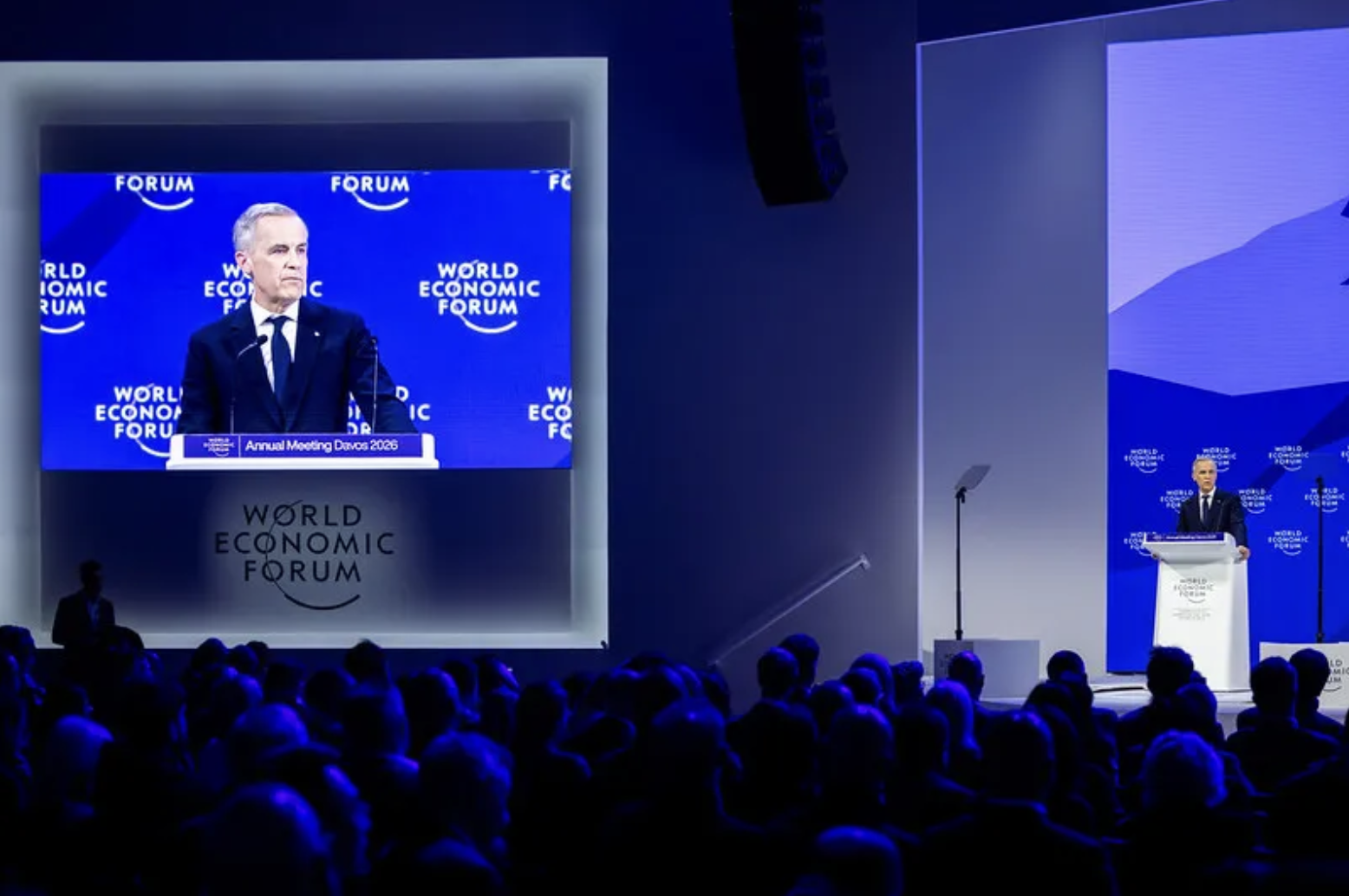
The Trump administration’s “might is right” approach can be understood as part of a renewed era of resource imperialism, which even includes ambitions to seize Greenland . This is what Mark Carney has recently described— to widespread acclaim— as a ‘rupture, not a transition‘. Yet for the thirty million people still living in Venezuela, the moment is likely to feel less like a rupture and more like another jolt along the long road of the modern resource curse.
‘It’s an important change, certainly, but everything is the same, everything,’ retiree Julio Castillo, 74, told Frontline of the removal of Maduro from office. ‘I feel as if nothing much has happened.’ It remains unlikely that Venezuelans will soon have meaningful control over their government or begin to benefit from the oil discovered in their country more than a century ago. Only when natural resources are extracted ethically and in moderation will countries such as Venezuela, the Congo, and Iran be able to move forward with genuine sovereignty and lasting peace.
The views expressed in this article are the author’s own and may not reflect the opinions of The St Andrews Economist.
Image credit: International IDEA