
By Henry Wilson-Litt
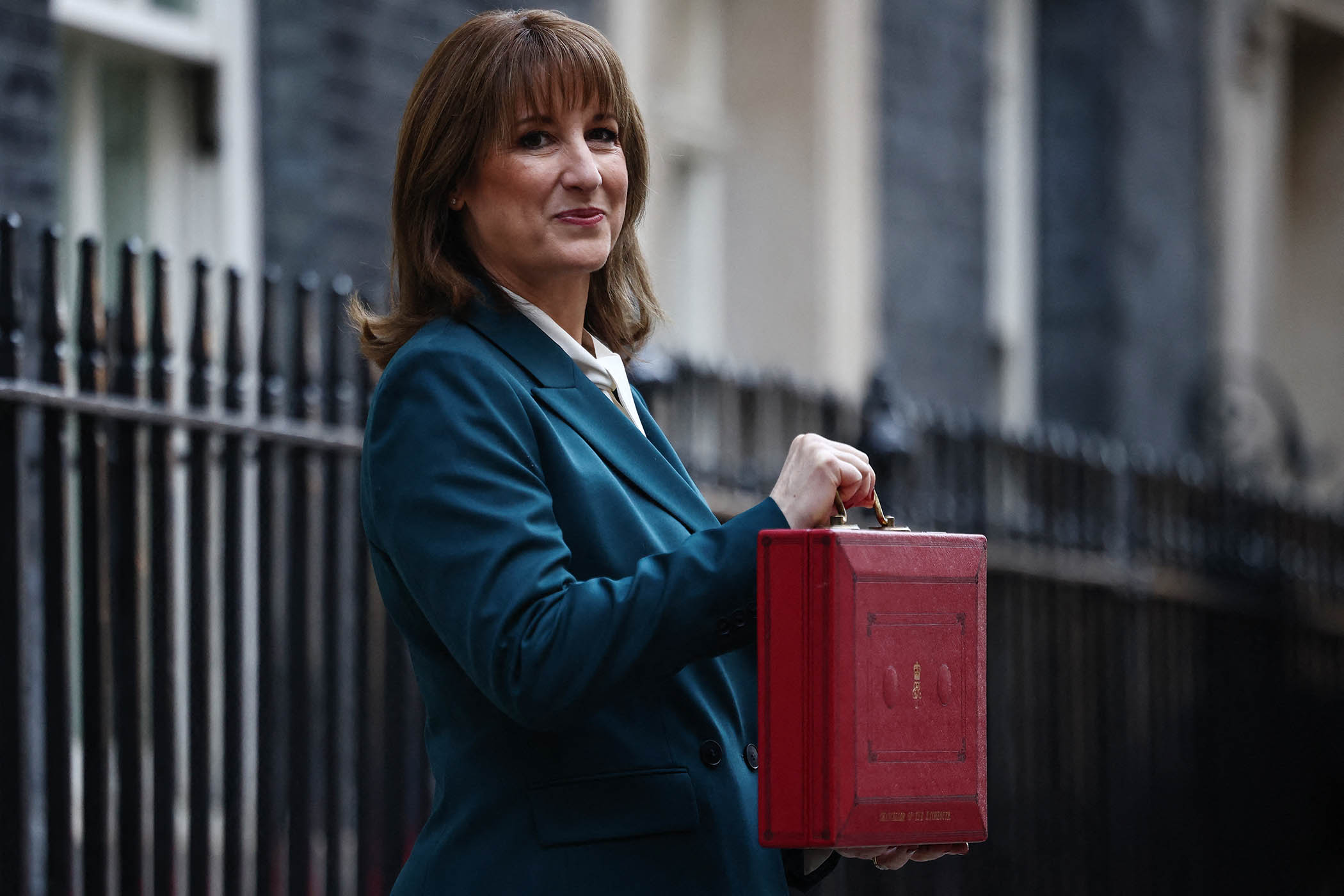
In Rachel Reeves’ first budget of the Labor Government she proposed to raise the tax paid on the inheritance of farming estates to 20% above a threshold of £1M where previously agricultural assets had been exempt. Significant backlash and debate in the media from the likes of Jeremy Clarkson has brought tax hikes to the fore as a major issue under the Starmer government. As Labour presses ahead with the compromised threshold of £2.5m, it is set to remain a key divide in UK politics in the coming months and years. Yet, despite the controversy, the Liberal Democrats had urged Labour to scrap the change. Furthermore, Deputy Leader of Reform UK Richard Tice argued the UK ought to abolish inheritance tax entirely. This sentiment is echoed by prominent conservatives with Rishi Sunak entertaining reducing the tax in 2023, Jacob Rees-Mogg and then Conservative Nahim Zawahi describing it as ”morally wrong”, and Grant Shapps calling it “deeply unfair”. Despite an estimated 3.7% paying the tax, around a third of Britons report believing they will be affected by it. We must therefore question why the electorate has become so concerned about taxes which ostensibly do not concern them and therefore why political parties have made it an important part of the policy agenda.
In the theory of political economy there is an idea central to voting theory referred to as the median voter theorem. First developed by Anthony Downs in 1957, the theory suggests that when two parties try to maximise their election chances by simultaneously competing for voters on a one dimensional policy space, the result will be an equilibrium in which the median voters’ preferences are the ones that are realised. In other words, imagine one party sets a tax rate at zero and the other sets it at approximately one. Either party could gain votes by moving their rate towards the middle – between zero and one – as they are still preferred by those at their respective extremes of the tail, yet they will gain some votes from the section between. They can continue to gain by moving in further until they reach the median voter in which any deviation will cause a loss of votes. By some back of the envelope calculation, we can generate a tax rate of around 50%-80% depending on parameter choice.This being a rate with a threshold of zero meaning all positive bequests are taxed.Yet, the tax rate on bequests in the UK on amounts over £325,000 is 40%.The median bequest is lower and hence that tax does not affect them.With thresholds the estimated rate could be significantly higher. Assuming a democratic voting system, it should lead to a significantly more redistributive tax system than currently exists in the majority of western democracies. From which arises the question of why this gap exists between the theory and actuality.
In a recent study from Demos on attitudes to the rate of inheritance tax, it was found that 71% of respondents opposed increasing the current rate, 65% approved of raising the current threshold, and 55% supported abolishing the tax completely. Assuming they voted to maximise their self-interest, we should see much higher rates being generated.The ONS reports that of those who received an inheritance greater than £1000 in value, the median amount was £11,000. Considering the current minimum threshold for tax, the fact that over half (including the median voter) would support abolishing the tax is astounding. The majority of those who inherit pay no inheritance tax and so any increase, with an assumed budget neutral increase in redistribution, would be welfare improving for them. Simultaneously a KCL study found a trend of moderate to great concern over current wealth inequality in the UK. They found 88% of Labour voters believed the wealth gap to be too large and 62% of Conservatives felt the same. Additionally they found that out of the respondents, 73% said that wealth’s largest determinant is the wealth of the household you are born into. So the question remains: why do the British electorate seemingly vote against their own self interest?
One explanation is that people overestimate their position within the distribution of wealth. That is, the majority of people believe they belong to a higher percentile of the distribution than they actually do, and so may believe that taxation on wealth and inheritance hurts them and their offspring to a greater extent than it actually does. Poorer people overestimate their relative position while wealthier people underestimate it. Given we’re concerned with voting and the poorer-relative to average- tail is thicker, voting will result in a set of taxes and transfers which would be lower than if perception were equal to the objective distribution.So the question that arises is how voters get this impression– and the obvious answer is from the media and from the politicians whose words are filtered through it. For instance, in the 2024 General Election Debate on ITV, incumbent Rishi Sunak claimed that under Starmer’s administration the average working household tax payments would rise by the denture rattling figure of £2000. This was misleading in that Sunak was misquoting Independent Treasury Officials and in that he did not mention that this would be over 4 years. However, this claim is misleading in another,less obvious, way that wasn’t talked about during the post comment debates. Sunak’s claim about the tax burden on ‘the average working household’ could mean either of the following: that £2000 is the sum of the total tax raises divided by the total number of households, or that the household who earns the average income will see a burden of tax increase by £2000.Sunak’s statement was actually saying the first but implying the second, however both are misleading.The audience will infer from the claim that they will pay £2000 more in tax, but the taxes do not fall on all households equally. So, presenting this number as a reason for the majority of households not to vote for the policy misleads the electorate.
The second possible meaning is misleading for a similar reason. The average income is greater than the median assuming the distribution has a positive skew – which all world income/wealth distributions do. So the majority of households will earn under the average income and hence for majoritarian voting purposes the preferred tax rates for the average household will be less redistributive than the median. Yet since, as we have seen, most households overestimate their position in the distribution, they may imagine that they are average or closer to average than they actually are and hence they conclude they will be worse off because of the tax rises than they actually would be. Whereas in fact, if we assume that greater social spending results from increased taxes, they may actually be made better off. In fact the Demos study supports this idea – when voters internalize the equivalent increase in spending, the tax becomes more favorable. It found that even among the respondents who were Conservative voters, responses suggested only a 2% increase in support for the Tories if they abolished inheritance tax but a 32% increase if they were to spend the money on the funding of the NHS. By the logic of the argument, if they truly were to believe that they were higher within the distribution consistently then they would be less likely to support such an increase in social spending. This indicates that voters do not fully internalise the budget constraints of the government. So the explanation may be that respondents evaluated their preferred taxation and spending separately. The full explanation of this may be a combination of misperception of their place in the distribution and of not respecting government spending constraints.
This leaves us with a troubling state of affairs. Democracies rely on the existence of the best feasible information set, so that voters can make informed decisions. When the information leads to distorted perceptions, it can result in voters voting against measures which would in fact improve their welfare. MIT economist Johnathan Gruber claimed the American people were ‘too stupid’ to understand what Obama’s healthcare reforms did for them. While put in a crude way, it may hold some truth about voters being misinformed; it may also indicate that those on the ‘left’ are not without a share of the blame. It has perhaps been mistakenly taken for granted that the general public understand what proposed government budgets actually mean for them. To avoid misinformation and false accusations about punishing working people, specificity is key. Politicians and voters alike would be much better served by using phraseology like ‘citizens who earn X amount per year will be taxed at Y rate’ instead of relying on vague and malleable notions of the ‘average’ household. Tax rises are scary but they ought only to be feared in accordance with the actual magnitude of the rise rather than the false perception.
The views expressed in this article are the author’s own, and may not reflect the opinions of The St Andrews Economist.
Image Source: The Observer