
By Freddie Coughlin
In 2025, Washington brokered two peace deals between the Democratic Republic of the Congo (DRC) and Rwanda, triggered by January’s escalation of the decades-long conflict in the Eastern DRC. Trump hailed June’s peace deal as a “glorious triumph”, and December’s as “historic”, yet violence continued. As bombings resumed in the South Kivu province on December 5, a day after the Washington Accords were signed, the world looked on in surprise. So, what went wrong, and was it truly unanticipated?
Background to the Conflict
The current conflict has its roots in the 1994 Rwandan Genocide. Following the height of the genocide, Rwanda’s Tutsi-led government viewed eastern Congo as a refuge for Hutu genocidaires, prompting a series of cross-border interventions. The pursuit of Hutu groups ignited the First and Second Congo Wars (1996-2003), killing millions and toppling the government in Kinshasa.
One Hutu group, ‘the Democratic Forces for the Liberation of Rwanda’ (FDLR), is still active inside the DRC and allegedly includes some of the individuals responsible for the Rwandan genocide. Rwanda views the group as a threat to national security and has accused the Congolese government of having organisational links with them.
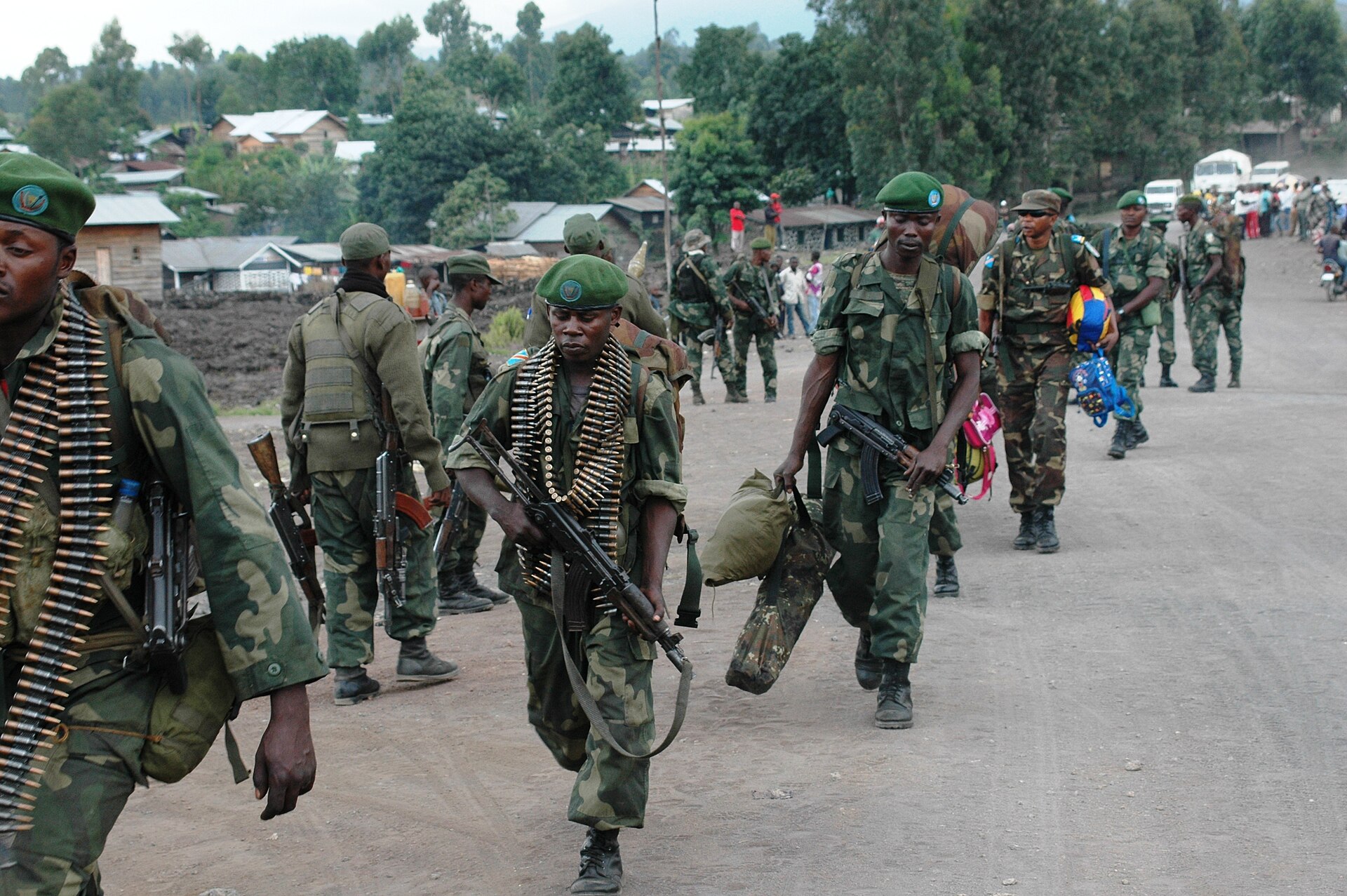
Today, the major conflict exists between DRC forces and the Rwandan-supported M23 rebels operating in eastern DRC. In early 2025, the rebels seized the South Kivu region’s main cities of Goma and Bukavu. Continuing its mission southward, the group announced its full control of Uvira on December 10 ––a strategic region on Lake Tanganyika near the Burundi border— just six days after the signing of the Washington Accords.
Following the advance, the Congolese government reported 400 deaths and the displacement of 200,000 people. Those fleeing have given accounts of “bombed villages, summary killings and widespread sexual violence by both sides” according to global NGO, Doctors Without Borders.
Speaking to the St Andrews Economist, a Goma-based NGO, Congo Peace Network, described how “people living under occupation suffer from extremely difficult economic, security, and humanitarian conditions”. They recounted the M23’s “destruction of the surrounding [refugee] camps”, which housed millions of internally displaced people, and where “some children were born and raised”.
Last week, Lawrence Kanyuka, a spokesperson from the M23 group, announced the group’s intention to pull forces out of Uvira, suggesting that Uvira would be placed “under the full and entire responsibility of the United Nations and the international community.” He suggested that the withdrawal will give peace efforts a chance to succeed.
However, the group had made a similar announcement in December, and DRC authorities refuted the evidence of any such withdrawal.
So, despite the Washington Accords of June and December, the evidence from the DR Congo is of continued conflict, not peace.
The Mining Trade
Since the 1990s, Rwanda has justified its influence on the eastern provinces of the DRC—through either direct occupation or via armed groups such as M23— by referencing serious security concerns.
However, according to the Congo Peace Network, the concerns are a “pretext to cover up economic ambitions”, adding that Rwanda was interested particularly in its lucrative mines and advantageous trade routes. The NGO went on to say that “the Rwandan economy is heavily dependent on minerals looted from the DRC.”
In 2023, the DRC estimated that it loses 1 billion USD to illicit mineral smuggling each year, with analyses of the conflict finding that Rwanda and Uganda are the predominant beneficiaries.
The Peace Network suggested that regional conflict not only increases Rwanda’s ability to acquire minerals, but that “Cross-border trade benefits Rwanda thanks to the insecurity in the DRC. With [DRC’s] national roads impassable, the populations of North and South Kivu travel through Rwanda to get around the region.”
Instability in eastern DRC has become a profitable economic asset for its neighbours — one that rewards continued insecurity. Therefore, any peace that does not address the dynamics of the mining trade is unlikely to last.
Washington’s Peace
The first peace agreement, the Washington Accords for Peace and Prosperity, was signed on June 27, 2025. The deal included agreements on respecting territorial integrity, prohibiting hostile acts, and ending state support to armed groups.
On December 4, in Washington DC, President Trump hosted Rwanda’s President, Paul Kagame, and President Felix Tshisekedi of the DRC, to reaffirm June’s Accords and to sign the Regional Economic Integration Framework (REIF). The REIF emphasised the mining industry’s potential to deliver peace, rather than its current role in sustaining conflict. The framework promotes cross-border trade, infrastructure improvements, and seeks to make the industry more responsible and traceable.
The intention is to make the industry investable for US firms.
As Trump put it, the deal would involve “sending some of our [America’s] biggest and greatest companies” to the region, and that “everybody’s going to make a lot of money”. Specifically, the US aims to gain access to the DRC’s rich tantalum, gold, lithium, cobalt, and copper resources, decreasing its technological manufacturing dependence on China.
Currently, Chinese firms dominate the region’s mining, with most of the 450 companies operating in South Kivu run by Chinese nationals. However, many of these firms violate Congolese mining codes, and there have been widespread reports on the use of child and forced labour.
The NGO explained, “China is not a reliable partner: it protects its interests at the expense of its partners and does not hesitate to resort to corruption or to arming armed groups.” The NGO also cited reports of large numbers of M23’s weapons coming from China. With Chinese mining relying on regional insecurity and bargains with regional power brokers, the arming of proxy groups is an unsurprising corollary.
“The United States has realised that it is losing out by relying on violent intermediaries such as Rwanda, with China making headway through the front door.” Alongside the original REIF, three other bilateral deals were signed, all aiming to bring both states economically closer to the US.
Key criticism from human rights groups and regional security analysts has centred on the omission of the M23 group from talks and its emphasis on securing US mineral interests over wider regional reconciliation and addressing widespread human rights violations.
They concluded that the Accords “represent an opportunity for civil society to advocate for improved governance, particularly in the mining sector”. Whilst warning that “The restoration of peace, stability and justice must be the ultimate goal of all processes. We must prevent the region from sinking into a situation of no return.”
The Accords represent a new model of peace-making, one which sidelines the United Nations and centres the region’s economic potential. Whether it will work within a conflict sustained by insecurity itself remains to be seen.
The views expressed in this article are the author’s own, and may not reflect the opinions of The St Andrews Economist.