
By Helen Street
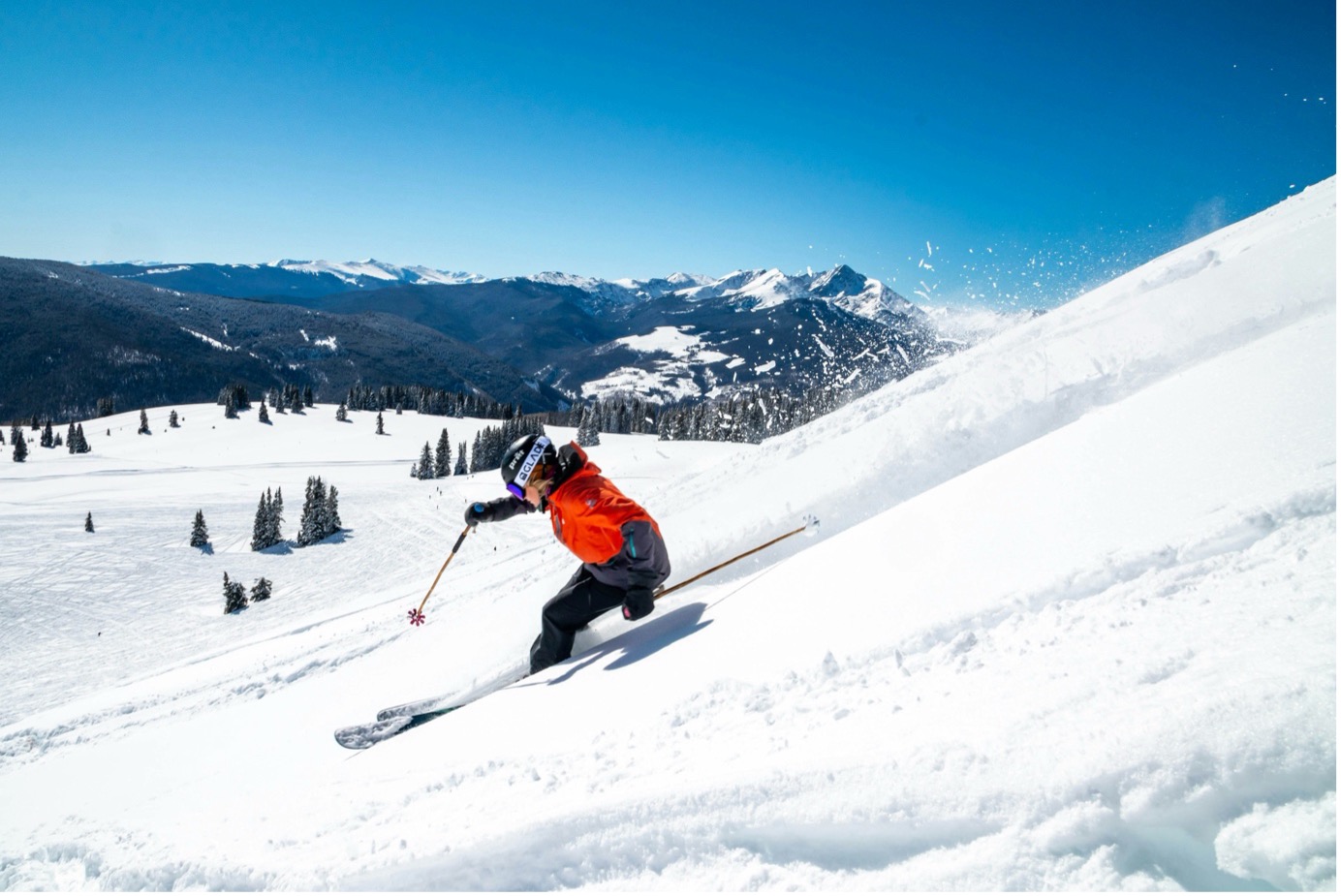
Winter has arrived in Colorado, but the snow hasn’t. Ski resorts are operating on thin coverage and relying heavily on artificial snow, while mountain towns feel the economic strain of shortened and uncertain seasons. What appears at first as a recreational inconvenience is, in fact, an early warning. The snow vanishing from ski slopes is the same snow that normally feeds rivers and reservoirs across the Colorado River Basin. As statewide snowpack reaches historic lows, a weak ski season becomes a visible symptom of a much broader economic and hydrological stress tied to water scarcity in the American West.
Colorado’s Fading Snowpack
Colorado is defined by its snow-capped mountains, yet by mid-January 2026, its most important natural reserve, the snowpack – the accumulated winter snowfall that serves as a natural water reservoir when it melts – has become severely depleted compared to seasonal norms. Statewide snow water equivalent, a measure of how much water is stored in the snowpack, stands at just 62% of its historical median, which is the lowest level ever recorded for this point in the winter season. This figure represents a material shortfall in the state’s primary water storage system, since 80% of Colorado’s annual surface water supply comes from snowmelt runoff.
Forecasts offer little indication of recovery in the short term. Meteorological outlooks point to above-average temperatures, minimal incoming moisture, elevated winds, and heightened fire risk across much of the Colorado Front Range, while 68.47% of the Colorado River Basin is in drought as of 13 January 2026. Warm, windy conditions are particularly damaging at this stage of the season, suppressing accumulation and actively eroding existing snow through melt and sublimation.
Under normal conditions, Colorado’s snowpack builds steadily through the winter and reaches its seasonal peak in early April. Theoretically, there are several more months for conditions to improve, but in practice, the window for recovery is narrowing. Each missed storm reduces the margin of error, while delayed accumulation compresses the runoff season and complicates reservoir operations later in the spring.
Why Snow Doesn’t Mean Water
The deeper problem is not just how much snow falls, but how much of it is ultimately usable as reservoir-stored water. Historically, snowpack has served as a reliable proxy for Colorado’s water supply, where a healthy winter snowpack used to translate into healthy rivers, reservoirs, and water deliveries across the Colorado River system, which supports seven U.S. states and Mexico. That relationship is now breaking down. For example, in 2025, the snowpack was 90% of its historical mean, indicating a normal, healthy level of snow. Despite this, the amount of water stored in Lake Powell, one of the primary storage reservoirs on the Colorado River, ended the season at just 44% of its typical storage, marking a historic low.
Several compounding factors explain this divergence. One of the most significant is soil moisture. Prolonged drought, aridification, and higher temperatures have left soils across the mountains exceptionally dry. When snow begins to melt, a larger share of that water is absorbed into the ground before it can reach rivers and streams, making the land itself a competing reservoir.
Warming temperatures compound these losses. Heat accelerates evaporation from snowpack, vegetation, and surface water, which shrinks the volume of meltwater available for runoff. Earlier melt timing further disrupts the system because when snow melts too quickly, runoff can occur before reservoirs are ready to capture it or before peak agricultural and municipal demand. This leaves water managers with less usable supply.
Climate warming is not acting alone. Dust deposition on snowpack is also a powerful accelerant of melt. Dust darkens the snow surface, lowering its reflectivity, or albedo, and causes it to absorb more solar energy. In high-dust years, studies show snowmelt occurring up to 17 days earlier, which fundamentally reshapes runoff timing across the Upper Colorado River Basin.
The sources of this dust are largely human-driven, including disturbed desert soils, dried lakebeds, overgrazing, and land-use changes associated with Western expansion and modern development. Once deposited, dust shortens the duration of snow cover and concentrates runoff into a narrower window, reducing the system’s ability to store and manage water efficiently.
Additionally, tree loss caused by beetle infestations, wildfire, and other sources of forest degradation alters how snow accumulates and how soil retains moisture. Thinner forest canopies and burned landscapes change wind exposure, snow retention, and infiltration, which further weaken the efficiency with which snow is converted into streamflow.
The result of each of these factors is a system increasingly defined by volatility rather than averages. Even without a dramatic decline in mean snowfall, year-to-year variance has increased, which makes outcomes harder to predict and undermines reliance on historical baselines that still guide most water planning. Conditions in 2026, marked by record-low snowpack, illustrate one extreme of this variability, showing how quickly the system can swing from misleadingly ‘normal’ winters, as in 2025, to unmistakable scarcity.
Who Depends on Snowmelt?
As the link between snowpack and runoff weakens, streamflow forecasts have taken on heightened importance across Colorado’s economy. In agriculture, expected runoff informs which crops can be planted and how water-intensive they can be. Municipal providers use the same forecasts to determine whether excess supplies can be leased back to farmers or must be reserved for urban demand. Recreation and tourism operators, such as white-water rafting companies that rely on the river, adjust their staffing, scheduling, and capital investments in response to projected conditions.
These decisions are mediated through large-scale infrastructure systems designed for a more predictable climate. The Colorado-Big Thompson Project, operated by Northern Water, exemplifies this translation of mountain hydrology into economic supply. Its network of 12 reservoirs and 35 miles of tunnels moves water from the West Slope to farms and cities along the Front Range. In years of volatility, managers must continuously recalibrate how much water can be delivered, to whom, and when. What was once a seasonal allocation process has become a high-frequency optimisation problem, acutely sensitive to forecast error and climatic variability.
The consequences extend well beyond the Colorado state lines. The Colorado River system supports 40 million people, seven U.S. states, Mexico, and 29 federally recognised tribes, including approximately 4 million acres of farmland. Persistent drought since 2000 has quadrupled the risk of critically low water levels at Lake Powell and Lake Mead, the Basin’s two principal storage reservoirs. Declining levels at these reservoirs threaten hydropower production, strain interstate and international delivery commitment, and destabilise regional economies that depend on reliable water and energy supplies.
At the same time, institutional frameworks have struggled to keep pace with the physical change. The operating guidelines governing releases from Lakes Powell and Mead expire in 2026, yet Basin states have repeatedly disagreed on replacement rules. The Colorado River Compact of 1922, which divided the river’s waters among seven states based on overestimated flow projections, effectively promised more water than the river can sustainably provide. This “paper water” refers to allocations on paper that exceed the available supply, creating a structural gap between legal entitlements and physical availability. These allocations did not account for long-term variability, climate change, or increasing demand, leaving downstream states vulnerable to shortages.
With negotiations stalled, largely due to disagreements between upper and lower basin states over water allocation and the difficulty of reconciling legal entitlements with declining flows, hydrological scarcity is exacerbated by uncertain governance. In practice, this means that the Colorado River is increasingly managed through short-term, reactive measures rather than durable long-term agreements. This is an increasingly fragile approach in a system where both supply and predictability of the supply are eroding.
New Demand, Old Water
As snowpack declines and water becomes scarcer, Colorado’s Front Range is rapidly emerging as a hub for AI-driven data centre expansion, creating new pressures on the strained system. The Front Range, which is the densely populated region along the eastern slopes of the Rocky Mountains, encompassing cities like Denver and Colorado Springs, is experiencing unprecedented growth in data centre development. While the state currently hosts 28 companies operating 50 data centres, most are relatively small, drawing less than 20 megawatts of power. New hyperscale facilities, however, represent a dramatic jump in both energy and water consumption. An Aurora data centre is planned as a 160-megawatt hyperscale facility, capable of consuming as much electricity as 176,000 homes, while a northern Denver data centre could use up to 805,000 gallons of water per day for cooling alone, roughly equivalent to the average daily indoor water use of 16,100 local residents.
These facilities illustrate a fundamental tension between Colorado’s water and climate goals. Water-intensive cooling, such as liquid systems, reduces energy use but draws heavily on scarce water supplies. Air-cooled systems, on the other hand, save water but demand more electricity. Meeting the pressures of expanding data demand risks delaying the planned retirement of coal-fired power plants, or increasing reliance on other carbon-emitting energy sources, which undermines the state’s 2050 net-zero emissions goal.
Despite these challenges, data centres could also play a role in advancing clean energy. They have the potential to shift power consumption to nighttime hours, making use of excess wind energy, or invest in geothermal and other renewable sources. Despite this potential, water resources are under stress from declining snowpack and prolonged drought, and the Colorado Water Plan predicts that demand for municipal and industrial water will outpace supply by 2050.
As Colorado continues to attract AI-driven infrastructure and accompanying population growth, the state faces a critical balancing act: supporting high-tech growth without overtaxing water resources or hindering climate progress. The decisions made now will determine whether data centres become a tool for sustainability or a stressor on systems already stretched thin.
Concluding thoughts
Colorado’s water challenges reflect a deeper structural shift, where traditional assumptions about supply and timing no longer hold. Snowfall alone can no longer guarantee adequate runoff, and competing demands from agriculture and industry amplify the pressure on rivers and reservoirs, which are already stressed by prolonged drought. Colorado’s experience is not unique. It illustrates wider water scarcity issues across the western United States, where over-allocated rivers, aging infrastructure, and increasing climate variability are forcing states to reconsider how they manage limited water resources. Similar trends are being observed globally, such as in Switzerland and the Alps, where declining snowpack threatens hydropower production, agricultural irrigation, and freshwater availability.
Addressing this requires more than monitoring and forecasts. Institutions, infrastructure, and policy must adapt to manage uncertainty, integrate variability into planning, and allocate water across sectors with flexibility and foresight. Without these adjustments, the state and the broader region risk chronic mismatches between available water and economic, ecological, and social needs.
The views expressed in this article are the author’s own and may not reflect the opinions of The St Andrews Economist.
Image: Unsplash