
By Roxanne Wright
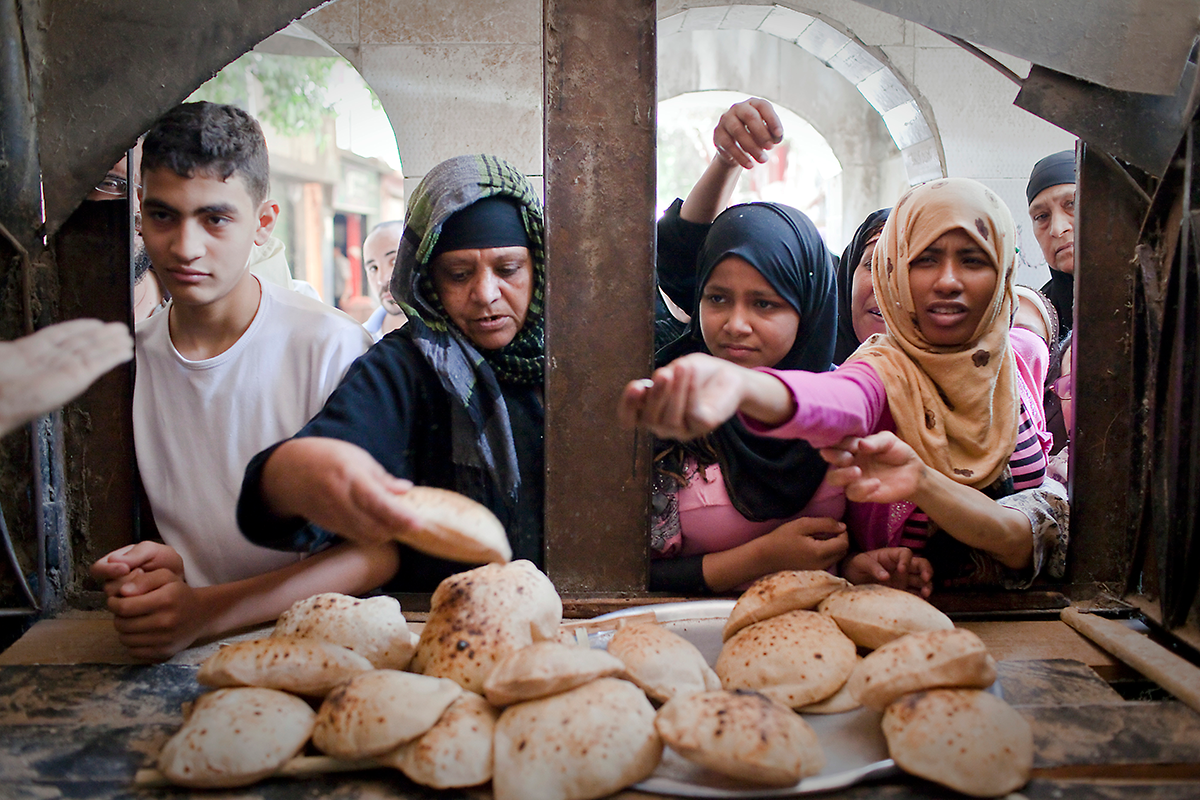
For millions of Egyptians, the choice to stay or leave has never been harder. Soaring prices, regional conflicts, and a weakening economy have transformed Egypt’s migration landscape, pushing more people out while pulling countless others in. What’s emerging is a complex story of survival, resilience, and difficult choices.
Egypt is weathering multiple crises at once. The COVID-19 pandemic devastated jobs and incomes, then Russia’s invasion of Ukraine sent food and energy prices skyrocketing. Inflation has climbed relentlessly while the Egyptian pound has plummeted, leaving families struggling to afford basics. Meanwhile, the war in Gaza and attacks on Red Sea shipping have slashed revenues from the Suez Canal—one of Egypt’s vital foreign currency lifelines. The numbers tell a stark story. By 2023, 2.5 percent of working-age Egyptians were living abroad, up from 2.1 percent in 2018. More telling still: far fewer are coming back. Those who leave are increasingly choosing to stay away, a clear signal that opportunities at home have dimmed.
The profile of Egyptian migrants has shifted dramatically in recent years. Whereas earlier waves often included a larger share of skilled workers seeking better opportunities, migration is increasingly used as a coping strategy in response to Egypt’s prolonged economic crisis, high youth unemployment, and declining living standards. For many households, international migration and remittances now function as a form of social insurance rather than a route for professional advancement. Saudi Arabia remains the favoured destination for Egyptian labour migrants, but the country’s expatriate workforce is widely dispersed across the region. Saudi Arabia, Libya, Jordan, Kuwait and, more recently, Lebanon collectively host the vast majority of Egyptian temporary migrant labourers, especially in low-wage sectors such as construction, agriculture, hospitality, and services.
Migration to Libya has also played a crucial role, not only as a labour market in its own right but as a key hub for irregular migration to Europe, facilitated by porous borders, weak state control, and the presence of well-established smuggling networks. These patterns underline how economic hardship and limited prospects at home are pushing more Egyptians into precarious, low-paid, and even dangerous migration networks. For families left behind, remittances have become essential, propping up countless households through the ongoing crisis. Although official remittance figures have dipped due to currency restrictions, more Egyptian families are receiving money from relatives abroad to cover rent, food, and school fees.
Egypt’s migration story has two sides. While Egyptians are leaving in increasing numbers, the country also hosts around 9 million migrants and refugees from Sudan, South Sudan, Ethiopia, Eritrea, Syria, and beyond. Crucially, Egypt is not only a destination but a major transit corridor, with many migrants using the country as a temporary stop on their journey toward Europe or the Gulf. In this way, Egypt functions simultaneously as a place of departure, arrival, and transit—a crossroads shaped by regional instability and shifting migration routes.
Egypt’s internal political landscape since 2011 has been marked by sustained instability and a steady erosion of civil liberties. The optimism of the Arab Spring and the mass mobilisations in Tahrir Square gave way first to the brief, turbulent presidency of the Muslim Brotherhood’s Mohamed Morsi, and then to the 2013 military coup that brought Abdel Fattah el‑Sisi to power. Under Sisi’s administration, Egypt has experienced one of the harshest crackdowns on dissent in its modern history: thousands of political prisoners, restrictions on civil society organisations, tight control over the press, and the criminalisation of peaceful protest. This environment raises critical questions about the reliability and morality of partnerships that funnel European funding into Egypt’s security apparatus, especially when the same institutions are implicated in widespread human rights abuses.
These political dynamics have only intensified in recent years. The state continues to crackdown on criticism, civil-society organisations, and protests by way of mass arrests, enforced disappearances, torture, and death sentences prescribed by kangaroo courts. At the same time, Egypt’s economic crisis has worsened pressures that push people to migrate, while the government uses its image as a regional “stabiliser” to secure additional Western support. When European migration-deals are made in this context, they risk entanglement with a system that prioritises political control over respect for human rights. Understanding this environment is essential, with any cooperation on migration impossible to separate from the broader reality of authoritarian governance and Egypt today.
The question remains: can migration be managed humanely while addressing root causes?
The country’s evolving migration patterns reveal a nation adapting under extraordinary pressure. Economic turmoil, regional conflicts, and shifting international politics are all reshaping who moves, where they go, and why. For policymakers, the challenge is clear: effective solutions must protect migrants, support struggling families, and address the deeper instability driving people from their homes. At the same time, partner states must commit to addressing human rights issues in Egypt and insure Cairo be held to account for historic ongoing abuses. Understanding these forces is essential for Egypt’s future stability and the well-being of millions caught in the middle.
The views expressed in this article are the author’s own, and may not reflect the opinions of The St Andrews Economist.
Image credit: Bloomberg/Getty Images