
By Lizzi Williamson
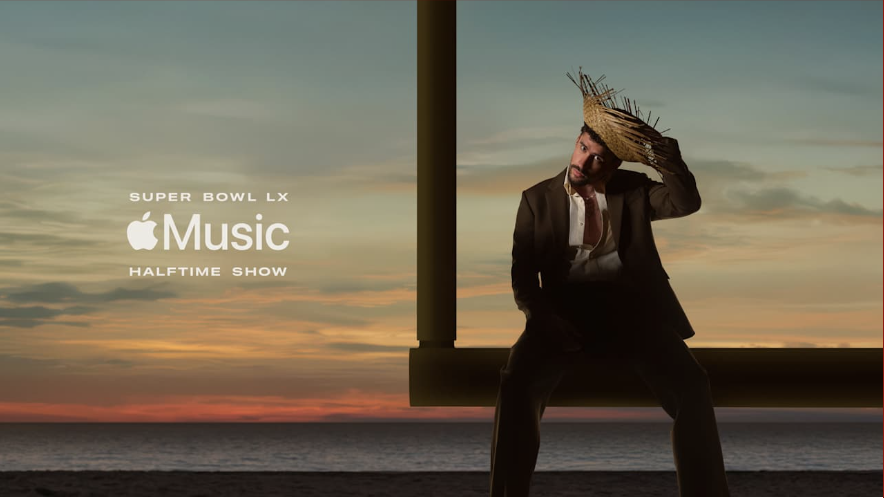
The announcement that Bad Bunny would headline the Super Bowl performance in February 2026 marks a cultural milestone for many, with a Puerto Rican artist taking centre stage at the most televised event in the U.S. However, the announcement has also sparked controversy, specifically from right-wing political figures such as Donald Trump, who labelled it as “absolutely ridiculous and crazy.”
Context
Beyond being a global music sensation, Benito has become a fixture in American entertainment as of late, having appeared in both ‘Happy Gilmore 2’ and multiple episodes of ‘Saturday Night Live’ this year. For many, this announcement was not so surprising, given his global popularity. However, despite also being the most-streamed artist in the world for three years in a row, the main discourse surrounding the announcement has focused on whether he is the right choice for the sports game, which is so closely tied to national culture.
Political Backlash
Prominent conservative voices have criticised Benito performing, arguing that only Americans should perform at an American event and that, because he sings only in Spanish no one will be able to understand him. These criticisms are easily refuted by the fact that multiple non-American artists have headlined the Super Bowl in previous years, including Rihanna, Shakira, and Coldplay, and by the fact that more than 41 million people in the United States alone speak Spanish, making it the second-most spoken language in the country.
Whilst some may see this controversy as insignificant, it exposes a broader and long-standing issue: many people in the United States still do not regard Latin Americans as their equals, despite Puerto Rico being a US territory. This sentiment was made extremely clear in a podcast by right-wing commentator Tomi Lahren, who argued that Benito is not a “great American artist” simply because he is from Puerto Rico.
Beyond being ignorant, this rhetoric reinforces a historic pattern of portraying Puerto Ricans as less than. Politically, this is evident in the fact that Puerto Ricans are deprived of full American rights, such as voting in general elections, and federal decisions that affect them are made without any local input. A clear example of this can be seen in recent years in the treatment of the islanders during and after Hurricane Maria in 2017. Residents were often portrayed as a burden and a foreign entity in public statements by the U.S. government at the time, whilst critical aid was delayed or withheld entirely which exacerbated the crisis.
To better recognise this systemic marginalisation, it is important to understand Puerto Rico’s unique political status. Puerto Rico is an unincorporated territory rather than a state of the United States; a status ceded to the U.S. by Spain following the Spanish-American War in 1898. This means that, whilst Puerto Ricans are U.S. citizens, they remain subject to federal control without full authority over their own affairs. Decisions made without their input have contributed to economic instability and heightened vulnerability during crises such as Hurricane Maria. This lack of autonomy and continual neglect reinforces this sense of ostracisation, which has left many Puerto Ricans feeling like second-class citizens within their own country.
Benito himself is one of many who criticised the U.S. government’s negligent response, which is especially clear in his song ‘Una Velita’ (a little candle.) The lyrics, “Fueron cinco mil que dejaron morir” (there were 5000 who were left to die) and “Con el gobierno no me envíen na/ Que esos cabrones lo van a esconder” (don’t send me anything through the government/ those bastards will hide it) both outwardly indict the failed leadership during this crisis. Therefore, by choosing Bad Bunny as the headliner for the Super Bowl, it symbolises, in a way, the beginning of undoing decades of Puerto Rican marginalisation and ‘othering’, by placing Puerto Rican identity at the centre of the most-watched televised event in the United States.
Support
Many artists have come to his defence in light of the controversy, with Jennifer Lopez defending him, stating that “his music transcends language,” and emphasising that his performance alone gives a crucial voice to cultural and linguistic diversity in the United States, especially to Latinos who make up over 20% of the population. In a statement made through the NFL, Benito himself said:
“What I’m feeling goes beyond myself. … It’s for those who came before me and ran countless yards so I could come in and score a touchdown. … This is for my people, my culture and our history. Ve y dile a tu abuela, que seremos el HALFTIME SHOW DEL SUPER BOWL.” (Go tell your granny that we’re going to be the SUPER BOWL’S HALFTIME SHOW.)
His words highlight that this performance goes beyond entertainment, serving as a statement of cultural pride and connecting his Puerto Rican identity to the wider American experience.
Even Charlotte Jones, co-owner of the Dallas Cowboys Cheerleaders, who has previously aligned herself with republican views, has come to Benito’s defence, stating:
“I think our Latina fanbase is amazing, and I think when you think about the Super Bowl, you want the No. 1 performer in the world to be there. Our whole society is based on immigrants that have come here and have founded our country, and I think we can celebrate that.”
Her comments go to show that this controversy is not simply a right-wing versus left-wing debate. Instead, it raises more profound questions about cultural belonging and what it truly means to be American.
Politics behind it all
Bad Bunny has been very vocal about U.S. immigration policies. He notably scheduled no shows on his recent tour in the U.S. out of fear that ICE would arrest his fans, and has been outspoken in his criticism of anti-immigration. His Super Bowl appearance, therefore, inherently will be political, especially given that many of his songs are. This shows the cultural significance and impact he will have on the country’s most popular sport.
Politics, however, are not a new addition to the show; if we refer to U2’s beloved halftime show, which featured a tribute to 9/11. This example counters criticism that the show should remain neutral and that the NFL is becoming “too woke,” as Mike Johnson did, strongly suggesting this was “a terrible choice,” and that he should be replaced by a better role model like Lee Greenwood.This reveals a clear double standard: politics is acceptable in the media only when it aligns with the majority’s beliefs.
The NFL commissioner, Roger Goodell, made it clear that there will be no reconsideration of the decision at a conference, stating:
“We’re confident it’s going to be a great show,” Goodell said. “He understands the platform that he’s on, and I think it’s going to be exciting and a united moment.”
Therefore, whether critics like it or not, Bad Bunny will take the stage in February. Ultimately, the backlash surrounding his selection is fundamentally rooted in anti-Latino sentiment and cultural gatekeeping rather than what those in opposition to the selection are cloaking as preserving American identity. His performance challenges these narrow definitions of what it means to be American and offers Latino communities in the United States a moment of pride, visibility, and cultural power, promising a memorable night for all.
The views expressed in this article are the author’s own, and may not reflect the opinions of The St Andrews Economist
Image credits: Apple Music