
By Ella Williams
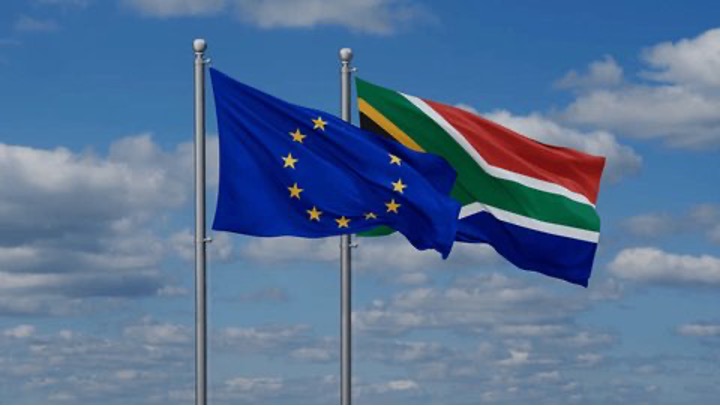
On the 9th October 2025, during the Global Gateway Forum in Brussels, a €11.6 billion EU investment package for South Africa, as part of a new green initiative by Team Europe, was announced by Ursula von der Leyen, President of the European Commission. The investment hopes to aid South Africa in a “Just Energy Transition” with other projects focusing on sustainable and connectivity infrastructure, and pharmaceutical value chains, namely, the regulated process from drug discovery to patient delivery. South African President Cyril Ramaphosa, following the announcement, addressed his hopes for the initiative. Ramaphosa stated that he hopes prioritising “the clean energy transition, skills and technology, connectivity and developing strategic industries” will not only initiate the transfer of water and energy into a sustainable realm but also create more jobs and opportunities within the sector. The expansion of clean water access and waste management is also on the agenda for this new investment.
As far as sustainability is concerned, South Africa has been making movements towards a greener future and sustainable economy for the better part of the last 15 years. South Africa’s partnership with Nationally Determined Contributions (NDC), the national climate action plans submitted under the Paris Agreement, first in 2016 and then updated in 2021, set out a measurable plan for the nation to reduce its greenhouse gas emissions. Its goals were set for 2025 and 2030; however, they seemed to fall short on one major factor needed to achieve these goals – funding. The numbers put forward by the NDC Partnership website are bleak, especially for a country still considered to be developing, with projected numbers at $241 billion USD and $64 billion USD required for total adaptation and mitigation for climate change, respectively.
Barriers to Success
Energy production and supply have long been a difficulty in South Africa. Loadshedding, the term for scheduled power cuts, has been an issue for the nation since the early 2000s and stemmed from issues with infrastructure, including poorly maintained power stations, operational failure and the coal supply. The unresolved question is whether this new green initiative investment will aid or aggravate the energy and loadshedding problem in South Africa. While the execution of the energy transition might put pressure on the power supply, some believe concerns surrounding supply have been temporarily put to rest. According to a BBC article published earlier last year, there is a trend of reduced energy consumption in South Africa. The two leading factors were named as increasing energy bills and the spread of alternative energy sources. As a result, there has been limited to no loadshedding nationwide for the last five months. However, another possibility for this decrease in electricity consumption is the fact that South Africans are tiring of the lack of a dependable power supply and have turned to rely on solar panels and generators to power their homes and businesses.
Further contention lies with the fact that the South African government has been heavily infected with corruption over the course of the last 30 years. Corruption has been dominated by the phenomenon known as state capture, a systemic form of corruption that involves the undermining of government institutions for the benefit and profit of private parties. Key examples of this are President Jacob Zuma (2009-2018), who has 16 corruption charges of embezzlement and fraud against him, and the Gupta Family, who are charged with fraud and money laundering in addition to operating a shadow government[1]. While the Ramaphosa administration has been focusing on rebuilding South Africa politically, the deeply entrenched nature of corruption does not instil confidence in the proper management of this investment. The issue is not whether the investment is sufficient, nor if it will achieve its aim, but instead, whether the €11.6 billion will be fully invested into projects promised by the EU or if it will make it into the pockets of others.
Fossil Fuels and Energy Consumption
Examining the 2024 annual data on fossil fuel consumption, South Africa ranks around the middle globally, consuming 1,000 to 2,000 TWh. Nations such as China and the USA were noticeably the largest consumers of fossil fuels in 2024, whereas nations such as Norway and Ecuador are on the lower end. It is worth noting that this statistic has not been adjusted for population size.

Figure 1. Fossil Fuel Consumption (TWh) Source: Our World in Data
If we instead look at fossil fuel consumption per capita, South Africa’s standing globally shoots up to 6th (7th if you include the European Union as an entity). At an average of 20,184 kWh per person, the South African population is almost on par with Britain’s population (20,390 kWh per person), a much more developed and economically established nation, comparatively. The nature of the respective countries’ economies is a driving factor when considering this point. While the UK is more developed, its economy is dominated by the services industry, which is less energy-intensive than the mining and energy sectors, dominant in South Africa. The other factor, of course, is that South Africa’s energy production is dominated by coal, while the UK has largely transitioned towards natural gas and renewable energy generation.

Figure 2. Fossil Fuel consumption per capita (2024). Source: Our World in Data
Over the last few decades, as the urgency to use renewable energy sources has grown, governments and global organisations have started to push for increased renewable energy production capabilities. An expensive endeavour, many underdeveloped nations do not have the resources to extend their capabilities toward renewables. Nations historically achieve economic growth by leveraging fossil fuels to develop their economy and infrastructure. This creates a cycle where a developed economy is then required to provide the resources needed to support then energy transition in underdeveloped nations. The graph below is evidence of this, specifically through the consumption of coal, which is historically industrial and considered the worst fossil fuel due to its high emissions and environmental impact.
Economic Growth and Development

Figure 3. Share of primary energy consumption from coal (2024). Source: Our World in Data
South Africa’s dependency on coal is largely due to its abundance and relatively low cost. A lack of investment and basic maintenance of crumbling infrastructure has contributed to South Africa’s stunted economic growth, on average below 1% per annum since the mid-2000s. This is well below the global Emerging Market & Developing Economies average of 4%, and the region Sub-Saharan Africa average of approximately 3%. Therefore, a solution must now be found that can deliver both economic growth and a more sustainable option for the future. If economic growth is not considered, then the institutions and infrastructure put in place for sustainable energy will also be neglected. Arguably, a shift away from coal to natural gas as a step toward renewable energy is needed. This shift will not only reduce carbon emissions by 50-60% but also have a greater effect, at a lower cost, and will stimulate economic growth and promote the development of other new infrastructure in South Africa. Successfully shifting between different types of fossil fuels will have a greater influence on the nation’s economy and sustainability than a poorly executed shift to renewable energy sources like green hydrogen that are yet to be proven at scale.
In conclusion
It is difficult to justify mandating green energy as a condition for economic growth in developing nations or, indeed, placing the responsibility for funding a green energy transition in these nations entirely on the back of taxpayers in developed nations, many of whom are facing cost-of-living crises. However, if managed and invested correctly, the €11.6 billion may be the first domino of many, setting in motion South Africa’s economic and sustainable growth. It is important that South Africa’s future, development, and security are not jeopardised by a blind and uncompromising crusade for renewable energy.
The views expressed in this article are the author’s own and may not reflect the opinions of The St Andrews Economist.
Image Rights: Shutterstock
[1] An opposition grouping in a parliamentary system that mimics the structure of the actual government, in particular its cabinet. Based on the notion that real and actual political power resides not only with publicly elected representatives but with private individuals who are exercising power behind the scenes, beyond the scrutiny of democratic institutions.