
By Inès Fabre
There is the France of croissants—roll that r—of marinière shirts, sun-drenched terraces, and then there is the France of packed metros, unpredictable strikes, and last-minute grocery runs at Carrefour at 9 p.m. There is the Sorbonne of Saint-Germain, and the crowded lecture halls of Clignancourt. Between Emily in Paris and Instagram’s Parisian girl aesthetic, reality has evaporated, replaced by a uniform, golden fantasy where every moment is painstakingly staged, choreographed, calibrated, and filtered.
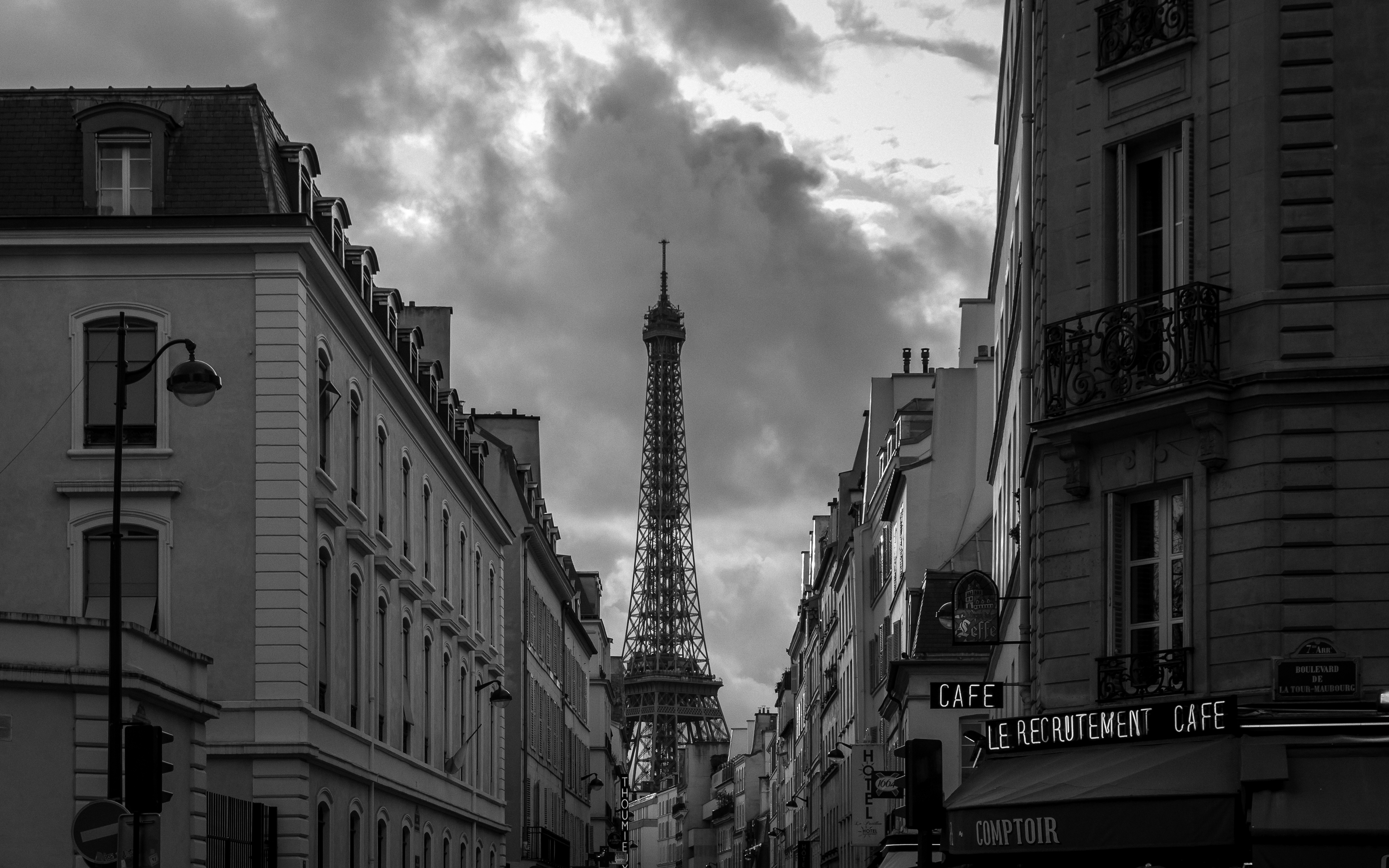
In recent years, France has become less a country than a global brand, an imaginary world of effortless elegance, minimalism, and charm. That brand has real economic weight: France’s “fantasy” now fuels industries from tourism to luxury, exporting not just style but a lifestyle that sustains a multi-billion-euro market. On TikTok, we sip wine in Montmartre to the sound of Chet Baker; on Instagram, we savor French Cuisine with its aromas of red wine and aged Comté; on Netflix, the Eiffel Tower glows amber and gold as the sun sets. The Parisian woman, with her je ne sais quoi, peachy complexion, and rosy lips, embodies this codified aesthetic: Camille Rowe, Jeanne Damas, Jane Birkin, and BB—almost poetic, almost unreal.
And modern digital culture, with its filters, stories, trends, and soundtracks, transforms this subtle poésie into a globalized aesthetic.
Behind these golden clichés lies a complex, overworked society, often at odds with the myth it exports. The French were aware of the myth, though they never truly grasped its scope—until they got caught up in it themselves. Between myth and reality, the question remains: How long can France survive its own legend, as reality gnaws at its golden edges?
France is not just Paris—attention! The South also has its moment on social media. With its golden sun, its Provençal countryside where lavender sways, markets fragrant with garlic, herbs, and citrus, the song of cicadas, and every village frozen in an Impressionist Monet painting. Social media has turned it into a dream landscape, idyllic and motionless, always ready to be photographed. This imagery has direct economic consequences: Provence’s tourism revenue, for instance, now depends as much on Instagram appeal as on heritage. Take Jacquemus’s 2019 anniversary show in Valensole, for instance—a moment that turned the iconic lavender fields into a viral sensation overnight. Already picturesque, these landscapes became the ultimate Instagram backdrop, drawing crowds of tourists and influencers alike. The result? A region no longer just selling lavender and wine, but curating a dream—one that thrives online, where every snapshot fuels economic growth.
Yet, this digital allure is a double-edged sword. When a Marseille photographer shared stunning images of the Huveaune River’s turquoise pools in 2019, the picturesque spot was flooded with visitors the very next day. “It was a rush,” recalled a local official, underscoring how viral fame can overwhelm even the most idyllic destinations. Provence has embraced this shift, but it’s a delicate balance: its prosperity now hinges on its ability to captivate—through both heritage and hashtags—while navigating the challenges of sudden, algorithm-driven.
Thus, Emily isn’t just in Paris: she glides through Provence, carves the slopes of Megève, and lingers under the Saint-Tropez sun! But Emily doesn’t go to Maubeuge or Béziers …
Indeed, behind this narrow, postcard-perfect image of France (Provence, Paris), reality is more complex. France faces social inequality, soaring inflation, and political tensions. Protests against pension reforms and repeated strikes contrast sharply with the image of a country of slow living. Recently, France’s simmering discontent erupted into a fragmented yet potent wave of protests. Under the rallying cry “Bloquons tout” (“Let’s block everything”), a movement born on social media and fueled by far-left group La France Insoumise (LFI), tens of thousands took to the streets on September 10, 2025. The demonstrations—spontaneous, decentralized, and driven by local grievances—united disparate groups in a single demand: the resignation of President Emmanuel Macron. The protests laid bare the country’s deep divisions, as anger over soaring living costs, economic inequality, and political alienation converged into a day of defiance. The mobilization underscored a growing rejection of Macron’s leadership, marking a shift from traditional union-led strikes to a more volatile, grassroots resistance.
Then, how does France still manage to perpetuate its myth abroad while unraveling from within? From Monet’s les nymphéas to Brigitte Bardot in Et Dieu… créa la femme, France has always known how to stage itself like no other. Who really shaped this myth? The French, by projecting a strategic image of their country, or foreigners, by seizing this aesthetic and turning it into a universal dream?
The answer may lie in the history of cinema, a mirror in which the nation reflects and reinvents itself. As historian Jean-Michel Frodon notes, “No nation without cinema, no cinema without nation.” Both share the same mechanism: projection. After the failure of its revolutionary and imperial utopias, France found in film a new tool to export its ideals. In the early 20th century, it dominated the global film industry before fading into the shadow of Hollywood. Yet in the 1950s, the Nouvelle Vague restored France’s brilliance. Godard, Truffaut, Varda, and others turned Paris into a carefree playground, where Jean-Paul Belmondo smoked Gauloises while delivering sharp one-liners, and Brigitte Bardot embodied a liberated femininity that fascinated puritanical America—and a certain Elvis, who dreamed of meeting her. These films, made with modest means but bold audacity, captured the spirit of a generation and exported an image of France as young, free, and sensual. And yet, the French themselves seem less convinced by this myth than foreigners, who see it as the expression of an “eternal France”—one of art, critical thought, love, and Paris.
This paradox continues in contemporary cinema. Amélie Poulain (2001) turns Montmartre into a postcard village, while Audrey Tautou, with her rosy cheeks and mischievous smile, embodies a modern fairy-tale heroine. These internationally acclaimed films show that the world loves France when it presents itself with nostalgia and irony. But it is abroad that this myth takes on a new dimension. Woody Allen’s Midnight in Paris turns the capital into a time machine where Hemingway and Dalí mingle with lost Americans. Emily in Paris, despite its excesses, exports the idea of a glamorous Parisian life, while celebrities like Kendall Jenner and Jacob Elordi embrace the “so French” style of Jane Birkin and Jean-Paul Belmondo. As if foreigners, inspired by France, reflect back an image France didn’t fully realize it was projecting.
However, this idealization has been skillfully monetized by the French economy ; it has been turned into a vast economic asset. The global appetite for “Frenchness” sustains billion-euro luxury empires such as Chanel, Dior, and Hermès, which sell not just goods but the illusion of timeless elegance. LVMH, the world’s largest luxury conglomerate, now embodies this transformation of cultural capital into financial power. “Effortless chic” has become a marketing argument: Guerlain’s La Petite Robe Noire, Veja sneakers, and the minimalist apartments featured in Vogue France sell the idea of accessible, timeless luxury. Houses like Chanel and Dior leverage craftsmanship and heritage to justify their prices, while chefs like Cédric Grolet turn pastry into art—and spectacle—behind a display window. In this sense, aesthetics and economics are inseparable: every image of France, from a croissant to a couture gown, circulates as both cultural expression and commodity. Today, social media amplifies this phenomenon. Instagram and TikTok are flooded with golden clichés: lavender fields in Provence, wine glasses in Montmartre, the Eiffel Tower at sunset. “French Film” filters and musical trends like Le Festin (Ratatouille) or Videoclub’s Amour Plastique create a performative aesthetic where France becomes a dream setting.
Yet the French, initially amused by this fascination, eventually play along. Influencers like Jeanne Damas and Camille Rowe embody the eternal Parisian, while accounts like @Frenchwords (602K followers) explain French expressions… in English. But when the “I don’t wanna be French” trend emerged on TikTok, the French responded with biting irony before shifting into unexpected patriotism. “At least we have the Carte Vitale,” “In France, we have healthcare,” “You wanna come at our food?”—replies flood in, blending self-deprecation and pride. Even then-Prime Minister Gabriel Attal joined in, posting a video titled “I wanna be French” set to Lady Gaga’s Bad Romance. By turning mockery into homage, he perfectly illustrated French soft power: the ability to flip stereotypes into strengths. That soft power is not only cultural but financial: every viral moment reinforces “Brand France,” boosting exports, tourism, and global demand for anything labeled Parisian.
This interplay of identity between creation and reappropriation, myth and reality even shapes domestic consumption: the rise of “made in France” products, neo-bistros, and nostalgic marketing reflects an internal market built on reappropriating the national myth. And yet, it is precisely this gap that fuels the myth. The French, caught between irony and a visceral attachment to their country, ultimately embody this paradox: they critique their own legend but defend it passionately when challenged.
In the end, France remains a country that looks at itself in the mirror held up by the world—and, despite everything, recognizes itself in it. Perhaps that is the ultimate paradox: France endures not only by telling its own story, but by selling it abroad even as it fiercely critiques its domestic politics. Could this, after all, be the essence of that je ne sais quoi?
The views expressed in this article are the author’s own, and may not reflect the opinions of The St Andrews Economist.
Image via Wikimedia Commons
