
By Gitika Sanjay
The 1990s were a watershed decade in the progression of queer rights. The first lesbian kiss on British television aired on the soap opera Brookside, just twenty-seven years after the legalisation of homosexuality in the UK. Australia passed a human rights act that legalized gay sex, ending a centuries-long legacy of sodomy law. The World Health organisation declassified same-sex attraction as a mental illness. Amongst this landmark change, media coverage stretched past politics to the economics of LGBTQ+ rights, as companies quickly realised that the “pink dollar” represented a new, lucrative market.
Although coined to describe the Western queer market, the pink economy has found substantial footing across Asia, especially in countries where same-sex couples still face significant discrimination. Take China: in 2016, state-run newspaper China Daily published an article titled “‘Pink Economy’ set to soar as companies target LGBT community,” claiming that the 70 million LGBTQ+ people in the country represented over £300 billion per year of revenue. According to Chinese LGBTQ+ organisation danlan.org, queer consumers in China have, on average, three times the purchasing power of their heterosexual counterparts. Faced with the expanding queer market, Chinese companies have participated in targeted advertising; in 2020, a viral advertisement from the e-commerce organisation Alibaba flooded social media. The advertisement, which showed a man bringing his male partner home to celebrate the Lunar New Year, was praised for its inclusivity and sparked a range of positive reactions across the country.
Although homosexuality has been legal in China since 1997, same-sex marriage is still prohibited, and no anti-discrimination laws exist to protect queer individuals. From 1978 to 2001, homosexuality was considered a mental illness under the Chinese Classification of Mental Disorders, instilling a deep-set societal stigma around queer identity. Still, the LGBTQ+ population in China is significant: according to a 2019 survey from LGBT Capital, LGBTQ+ individuals within mainland China encompass a total purchasing power of approximately £500 billion pounds. In 2020, reports from Daxue Consulting found that China has the largest LGBTQ+ economy in the world; yet, it is largely untapped due to the lack of visibility for queer individuals within the country.
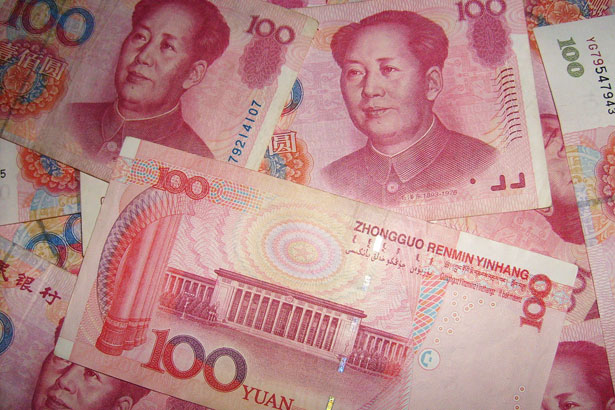
Over the last decade, businesses have begun to exploit the potential market, employing strategic marketing and advertising strategies to target the queer Chinese community. The shift towards the pink yuan began in e-commerce: in 2015, Taobao partnered with a range of LGBTQ+ organisations, including PFLAG China, to offer contest winners a wedding and honeymoon retreat in Los Angeles. More recently, tech companies have been racing to carve out a niche in the social-media market, especially with dating apps. Currently, Hong Kong-based Newborn Town is heading the charge with its gay dating app Blued. Speaking to The Wall Street Journal, Chief Executive Officer Li Ping spoke about overseas expansion, aiming to “build up a profile in Southeast Asia, Japan, and South Korea” after experiencing significant success in the Chinese queer market.
China is not the only country experiencing a rapidly expanding pink economy: across Asia, queer communities are a growing target for advertisement and corporate engagement. In Japan, an increasing recognition of LGBTQ+ economies and anti-discrimination laws have progressed simultaneously. Although historically fluid in attitudes towards sexuality, the nineteenth-century saw an increasing Westernization of Japan which brought with it Anglo-Christian prejudices about homosexuality. Although the social attitude towards queer individuals in Japan has slowly advanced, the legal rights afforded to queer individuals are limited, and same-sex marriage is still not nationally recognised. However, Japan is also facing a quickly rising demographic crisis: declining birth rates and increasing emigration have caused a critical labour shortage, and companies have rapidly modernised their attitudes towards diversity, desperate to survive. In May 2017, the Japanese Business Federation, or Keidanren (経済団体連合会), instilled inclusive guidelines for LGBTQ+ employees, including the recognition of same-sex partnerships for spousal benefits. Several influential companies, including NEC Corp and Sompo Holdings Inc., have adopted these policies.
The most visible impact of the Japanese pink economy, however, is not in an office – it’s in a bookstore. Over the last decade, Japan has experienced a thriving boys’ love (BL) media genre, with series such as Cherry Magic (30歳まで童貞だと魔法使いになれるらしい) and I Cannot Reach You (君には届かない) reaching fans across the country. While ultimately constituting a relatively small proportion of Japanese media revenue, such series have been instrumental in spreading awareness of LGBTQ+ identity to the wider Japanese public. In similar fashion to the push for workplace diversity, the growing BL genre has subconsciously influenced social attitudes towards inclusion, offering visibility to a long-marginalised community.
However, visibility comes with a cost. Corporate solidarity is important, especially in increasing opportunity and recognition for minority groups, but the mechanisms of the pink economy have often hinged on tokenism, fostering stereotypes and a general exploitation of queer identity. It solely targets the affluent sectors of the LGBTQ+ community, prioritising purchasing power over genuine inclusion; queerness is reshaped as a lifestyle choice instead of a fundamental reality. Furthermore, advertisements and popular media are often, albeit progressive, heteronormative, applying a standard male-female binary to queer identity. A common example of this is in BL manga and anime, where same-sex relationships are often categorised in heterosexual dynamics, leaving little room for non-conformist queerness. The monetary value placed on queer identity dehumanises the struggles of LGBTQ+ individuals, often further enforcing socioeconomic structures of wealth and heteronormativity in an attempt at inclusion.
The pink economy is still undoubtedly important – and beyond important, undoubtedly significant. Despite the symptomatic stereotyping that occurs in relation to this process, the pink economy has definite benefits. The overall increased awareness of queerness throughout Asia has progressed queer rights on a local and national level: Japan, for instance, has experienced a consistent push for same-sex marriage rights, with several provinces choosing to adopt equal marriage law. Anti-discrimination policy has also become mainstream, a necessary component of company strategy: while corporate motivations may be economically driven, the outcome is still positive. The effects are also far from complete: the pink economy – whether the pink yuan, yen, rupee, baht, or won – is still growing, signposting a new era for LGBTQ+ communities across Asia.
As countries across Asia experience varying steps in the progression of queer rights, the pink economy continues to play an important role both in media and in law. Yet, the impact is questionable: it is difficult to discern whether the rise of pink economies suggests genuine progress in inclusion or an increasing commodification of identity for profit. Whilst LGBTQ+ focused advertisement has led to concrete improvements, such as anti-discriminatory workplace regulations and spousal recognition rights, the driving force behind the pink economy is financially motivated. Companies frequently generalise queer identity for easy representation, often framing queerness within conventional heteronormative structures. Additionally, it is common for brands to participate in pride-related events to demonstrate representation and inclusion, but the attempt is superficial, with little actual investment in LGBTQ+ rights. Moving forward, the Asian pink economy may turn into a truly positive force, reaching across social, economic, and legal boundaries to uplift long-neglected communities, but for now, its effects remain twofold.
The views expressed in this article are the author’s own and may not reflect the opinions of The St Andrews Economist.
Image via PxHere