
By Kabir Gadre

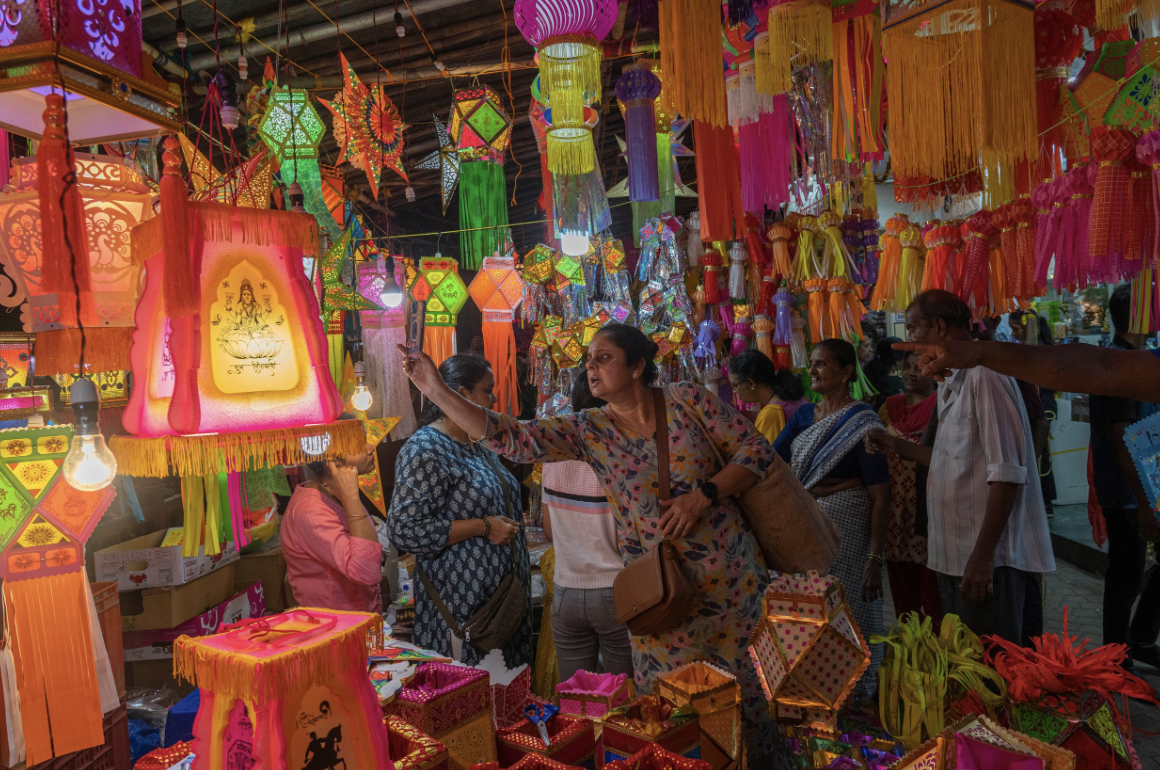
On October 20th, millions of Indians celebrated Diwali, the festival of lights, India’s most observed holiday. Diwali represents the victory of good over evil, marking the end of the Hindu calendar and symbolising new beginnings. Diwali is a time to spend with family and friends, exchanging gifts and lighting diyas (lamps). For centuries, economics has played a central role in Diwali, but in the last severaldecades, as Indians have increased their wealth, the impact, good or bad, is hard to ignore.
The primary deity of worship is the goddess Lakshmi, the god of wealth, fortune and prosperity. A reason for her worship is that agriculture was the main profession in India for millennia. Diwali takes place after the harvest season concludes, and farmers have sold their crop, causing them to give thanks to Lakshmi. With the extra disposable income farmers had, they would often buy gifts for family and friends, beginning the timeless tradition. Across the five days of Diwali, each day has a unique meaning for gifts to buy. On the first day, Dhanteras, it is tradition to buy gold and silver as it is believed to bring prosperity. This has often resulted in gold prices skyrocketing before Diwali, such was the case in 2024, when gold prices in India reached a record Rs 63000 ($750) per 10 grams of 24 carat gold, weeks ahead of the festival. The demand for gold led to gold imports into India tallying $5.2 billion during August, a 37% increase from July, as jewellers prepared for the celebrations. Consumer confidence was so high during the festival that over $11 billion of gold was bought during the five days of the festival, highlighting how much economic impact the festival has on foreign and domestic markets.
Another common tradition during Diwali is Muhurat (auspicious) trading, which is a special one-hour trading session held by the stock exchanges to bring in the new Hindu financial year or Vikram Samvat.The practice dates to 1957, when the Bombay Stock Exchange began the tradition, with traders believing it would bring them good fortune for the year ahead. Today, Muhurat trading is a good indicator of consumer and investor confidence in India for the upcoming year, with over, $2.4 billion in trading turnover made during Muhurat trading in 2024.
Over the last decade, total expenditure during Diwali has been steadily increasing, reaching a peak of $69 billion spent on goods and services during the holiday season in 2025, a $18 billion rise from the previous year. Automobiles,
Electronics and apparel were the most commonly bought goods this year. Amidst a trade war with the USA, the Indian government has pivoted to boosting domestic producers as much as possible. This strategy seems to have paid off, with domestic manufacturers experiencing a 25% increase in sales during Diwali compared to the previous year, providing millions in employment and boosting economic growth, yet there is still significant dependency on countries such as China, which still contributes 70% of lighting-related products, with over 700 million LED lamps being imported this year alone.
A primary reason for the surge in expenditure between 2024 and 2025 is the government of India’s restructuring of its goods and services tax, which occurred just a month before Diwali. The reduction in sales tax to 5% for inferior goods has made this year’s Diwali the most affordable for middle and lower-income families, with experts claiming that the tax reduction was a driving factor in the increase in expenditure from 2024. The tax cuts utilised the Laffer curve, a negative parabola that suggests that cutting sales taxes could increase tax revenue due to increased purchases. This is exactly what took place during October this year, with sales tax being 4.6% higher than the same period last year, with the government earning over $23 billion through sales tax in October, allowing the government to continue their strategy of spending to stimulate growth.
Apart from tax cuts, expenditure was driven through consumer borrowing, particularly in the form of EMIs (equated monthly instalments), a very popular form of loan in India. 70% of all automobiles bought during this year’s Diwali were done through EMI’s with banks distributing over 115000 loans for automobiles during Diwali. Questions have been raised about whether stimulating consumption through borrowing is wise for citizens. With household liabilities increasing much faster than assets and households taking multiple loans at once, experts believe a debt cycle is looming, with research suggesting that for the bulk of India’s middle class, debt service to income ratios now exceed 45%, leaving households exposed in case of recessions. Excessive Diwali spending through borrowing, especially for rural communities, could pose a severe threat to the Indian economic system.
Ultimately, Diwali is a great asset to the Indian economy, providing jobs and stimulating consumption. However, has the festival has lost its meaning through all the fireworks and haze? Do those who celebrate need to remember what it is they are celebrating?
The views expressed in this article are the author’s own and may not reflect the opinions of The St Andrews Economist.
Image from CNN website