
By Finlay Ferguson
A Double-Edged Sword
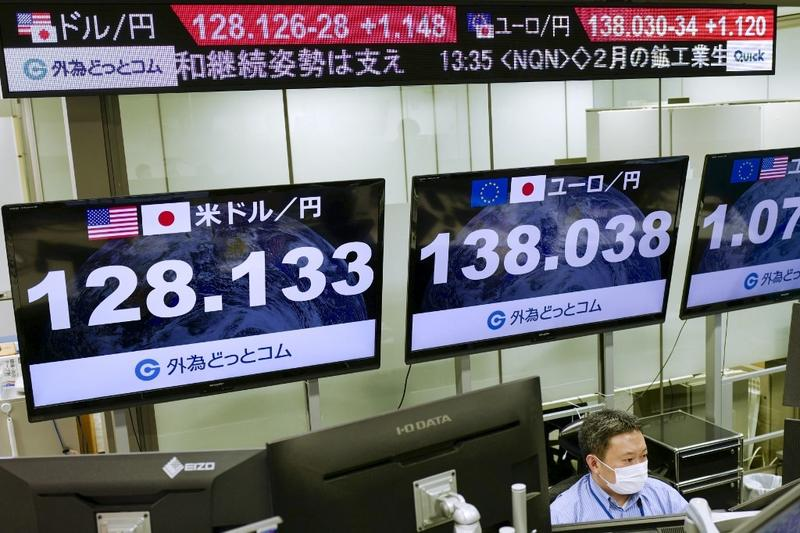
The Japanese Yen is a cornerstone of the global financial system; however in recent times, it has experienced a precipitous decline, tumbling to multi-decade lows versus the U.S. dollar and declining to levels not witnessed since the early 1990s. For the world’s third-largest economy, this provides a profound and urgent conundrum. On the one hand, a cheaper yen gives a tailwind to Japan’s corporate titans: Sony, Toyota and co., boosting Japan’s export competitiveness by making Japanese goods relatively cheaper to foreign buyers, and inflating the value of profits earned abroad. Moreover, it has fueled a tourism boom, as Japanese goods have become relatively affordable to international tourists; it has also sent the Nikkei 225 stock index soaring to record highs.
This light presents the weak yen as a crucial tool for Japan’s economic revitalisation, however the other hand presents it as a punishing tax upon Japan’s domestic population. This currency depreciation has drastically increased the costs of imports such as food and energy, and this real household income. Small and medium-sized businesses also face tighter margins as their production costs rise. In effect, Japan faces a policy trade-off, and a “currency conundrum” is formed, where the policy intended to heal the national economy has simultaneously harmed a vast segment of its people. Understanding this complex trade-off demands a closer look at the deep-seated forces driving the yen’s historic plunge. The critical challenge that faces both The Bank of Japan (BOJ) and The Ministry of Finance (MOF) is to maintain this delicate policy balance without undermining price stability or the welfare of Japanese households.
The Primary Mover: Monetary Policy Divergence
As the title suggests, the single most immediate and significant driver of the yen’s depreciation is the “yawning gulf” between Japan and its significant economic peers, such as the United States. Since the pandemic, central banks such as the U.S. Federal Reserve have raised interest rates sharply to fight inflation. Higher rates make their currencies more attractive to investors, who can earn better returns on U.S. assets. In contrast, the Bank of Japan has kept interest rates extremely low to support economic growth and avoid deflation. This policy difference has encouraged investors to move money out of Japan and into countries with higher rates, increasing the supply of yen on global markets and pushing its value down.
This is a stark divergence. Whilst the Fed’s benchmark rate was set at a range of $5.25-5.50$ percent, the BOJ’s equivalent rate lingered at just $0-0.1$ percent. Even following a modest hike to $0.5$percent in early 2025, this is still a substantial differential. This creates an incentive for a global investment strategy termed as the “carry trade.” Investors borrow money in the low-interest yen, and invest it in a high-interest rate currency, like the U.S. dollar; they receive interest rate returns from the U.S. which far exceed the cost of borrowing in Japan, and therefore profit the difference. This involves the sale of yen and buying dollars, directly applying downward pressure upon the Yen’s value. The high yields upon assets like U.S. Treasury bonds have now become irresistible to global capital, and has seen a mass exodus from yen-dominated assets. This has been a long-standing trend since early 2021, in which the yen lost almost half of its value.
The BOJ’s inability to hike its rates is tied to Japan’s colossal public debt, which stood at 45 percent of GDP in 2022, and is projected to only fall marginally to 243 percent in 2024 and 242 percent in 2025, the highest ratio among advanced economies. A rate hike would skyrocket debt-servicing costs and force the BOJ into Yield Curve Control (YCC), capping long-term government bond yields by buying unlimited Japanese Government Bonds (JGBs). This moves the pressure from the bond market to the currency and makes the weak yen both a fiscal necessity and a “cautionary tale” for other nations.
This mixture of low domestic yields and large overseas returns has created a structural capital flight, with Japanese households and corporations diversifying their savings into foreign assets. The yen has thus lost its traditional “safe-haven” status, as the safe-haven effect has been muted and short-lived in recent global shocks.
Are There Any Rewards To This?
The yen’s depreciation has significantly benefitted Japan’s export sector, as goods have become cheaper and more competitive for foreign buyers. Multinational corporations like Toyota and Sony have seen their foreign-currency earnings magnified when converted back into the yen, providing contributions towards a healthy current account surplus. However, it has driven a divide between “Corporate Japan” and “Household Japan”. The former, Japan’s large exporters and multinational firms, benefit from higher overseas profits and stronger exports, while the latter, ordinary consumers and smaller domestic businesses, suffer from rising import prices and weaker purchasing power; this therefore demonstrates the two-sided nature of the Yen’s depreciation.
The weak yen has also made Japan a relatively affordable travel destination, and has thus driven a record-breaking influx of international visitors, whose money now stretches significantly further. Tourism revenues saw a remarkable 47% increase in 2024.
Moreover, the positive impact of corporate profits has fueled a buoyant stock market, as the Nikkei 225 reached its highest year-end level in history. Foreign direct investment (FDI) is also stimulated as Japanese assets are presented as “on sale” for foreign investors.
Whilst the weakened yen would theoretically incentivise manufacturers to reshore their production, evidence proves tenuous. The current supply chains are already deeply entrenched, as manufacturers offshored their facilities in response to the strong yen.
Costs For the Domestic Economy
Currently, Japan imports approximately 90% of its energy and 42% of its food, thus a weak yen, whilst making exports more expensive, has made these essential goods more expensive. This has driven substantial cost-push inflation, and has raised average household costs by 90,000 yen (approximately US$590) in 2024 alone.
Moreover, this hasn’t been countered with broad wage growth, as there has been negative real wage growth and a fall in Japanese purchasing power. Consequently, this reduces the domestic consumption of the economy and puts downward pressure on aggregate demand. As a result, the goal of a “virtuous cycle” of rising wages and prices is severely undermined.
Small and medium-sized enterprises (SMEs) are disproportionately hit, as they are heavy imports of raw materials, and lack the market power to pass on increased costs to the consumer in the form of higher prices.
The Policymaker’s Tightrope
Currently, a “tug of war” is occurring within Japan’s economic leadership, between the BOJ and the Ministry of Finance (MOF). Whilst the BOJ is focused on price stability at two percent inflation, the MOF is responsible for the stability of the yen, and is sensitive to political fallout.
Under Governor Kazuo Ueda, the BOJ has cautiously begun a “normalization” of monetary policy, notably removing negative interest rates in March 2024. However, political pressure has forced Ueda to acknowledge that sharp currency moves may necessitate a monetary policy response. The MOF utilises direct foreign exchange (FX) market intervention, as foreign currency reserves are sold to buy more yen. Japan spent north of $60 billion in 2022 and is suspected of intervening in 2024. Yet, this intervention can only “put a pause” on a decline, rather than reversing deep-lying, fundamental trends. The market sees 160 yen to the dollar as a line in the sand, creating a “remarkable situation” in which yen are purchased by the MOF, whilst the MOF simultaneously creates more electronically.
The Road Ahead
The future of the yen is largely reliant on the Federal Reserve’s policy. A significant reversal is unlikely until the Fed decides to initiate a cycle of interest rate cuts. Forecasts are thus suggesting that the yen is likely to remain at close to or above 150 to the dollar for the coming six to twelve months.
There are ripple effects of a persistently weak yen within Eastern Asia, neighbours like South Korea and Taiwan compete directly against Japanese firms. Consequently, this increases the threat of competitive devaluations or a “currency war,” which could introduce significant instability to the global financial system.
Ultimately, this weak yen policy is a significant gamble, it has played a “functional role in Japan’s reflation,” boosting corporate profits and tourism inflows, whilst generating inflation. However, efficacy is waning, and the side effects are becoming increasingly more substantial. These benefits are driven more by financial engineering than any domestic production; costs are being borne by households and small businesses, thus suppressing domestic demand in favour of foreign demand. Currency weakness risks a two-tiered economy, yet tightening monetary policy risks choking Japan’s recovery; the essential challenge proves to be to navigate a graceful exit of this expansionary policy route, without returning to significant deflation and sparking a fiscal crisis.
The views expressed in this article are the author’s own, and may not reflect the opinions of The St Andrews Economist
Image from China Daily Hong Kong