
By Charlotte Corcoran
Despite the shift to mass recycling over recent decades and the concerted effort that many make to follow proper protocol, relatively little attention is given, in the media and everyday life, to what happens once waste leaves the hands of the consumer. A significant proportion of recycled waste does not make it through the proper processes, and instead, huge volumes are shipped abroad to landfills in developing countries without the proper infrastructure to manage such a high volume of waste. In the past year, the US foisted about half a million tonnes of old plastic waste to poorer nations, all while maintaining its image as a leader in recycling. Globally, over 460 million metric tonnes of plastic are produced annually, yet only about 9% of that waste is properly recycled.
One of the countries suffering the brunt of this mismanaged waste system is Ghana. Despite generating far less plastic waste per capita than the US or UK, Ghana discards about one million tonnes of plastic each year, and recycles only around 5% of that. The rest clogs waterways, litters coastlines, pollutes food sources, and fuels public health crises by blocking drains and creating stagnant breeding grounds for malaria-carrying mosquitoes. In coastal cities like Accra and Jamestown, plastic pollution threatens both tourism and fishing, industries that are central to livelihoods and the national economy. Tema, a major industrial port near Accra, similarly holds a 400 meter long landfill site that, after bursting into flames in 2019, has since been covered by astroturf. Today, chimneys pierce the landfill to vent the buildup of dangerous gases beneath the surface, serving as “an archaeological record of the world’s addiction to plastic.”
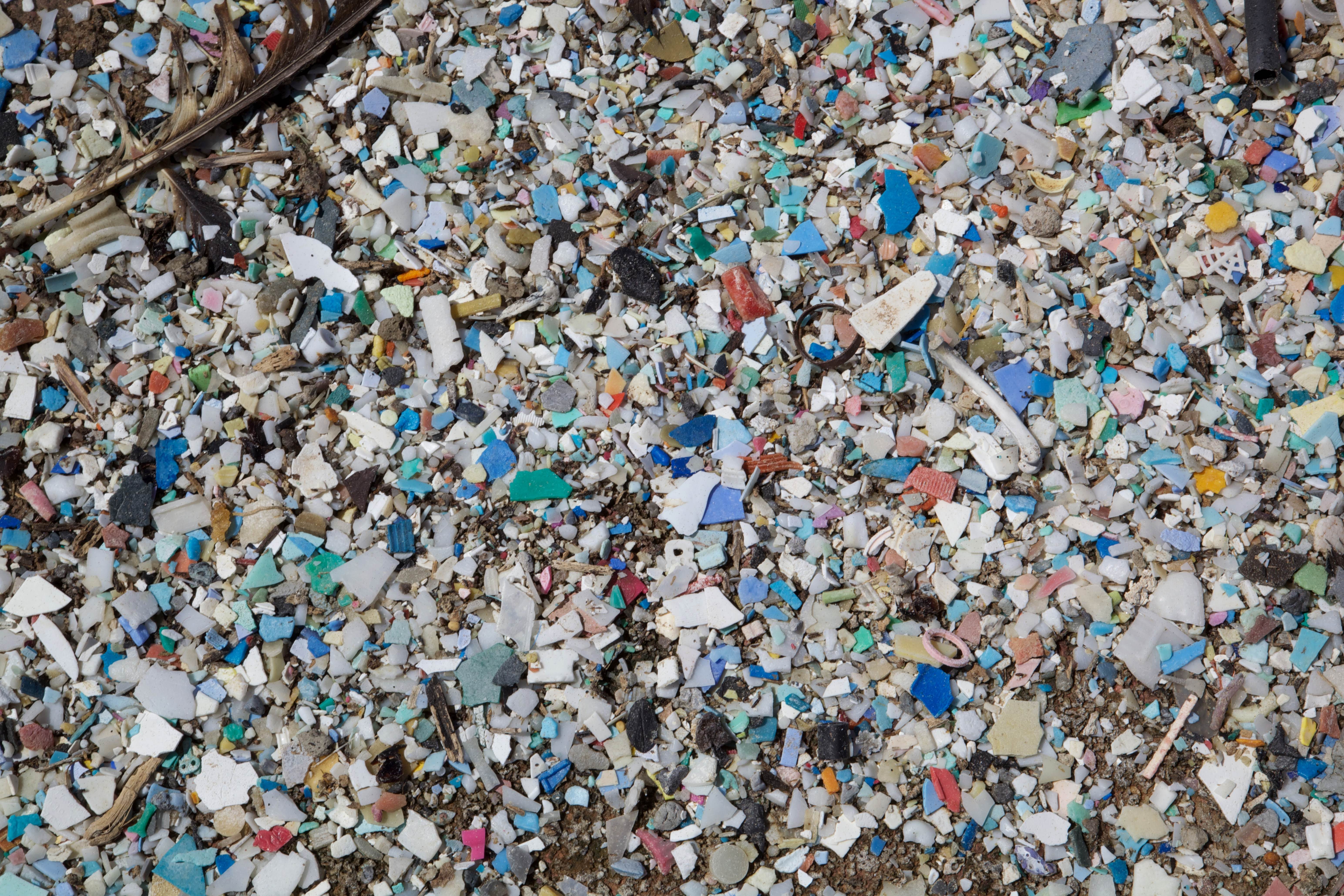
But Ghana’s crisis is not isolated. Now, over 90% of plastic in the ocean exists as microplastics that are beginning to enter the food chain and pose risks to human health. If current trends continue, emissions from plastic production could triple by 2050, amplifying both climate and ecological damage. The story of Ghana’s struggle with plastic is not only about the environmental cost of global consumerism, but also about how one of Africa’s fastest-growing economies is navigating a problem it did not create.
Plastic Bonds – A Viable Solution?
One method proposed by a World Bank official to slow the harmful environmental repercussions from plastic production was “plastics bonds”. Simply put, every tonne of waste generates a ‘credit’ certificate that plastic-producing companies can buy to offset the pollution they create. If a polluter pays for one tonne of plastic to be collected, it gets one plastic credit, and if it pays for the amount that it outputs, it can be named ‘plastic neutral’. This system works in the same way in which airlines can claim to be ‘carbon neutral’ while emitting CO₂ on every flight. In practice, however, offsetting allows polluters to advertise sustainability without reducing production or sacrificing profit. Unfortunately, plastic offsetting does little to address the root cause of global plastic waste. It ends up in countries like Ghana, who lack genuine global support to combat the problem. Even Nestle, the world’s 2nd biggest plastic producer, has argued that extended producer responsibility laws would be a more effective solution. St Andrews academic Patrick O’Hare, who recently attended the UN plastic treaty negotiations, also warns against the “prominence given to plastic credits,” pointing out the lack of evidence for their success. For Ghana, where plastic already overwhelms recycling capacity and infrastructure, such false solutions risk deepening the crisis rather than alleviating it.
The National Plastic Action Partnership, a future for Ghanaian Sustainability?
While international debates often focus on offsetting schemes like plastic credits, some governments and organizations are experimenting with more practical approaches. In 2019, the Indonesian government began the National Plastic Action Partnership (NPAP), a platform for multi-stakeholder cooperation to reduce plastic pollution. By partnering with the Ghanaian and Vietnamese governments, the collaboration has instilled confidence in the NPAP as a vehicle for generating local, data-driven solutions. In 2021, the NPAP launched a national action roadmap to manage the plastic life cycle while boosting Ghana’s economic growth. Given Ghana’s limited infrastructure to collect, sort, and recycle waste, this initiative offers tools to help the government better measure and address its pollution challenges. With plastic leakage into Ghana’s water bodies projected to rise by nearly 190% between 2020 and 2040, the NPAP seeks to guide the country toward a more circular economy for plastics.
The Reality of the Plastic Problems in Ghana
The human cost of plastic pollution in Ghana is borne out most visibly by the waste-pickers who labor daily to clean up the country’s discarded plastics. High density polyethylene (HDPE), a widely used plastic found in water tanks, bins and detergent bottles, is the most valuable catch, earning pickers about five cedis ($0.5) per kilogramme from recyclers. Yet even after long hours of backbreaking labor, most waste-pickers still earn below Ghana’s minimum wage of 19.97 cedis ($1.90) per day. The work is not only physically punishing, often causing chest pain and headaches, but also socially stigmatized. Some workers are ostracized by their families, branded as “witches,” or viewed as people abandoned by society.
Accra’s Borla Tricycle Association (Borla meaning rubbish in Twi, the regional language), consists of about 8,000 workers, many of them orphans or cast out by their families. Collectively, they remove about 40% of Accra landfill’s contents for recycling. They are among the over 40 million waste-pickers globally represented by the International Alliance of Waste Pickers. Despite their crucial role, they see little benefit from initiatives like the World Bank’s proposed ‘plastic bonds’.
As one waste-picker, Johnson Doe, puts it: “The support is meant for us, but doesn’t come. We are not on the internet, on computers every day to write grants and proposals. We are always here.” For those working daily to clean up the world’s plastic, these kinds of offsetting initiatives are a false solution that overlooks and excludes the very people working to keep the mountains of plastic at bay.
The Ongoing Search for a Global Plastics Solution
For Ghana’s waste-pickers, the promise of global solutions like plastic credits or bonds already feel distant and exclusionary. But even at the highest levels of international policymaking, progress remains stalled. In 2022, the Intergovernmental Negotiating Committee (INC) began a series of talks with the Global Plastic Action Partnership (GPAP) to address the full life cycle of plastics and the mounting consequences of plastic pollution, with the ultimate goal of creating a legally binding treaty. Yet, negotiations couldn’t fully resolve key issues such as whether it should solely focus on plastic waste reduction or address the entire plastic lifecycle. At INC-5.2 held in Geneva in 2025, delegates once again left talks without a unified result. Panama’s delegation head lamented the lack of collective support from the members of the committee, stating “Postponing negotiations does not postpone the crisis.” UNEP Executive Director Inger Andersen echoed this sentiment at the close of the talks, asserting that “this work will not stop, because plastic pollution will not stop”.
Innovation Amid Inaction
Meanwhile, the ASASE Foundation is one NGO that aims to provide inspiration and support for locals by offering seed money and technical and business training to build their own plastic waste reprocessing plants, managed as a social enterprise. Effectively, one sector buys plastic from waste-pickers and turns it into pellets or blocks for new plastic products. For example, men like Makafui Awuku, who, after developing asthma from breathing in smoke from burning plastic, started a factory that melts and molds discarded plastic into durable school desks that can last over 30 years. This 100% circular waste system supports a vast number of Ghanaian schools that are without proper edifices while genuinely recycling the plastic that has ended up in Ghana’s landfills.
The INC discussions reaffirmed what Ghana’s experience makes clear: developing nations bear the heaviest burden of plastic pollution, yet too often receive the least global support. Rather than relying on a patchwork of weak regulations or empty offsetting schemes, tackling the plastics crisis will require comprehensive international cooperation backed by meaningful investment in grassroots solutions. Projects like Awuku’s show that waste can be transformed into opportunity—but without stronger global commitment, these initiatives will remain isolated success stories rather than the foundation of a sustainable future.
The views expressed in this article are the author’s own and may not reflect the opinions of The St Andrews Economist.
Image Source: Plaxnio