
By Alix Ramillon
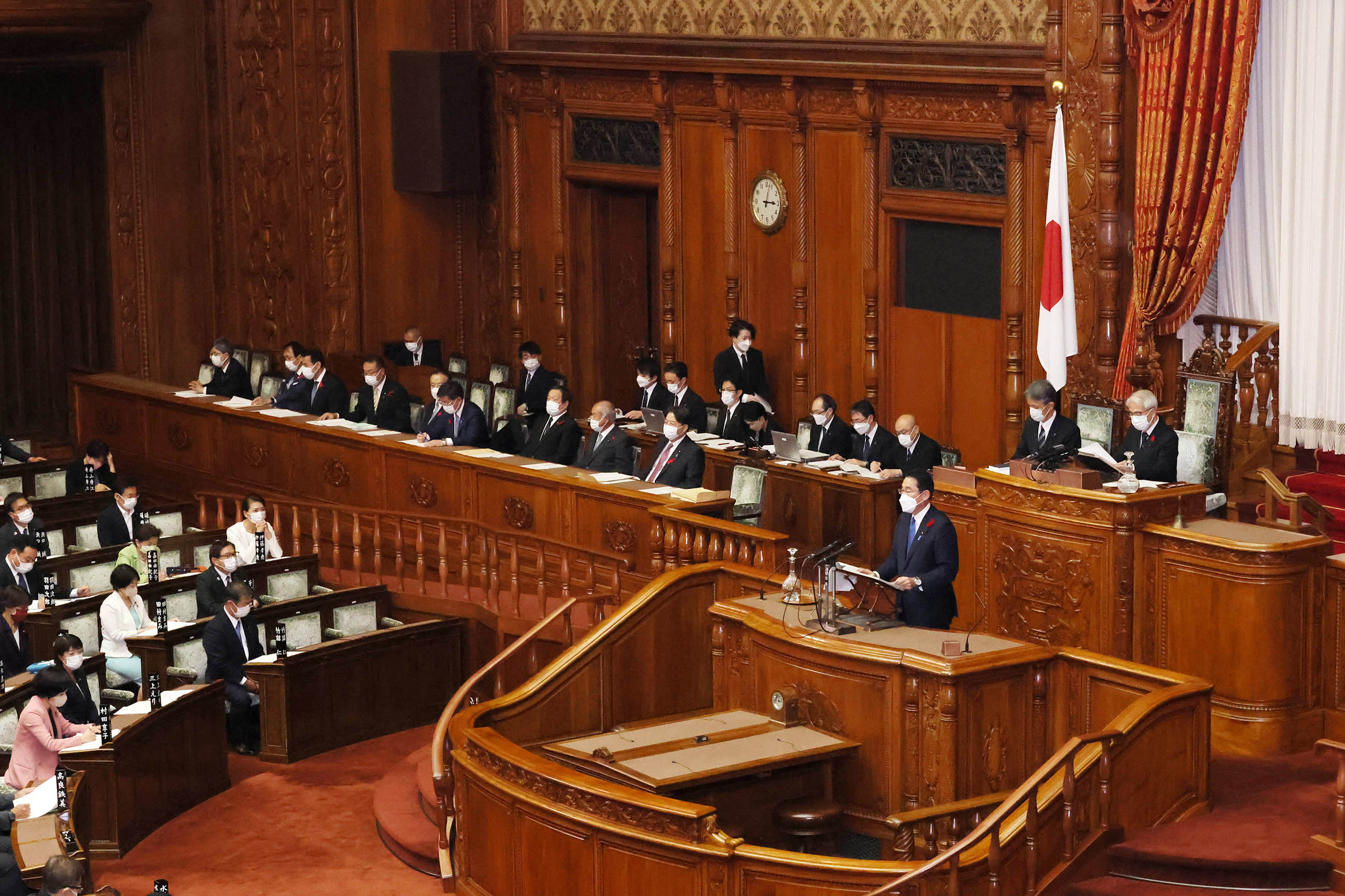
The 2025 Japanese House of Councillors (Upper House) election was held on July 20, 2025, with 125 out of 248 seats contested. The main players were the ruling Liberal Democratic Party (LDP), opposition parties like the Constitutional Democratic Party of Japan (CDP), the Japan Communist Party (JCP), and the rising right-wing populist Sanseitō. Losing its majority i both chambers for the first time since its founding in 1955, the election marked a historic setback for the LDP, while Sanseitō made notable gains and the JCP continued to lose ground due to shrinking and ageing membership.
These electoral dynamics cannot be understood in isolation from Japan’s deeper structural and economic currents. The interplay between nationalist rhetoric, anxieties over scarcity, and long-standing socio-economic fractures provides the backdrop against which voters have cast their ballots. Beyond the political maneuvering of parties such as Sanseitō or the decline of the JCP, questions of food security, labour relations, and trade dependence weigh heavily on the public consciousness. In particular, the symbolic and material importance of rice production offers a lens through which these broader anxieties about resilience, inequality, and Japan’s place in the world are both expressed and contested.
A rise in conservatism? An analysis of the election’s issue framing
The Upper House election campaign focused mainly on domestic economic issues, with inflation topping voter concerns, followed by social security, pensions, and the ageing population. The results of the election signal the progression of political turmoil in Japan, testing the nation’s capacity for decisive leadership through both domestic and foreign policy challenges. The rise of Sanseito, a right-wing, populist, xenophobic, anti-globalist and anti-immigration party, is a symptom of the general discontent with governance in Japan, coupled with the Nippon Kaigi’s recourse to historical revisionism to push forward a “Japan first” agenda.
Sanseitō’s platform focuses on the framing of three issues. Shaimaa Khalil summarises it well: “the threat of “globalist” elites, an “uncontrollable” influx of allegedly criminal foreigners, and a “corrupt” political establishment “burdening” young people with taxes. These narratives echo the themes of globalized populism. The goal is to “reclaim” the nation from these perceived threats.”. However, the statistics remain clear, and suggest that the issue of mass migration is exaggerated.Although Japan’s population of foreign residents has jumped from 2.23 million to 3.77 million over the past decade, they still only account for 3% of the total population of more than 120 million people. In July 2025, allegations arising that claim the party might have ties with Russia following Saya’s appearance on Sputnik News, a Russian state propaganda outlet, during her upper house election campaign, has increasingly made the party’s claims less and less credible to the eyes of many Japanese citizens.
The Upper house election also delivered a setback to Japan’s ruling Liberal Democratic Party (LDP), which lost its majority in both chambers for the first time since its founding in 1955, and now faces greater political constraints. Out of the 248 seats in the upper house, 125 seats were contested, demonstrating a clear recourse to the rhetoric of populist opposition parties. The Japanese Communist Party is also seeing a shrinking and ageing support base. As of 2024, the party had in the region of 250,000 members, a little over half its peak in 1990, when it had around 500,000 members.
A dive into the conflating long-term and short-term factors reveal that these election results were not actually as surprising as the media has portrayed them to be. In fact, the surge in nationalism has been maintained by a prolonged “Red-Scare” and “X-risk” fear, and new shifting alliances and priorities toppled by the forces of a recessive market.
Rice and other economic means
Japan’s rice production is based on autarky, as it grows 99% of the rice it consumes annually, meaning production can be vulnerable to weather or economic shocks and the poorest fringe of the population liable to its fluctuations. It has barely recovered from a poor harvest in 2023 as a result of government efforts to keep rice prices high by reducing the acreage of crops cultivated. This provides a stark contrast with the rise of those benefitting from private investments from the wealthiest part of the nation in mainly urban areas. In Japan, the number of private-equity deals has doubled since 2019, and their value has tripled. Mergers and acquisitions reached a record $232bn in the first half of 2025. This data undoubtedly illustrates the reality of the stark wealth and class divides present in Japan and instrumental to Japanese politics.
The spread of the silent-quitting job phenomenon? A look into the myths of a hyper capitalist society centered around the nomikai’s fidelity
A lack of labour fluidity is stringent on the Japanese job market, where many worker’s wage rises depend on shunto, the annual spring wage negotiations. According the Economist, nearly two-fifths of job-hoppers now see their wages rise by more than 10%. The traumatic effects of the 1990s “lost decade” have stretched to over three decades of stagnation, although Japan remains one of the strongest economic powerhouses as of 2025. The image that comes under eyes is the prominence of the workaholics of the urban areas, or referred to as the nomikai, one image that comes to mind is Paweł Jaszczuk’s Legless Businessmen series (2008). But many younger workers, in trend with the “GenZ spirit”, slowly are turning towards balancing personal and private life. In fact, Tokyo is turning to a 4-day workweek in a desperate attempt to help Japan shed its unwanted title of ‘world’s oldest population’. Across the country , workers have more bargaining power as the population continues ageing, a reality that the government will be increasingly faced with in coming years.
A strong recourse to isolationist narratives, but an increasing trend towards trade deals?
Although promoting a “Japanese first” and ultra-nationalist stance, Japan is increasingly turning to foreign powers to advance its agenda. Tariff negotiations between Japan and the United States have resulted in the United States 15% tariffs on Japanese imports – down from the previous announcement of 25%. Furthermore, Japan claimed it aimed to make a huge investment of ¥550 billion in the United States and to open up its automobile and rice markets.
Japanese firms are attracting foreign direct investment (FDI) with managers tend to squander shareholders’ capital which significantly reduces costs. For example, the median listed firm holds cash worth 21% of its total assets, compared with 8% for American public companies.
Many speak of this trend as converging towards deglobalisation. The rise of protectionism is rattling Japan’s many exporters. But the Japanese government also relies on bilateral trade agreements to advance its agenda, benefitting from China’s retreat and subsequently gaining the upper hand over the Trump administration. Governor Yuriko Koike’s pitch to host expanded United Nations operations in Japan’s capital converges towards the nation’s broader ambitions to shape the new geopolitical and economic trends in the post-Covid era. Koike’s ambitions underscore both Japan’s position as a diplomatic bridge-builder, but also as as a nation with a resolutely assertive government. Ishiba committed himself to “uphold the international order based on the rule of law and lead efforts to further ensure safety and stability” in a free and open Indo-Pacific, a concept originally proposed by former PM Shinzo Abe. Ishiba has reaffirmed the previous Japanese administration’s policy to impose sanctions on Russia and support Ukraine. It is not a breakthrough, but rather a consistent foreign and national foreign policy.
The political structure of Japan, on Cults and modern-day anti-communist missions
Relatively little attention is given, in Western and global media, to the significant influence of Communism in Japan. Founded in 1922, the Japanese Communist Party (JCP) has 250,000 members, making it one of the biggest communist parties in the world, next to those in China, Vietnam, and Cuba.
Nonetheless, since the 1952 Subversive Acts Prevention Law, the party has been exposed to extensive and continual surveillance, which intensified after the former right-wing Prime Minister Shinzo Abe declared in March 2016 that the JCP was “pursuing a policy of violent revolution”. Indeed, the USA’s anti-communist crusade also coexisted in Japan when the CIA orchestrated the merger of the Liberal Party and the Democratic Party, the LDP, which was led by on Nobosuke Kishi , Shinzo Abe’s grandfather, one of the figures contributing to a military regime enacting war crimes. Similar action has continued into more recent electoral history and in the run up to the July 10 2016 House of Councilors election anti-JCP propaganda was relayed using deceptive handouts and anticommunist books highlighting the nationalist’s agenda of anti-socialism across the country.
Enter the [Nuclear] Void: Tokyo’s obliteration of the Hibakusha ? On self reliance, a nuclear rebranding and links to conservatism
In February 2025, Japan announced its aim to achieve 20% nuclear power by 2040 through their 7th Strategic Energy Plan. Japan does not possess any programs for the development of weapons of mass destruction (WMD), but it is the only non-nuclear weapon state in possession of a full nuclear fuel cycle and has advanced WMD-relevant industries. One of the axioms for that is the “Atomic Energy Basic Law”, that stipulates that nuclear energy should be used to the ends of peaceful purposes. The Hibaskusha have been strong proponents of this nuclear disarmament movement. Prime Minister Shigeru Ishiba has claimed it as a significant diplomatic achievement in the wake of his party’s defeat in Japan’s upper house election on July 20. If the Ishiba administration promotes the deal as a success, its positive effects on the Japanese economy are still to be assessed on the longterm. In the meanwhile, Japanese stocks have soared in response to the deal announcement.
Japan lacks natural resources, with fossil fuels relying mostly on imports. If nuclear power was seen as a path to energy independence and combatting climate change in the 1960s, but it is essential to note that placing all assets on nuclear energy is quite straightforward: it could delay the transition of the electricity system of Japan overall. Especially after the 2011 Fukushima disaster, many nuclear power stations were shut down and there was a reverted tendency to relying heavily on the use of gas and coal. In fact, nuclear energy and more particularly radioactive waste storage has been considered Japan’s Achilles heel with the majority of the burden on the small fishing villages: Hokkaido, Suttsu, and Kamoneai.
Kansai Electric Power announced this July 2025 that it is to start geological surveys again to plan the construction of a next-generation reactor at its Mihama Nuclear Power Station in Fukui Prefecture. This enables the Nippon nation to ensure its energetic autonomy due to rising tensions in the region and environmental concerns.Many local groups in the region perceive this decision as controversial. Japan’s goals to use carbon-free nuclear energy to replace electricity generation from expensive imported fossil fuels and cut greenhouse gas emissions on the way to net zero by 2050 is deeply entrenched with the Hibakusha’s traumatism, a term used to designate the people affected by the atomic bombings of Hiroshima and Nagasaki. Additionally, nuclear waste storage is particularly controversial among the Ainuindigenous community, as the program has been perceived by some as ‘energy colonialism’.
Japan’s pro-nuclear path stays on track. Center-right groups like the Democratic Party for the People and the Japan Innovation Party support restarting reactors or replacing aging ones. The rising Sanseito party also advocates for next-generation technologies such as small modular reactors (SMRs) and nuclear fusion. The new plan calls for increasing nuclear’s share from 8.5% today to 20% by 2040, alongside more renewable energy.
Under scrutiny since the murder of former Prime Minister Shinzo Abe in 2022, the Japanese branch of the Unification Church has been handed a ‘legal dissolution order’ by the Tokyo court. Thisdecision falls in line with Japan’s Religious Organizations Law, which allows for the dissolution of religious corporations and liquidation of assets in light of disturbances to “public welfare”. In Japan, the Communist Party has been particularly diligent in mounting a decade-long campaign against the Unification Church, promoting hate speech, weaving webs of falsehoods, and exciting politicians, media and public opinion against “the cult.”
The views expressed in this article are the author’s own and may not reflect the opinions of The St Andrews Economist.
Image Source: Wikimedia