
By Sarah Caldwell
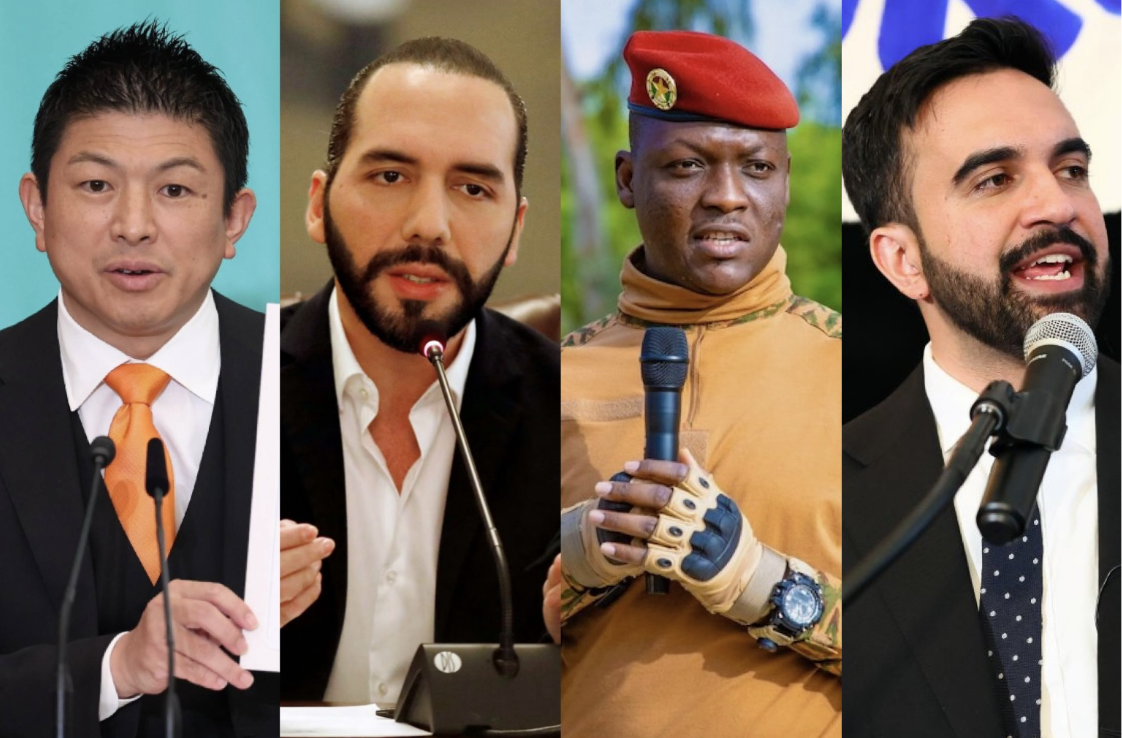
Sohei Kamiya, Trumpism, and Japan’s first ‘Japanese First’ Party
July 2025 elections rocked the upper house of the Japanese Diet, with the ruling Democratic Liberal Party (LDP) and its coalition partner Komeito losing their majority. This marks the first time that the LDP holds a minority in both houses of the Diet since 1955. More shockingly, however, was the rise of far-right politician Sohei Kamiya’s Sanseito Party, which gained 13 seats in the July election (up from one seat in 2022).
The Sanseito Party established its popularity during the pandemic through a campaign of YouTube videos which peddled conspiracy theories about the “deep state” and warned people not to wear masks or vaccinate themselves. Kamiya’s party now runs on a MAGA-inspired, nativist, isolationist platform, disavowing the rise in tourism, immigration, gender equity, and international business policies that the LDP has promoted in recent years.
Sanseito’s official economic policy is thus far unclear. Still, many Japanese are turning to the far-right party, fed up with the LDP’s failure to address rising inflation and poor economic growth. “Under Globalism, multinational companies have changed Japan’s policies for their own purposes,” Kamiya proclaimed at a recent rally in Kagoshima. “If we fail to resist this foreign pressure, Japan will become a colony!”
Right now, Sanseito only holds 14 seats, still short of the minimum number required to submit budget bills in the upper house. Yet its influence, particularly in the media, could be a bellwether for the future of Japanese and Asian politics. “I think for years now, people have said Japan doesn’t have a populist right, or doesn’t have a populist far right,” Jeffrey Hall, a professor of Japanese Studies at Kanda University, told the BBC. “But I think [the result] has proven that there is a possibility for this to happen in Japan, and it’s probably here to stay.”
Nayib Bukele: no longer the world’s ‘coolest dictator’?
In 2024, Nayib Bukele was re-elected president of El Salvador with 84.7% of the popular vote. This July, his supermajority in the legislative assembly passed legislation to remove the constitutional barriers to unlimited re-election, forcing critics and supporters alike to question his intentions as the world’s self-proclaimed ‘coolest dictator.’
Bukele was elected president in June 2019 after running a successful law-and-order campaign. His administration has since dramatically reduced the gang-related extortion that has plagued the country since the civil war ended in 1992. The homicide rate, once the highest in the world at 106 per 100,000 inhabitants in 2018, has fallen to 1.9 per 100,000 — lower than Canada’s. This sharp decline has significantly improved both the quality of life and the business climate in El Salvador.
The success came with widespread support from El Salvadorans, tourists, and even tech companies like Google, which have since entered the country. Yet NGOs and human rights organizations have been less accepting of the administration’s atypical tactics, which include incarcerating over 85,000 people (nearly 2% of the entire population). These groups claim that most inmates have never been tried in court and are often heavily tortured without reason. The administration has also recently been accused of targeting such human rights organizations, as well as media outlets, opposition parties, and outspoken critics, in addition to anyone affiliated with a gang.
As the country sinks further into autocracy, comparisons to infamous Latin American dictators like Maduro and even Castro become increasingly likely—particularly as GDP growth appears to be declining under Bukele’s leadership, just as it did in Venezuela in 2014 and in Cuba in 1989.
Today, El Salvadorans remain cautiously supportive of their president but aware of the regional stereotypes regarding such ‘strongmen’. “Maybe I’ll feel differently if you ask me in 10 years, I don’t know,” said Cecilia Lemus, a local business owner in San Salvador. “But for today, I have no problem with him being re-elected. I don’t know if this is going to be like Venezuela; I don’t think we’re headed toward being Cuba, though I don’t know.”
Ibrahim Traoré – “This is it. He is the man…” Is he?
Military captain Ibrahim Traoré came to power in Burkina Faso during a 2022 military coup. The African leader and social media sensation has captured the hearts and minds of young people and Africans around the world with his pan-African, neo-colonial rhetoric. Traoré presents himself as a man of the people, dressing the part of a modest military captain, busy on the front lines of daily conflicts… and it’s working.
“Traoré’s impact is huge. I have even heard politicians and authors in countries like Kenya say, ‘This is it. He is the man,‘” Beverly Ochieng, a senior researcher at global consultancy firm Control Risks, told the BBC. “His messages reflect the age we are living in, when many Africans are questioning the relationship with the West, and why there is still so much poverty in such a resource-rich continent.”
Many Burkinabés have praised Traoré for returning the country’s resources ‘to the hands of the people.’ His administration has pursued this goal by cutting ties with the country’s former colonizer, France, as well as terminating unprofitable mining and refinery contracts with the United Kingdom and Australia, replacing them with more lucrative agreements with Russia. For the first time in its history, Burkina Faso has also established a national gold reserve. Under Traoré’s leadership, with help from Russia, the government has made notable progress in boosting domestic revenue and expanding investment in education, health, and social protection.
The president’s efforts have thus far paid off: the IMF recently reported ‘commendable progress ’ in the country’s economy, expecting it to remain ‘robust’ throughout the year, while the World Bank assessed that, despite inflation, growth in the agriculture and services sectors contributed to a fall in the poverty rate by two percentage points in 2024.
Human rights groups, on the other hand, have been more critical of Traoré’s administration. In August, for example, the country faced backlash for expelling a senior UN official following the release of a UN report documenting increasing abuses against children; additionally, his government is facing criticism from rights groups following the federal assembly’s unanimous decision to make homosexuality a crime punishable with prison time.
Criticism from the United Nations and the growing visibility of LGBTQ+ communities, however, can often be demonized by African politicians as excessive ‘Western influence’, making Traoré’s policies popular with some (but not all) Africans. This phenomenon is evidenced by the growth of anti-LBGTQ+ legislation in recent years across the continent, where South Africa is still the only country where gay marriage is legal.
Right now, it is unclear how the increasing influence of Russia and the de-influence of human rights organizations could reshape the power systems and economy of Burkina Faso, not to mention the rest of the African continent. What is evident, though, is that Ibrahim Traore’s popularity and success are not going anywhere anytime soon.
Zohran Mamdani: making politics fun again!
This summer, mayoral candidate for New York City, Zohran Mamdani, proved that you can win a major American democratic primary by becoming viral on TikTok… well, kind of. Mamdani, a former New York State Assembly Member, was polling in the low single digits when he entered the heavily contested mayoral race in October 2024. By June 2025, he beat former New York governor and established political elitist Andrew Cuomo by a whopping 12 percentage points, despite raising a fraction of the money.
Mamdani campaigned on a traditional socialist ticket: free buses, universal childcare, and rent freezes for regulated units – yet his campaign strategy was anything but traditional. The former-rapper-turned-politician, who immigrated from Uganda and met his wife on Hinge, went viral for posting TikTok videos talking to voters in the streets of NYC about what mattered to them. His TikTok profile – which has amassed over a million followers and fifteen million likes – boasts videos in English, Spanish, and Hindi, showcasing interviews in Halal trucks and the ocean off Coney Island, in addition to dozens of hilarious celebrity guest features.
The strategy brought Mamdani’s campaign over 50,000 volunteers who knocked on a record 1.6 million doors around the city. The campaign, guided by the slogan “Afford to Live & Afford to Dream,” was inviting and optimistic, youthful and fun: everything that Governor Cuomo’s campaign was not. Mamdani’s campaign is what Time Magazine calls “[exactly] the kind of affordability-focused, podcast-conversant campaign Democrats have called for after 2024.”
Even still, many prominent Democrats have been hesitant to hop on the Mamdani bandwagon ahead of the November election. Yet as the 2026 national midterm elections kick off across the US, Democratic candidates would do well to recognize that the same weariness for the status quo that has fueled the far-right across the country, and around the world, may just be the driving force behind Mamdani’s great success.
The views expressed in this article are the author’s own and may not reflect the opinions of The St Andrews Economist.
Image Credits: The Japan Times, Independent UK, Peoples Dispatch, Manhattan Institute