
By Toby Lewis
Ever since the concept of GDP was developed almost ninety years ago by free-market economist Simon Kuznets, it has become the benchmark figure for governments and economists concerned with increasing living standards. Measuring total economic output, it is a useful tool to compare the economic power of differing countries, as well as allowing for estimation of government spending and taxation capabilities. However, its prevailing use in the twenty-first century for measuring living standards is misguided. Any economics student will tell you that the figure is poor as it does not consider inequality, even when taken as a per-capita measure. However, the consequences of this go far beyond being just a limitation of the metric. The inane obsession with GDP and year-on-year growth as the main measure for economic performance and the experiences of ordinary people is extremely dangerous. In the UK, inequality is increasing at unprecedented rates, and the country seems to be regressing further into pre-war hegemony.
Over the past twenty years there have been huge increases in economic inequality, as taxes on corporations and the very wealthiest in the western world trend downwards. Mainstream economists have feed political representatives the view that these measures are what’s needed to increase living standards. University and school curriculums in Britain tend to reflect this view, nurturing future generations in the same economic ideology. But the actual picture is much more complicated. Policymakers obsess over growth, shaping policy to achieve this aim, but little regard is given for how it generates increased social and wealth inequality.
Increased inequality in the UK has been particularly instrumental in falling living standards since the financial crash of 2008. The central banks’ quantitative easing handouts to financial institutions began a trend of increasing wealth inequality, as £895bn was handed to financial institutions and by proxy, shareholders, who bought up a huge percentage of UK assets. As of 2023, the richest 1% hold more wealth than 48 million British people.
This presents a huge problem for living standards, as the concentration of assets into the hands of fewer and fewer people pushes up the price of assets such as housing – explaining why the house price to earnings ratio has increased from 4.0 in Q2 of 2002 to 7.0 in Q2 of 2021. Moreover, the wealthiest buy up commodities and capital, increasing the prices for ordinary consumers due to a lack of competition for resources, leading to a cycle in which more capital is accumulated, pushing up prices further.
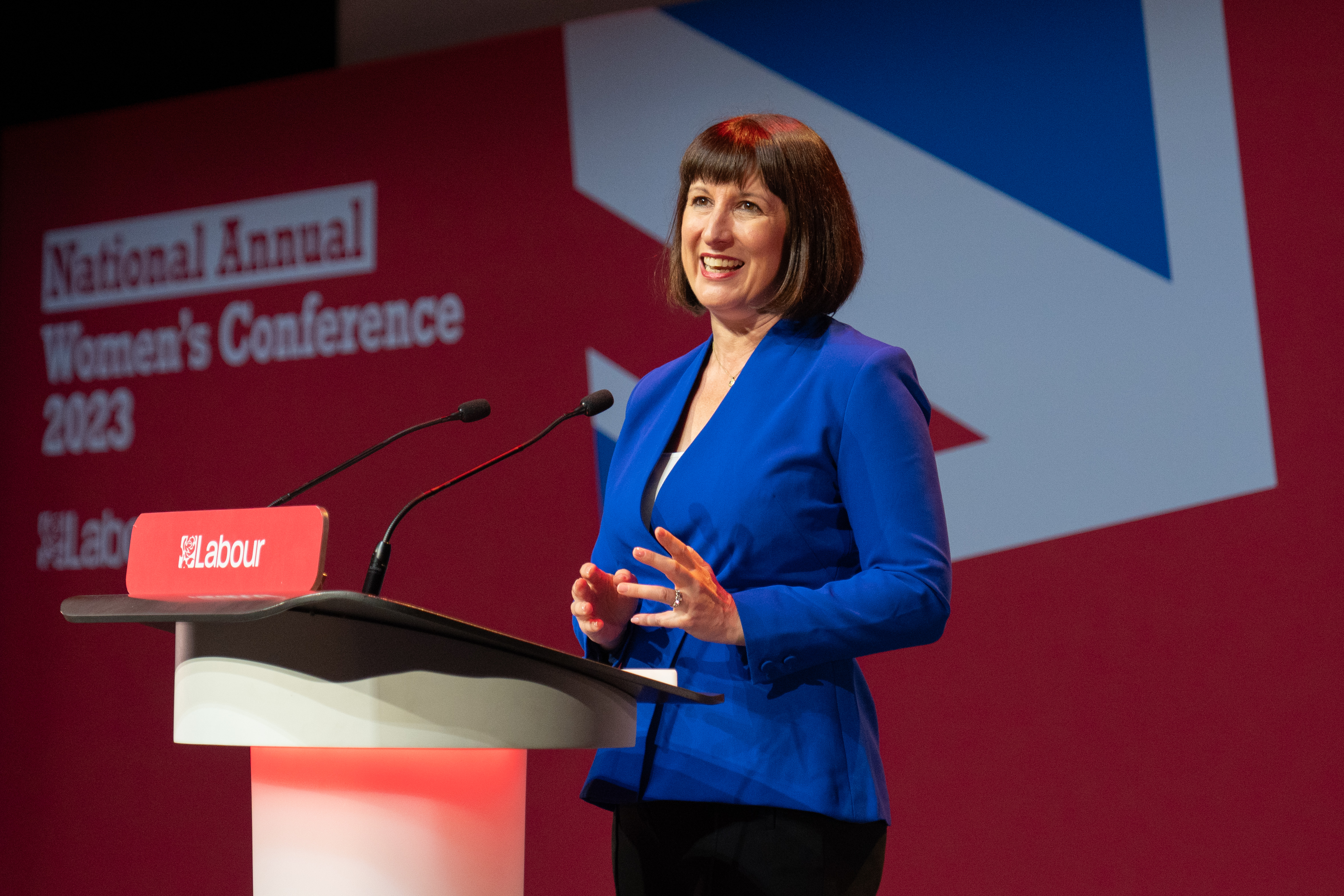
Last June, the Labour Party won the General Election with the promise of not raising taxes. Although a useful promise to win an election, ruling out tax increases can prove problematic, as it discards the potential benefits of using taxes to tackle issues of inequality prevalent in the UK. Therefore, Labour’s fixation on small scale incremental changes such as an increase in capital gains tax to 24%, far below the 30% rate in the sixties and seventies, will likely fail. Closing non-dom tax loopholes was promised by Rachel Reeves to raise revenue and to make the super-rich pay their share in taxes. However, Reeves backtracked on this after an alleged plea from Blackstone boss Stephen Schwarzman. This policy decision is contrary to widespread beliefs that wealth should be taxed more than income, as work should be rewarded more than idle accumulation of capital. As of 2022/23, in the UK the poorest 10% pay more in taxes as a proportion of income, at 48%, than the richest 10%, at 39%. This is due to regressive taxation through VAT, as the poorest spend more. It is also because capital gains, typically only enjoyed by the highest earners, are taxed too little.
The solution proposed here is state intervention through greater taxation on capital. This can be achieved in multiple ways: through capital gains tax on returns, greater inheritance tax, and with the introduction of a wealth tax. The first will fix the problem in the short-term, while the second will decrease generational inequality. A wealth tax will work to redistribute wealth through a complete overhaul of capital taxation.
A number of European countries have already proven the viability of a wealth tax. Belgium, for instance, has a wealth tax on property equivalent to 11.3% of the value of €1 million. Similarly, Spain taxes individuals at 3.5% at the top rate. A wealth tax is a tried and tested idea that has worked in both these countries where wealth inequality is significantly lower than that of the UK. In the Wealth Gini, a measure of wealth inequality, higher numbers mean greater amounts of wealth are controlled by the top percentile. Spain had a Wealth Gini Index of 57 while Belgium’s was at 46, against the UK’s at 61 as of 2023.
Thomas Piketty describes the hypothesis of r>g, or in other words, the idea that the after-tax return on capital is greater than the economic growth rate. This idea suggests that the reason for increasing wealth inequality is capital growth outpacing wage growth, enabling the wealthiest to accumulate wealth at a rate faster than wage growth, thus increasing inequality. Increased taxes on capital gains and a wealth tax will close the gap between wage growth and capital gains growth, allowing for the gap between the rich and the poor to close too.
By proxy, taxation can be used by the government to redistribute wealth through more housebuilding. Experts believe the UK needs to build 250,000 houses a year, and over the last decade housebuilding has averaged just 130,500 a year. Further, using progressive capital gains and a wealth tax will reduce demand for capital assets, lowering prices and therefore redistributing wealth. Democratisation of wealth will lead to greater living standards for all, as housing and investment in the stock market will be available to all. The argument made in this article is not railing against hard work or success but instead amplifies the rewards of hard work while dampening the returns given by the idle accumulation of capital.
The views expressed in this article are the author’s own, and may not reflect the opinions of The St Andrews Economist.
Image Source: https://www.flickr.com/photos/190916320@N06/53241802814