
By Paul Halleman

A brief overview of the structures of China’s labour relations
Deng Xiaoping’s declaration ‘let some people get rich first’ is an example of the rhetoric used by Chinese policy-makers to justify the abandonment of Maoist ideals in favour of authoritarian State-capitalism. With this formula he enshrined a tacit agreement between the Chinese Communist Party (CCP) and the population: the CCP’s absolute grip on power would go unchallenged as long as the population could ‘get rich’. This has put the State in an uneasy situation where its legitimacy is derived solely from economic success rather than ideological underpinnings or democratic approval. In the post-socialist era, the CCP’s pragmatic economic policy-making has been successful in making China the leading manufacturer in the world. If it specialised on labour-intensive goods at first, China’s industry has quickly climbed the value-added ladder to be at the cutting edge of technology and a serious rival to the United States. Since the 1990s its growth rate has averaged an astonishing and sustained 9% per year transforming it from a low income country to the leading economy in the world in terms of purchasing power parity. But this transformation has not been without drawbacks, the increase in economic growth has run parallel to a spectacular increase in income inequalities. In the span of a generation, China’s income distribution transformed from an ostensibly egalitarian one, to one of the most unequal in the world. This economic miracle was only possible thanks to the sacrifices of the Chinese working class that accepted harsh working conditions if it meant rising standards of living. Long hours, managerial despotism, casualisation, and job insecurity have become the every-day experience of many workers across the country. To satisfy its conflicting imperatives, the Chinese State has had to orchestrate a delicate balancing act between the protection of worker’s conditions and the promotion of economic growth. The heart of their industrial relations policy relies on the control of trade unions organised within the ‘All China Federation of Trade Unions’ (ACFTU). The organisation however has long been criticised for its repeated failures to protect the interests of workers. Labour relations are extremely volatile in China and, without institutional reforms, widespread unrest might spill over into hostile class confrontation and threaten the CCP’s monopoly on power.
Since the late 1970s, economic liberalisation has fundamentally reshaped the relation between Chinese workers and companies. The 1994 Labour Law was pivotal in shaping China’s contemporary economic system. The CCP abruptly abandoned the socialist danwei system in favour of a contractual, wage-based, relationship between employees and employers. These reforms led to the mass restructuring of State-Owned Enterprises (SOEs). The public sector in the economy lost its primacy and Foreign Invested Enterprises (FEIs) as well as domestically owned private enterprises developed. In essence, the CCP relinquished the command economy and transitioned towards a more flexible ‘market socialism’ model of production, in which it still retains considerable sway on economic matters. This move, however, has limited the State’s ability to supervise on the shop floor practices and appropriately enforce workplace regulations. In strictly legal terms, postsocialist China has had better labour standards compared to countries of similar income per capita. In practice however, Chinese workers have often faced appalling working conditions. The issue of workers’ rights, therefore, lies not in the establishment of labour standards but in their proper implementation. Typically, in industrial and post-industrial economies, advocacy groups such as trade unions or NGOs enable workers to organise and promote collective bargaining. In the Chinese case, however, such groups face serious constraints imposed by the legal, political, and institutional structures of labour organisation.
The ACFU: an organisation under close political scrutiny
Much like the Chinese State, the ACFTU, the structure that englobes all trade unions in China, pursues sometime conflicting goals: to increase production and represent workers. With an estimated membership of over 300 million, the ACFTU is the largest worker organisation in the world. Politically, it is subordinate to the CCP, taking direct orders from party officials. The ACFTU is caught in the crossfire between the State’s accumulation and legitimation imperatives. At the enterprise level, unions are financially dependent on employers who contribute 2 percent of their payrolls to the union fund. This makes them vulnerable to managerial co-optation and largely irrelevant to workers in case of disputes. On the other hand, workers are continually excluded from significant participation in the enterprise unions. For these reasons the ACFTU, despite a high union density, lacks legitimacy among workers. The reliance on labour dispute arbitration committees (LDACs) and civil courts rather than agreements brokered by unions between employers and workers to solve labour disputes is worrying. Litigation procedures have increased from 33,000 in 1995 to 693,000 in 2008 and have likely followed a similar trend since then. Individual example of workers’ collective action can be tracked thanks to the China Labour Bulletin map database. The systematic use of alternative by workers is a testament to an existing widespread mistrust amongst them towards official unions. More to the point, the NGO China Labor Watch has qualified the LDACs decisions as overwhelmingly “pro-employer” and warned that courts are actively incentivised to protect business interests, especially in industrialised provinces such as Guandong. Hence, current institutional arrangements are failing to provide an efficient framework to protect workers rights, this is partly due to political considerations.
Their exists close links between the top of the ACFTU and the CCP, this gives the former a direct access to political deciders but also places the organisation within the orbit of the State. Arguably, the main objective of the ACFTU is to support the economic policies of the State, and strengthen the CCP’s social control on the population rather than protect workers’ interests. The State, as the self-proclaimed protector of the ‘legitimate rights and interests of workers’, exercises a legal monopoly on labour organisation and cracks down violently on attempts to establish independent unions. The State’s suppression of labour movement that go beyond individual work-units, weakens the working class’s bargaining position and its ability to resist commodification. Because the ACFTU is deeply embedded within the structure of the Chinese State and ‘harmonious’ labour relations are essential to the legitimacy of the CCP; from the central government perspective, industrial action is perceived as a major political threat. The distinction between legitimate expression of economic grievances and unacceptable, seditious, anti-regime action is blurry. Union mediated agreements between workers and employers, as well as alternative legal routes to arbitrate labour disputes are, to a large extent, not able to answer workers’ increasing discontent.
The risk of class confrontation
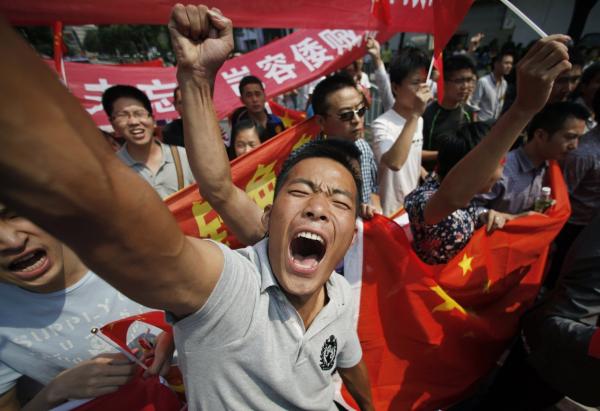
Actions within the institutional framework we described being a dead-end, labour activism turns to more confrontational methods for workers to have their voices heard. Strikes and protests have become more common in recent years, especially since Covid, and, worryingly, have spread beyond the traditional hotbeds of labour activism to smaller cities and the countryside. Labour disputes are no longer constrained to manufacturing industries but now plague most sectors of the economy. This widespread unrest, across geographical sectors and industries, is unlikely to die out in the near future. Institutional channels are unable to cope with the rapidly changing employment practices brought by technological change, chief of which is the growing importance of the platform economy. The heavily top-down structure of the ACFTU, and Chinese policy-making in general, makes the organisation slow to adapt to new challenges. Grassroots movements are developing, for example, delivery workers are organising to protect their rights, however they operate in a legal grey area. Would they to become threatening to influential business interests, or would their very existence appear to question the legitimacy of the ACFTU and the State, these organisations could be shut down and leaders sentenced to hefty jail sentences. Scholars have described workers’ unrest in China as an insurgency because of its dispersed, fractured, and ephemeral nature. The lack of legitimate workers’ representative pauses a challenge because without articulated rational proposals from workers, the CCP is left guessing what they are expecting. This makes the situation particularly volatile and given the spread of unrest to new sectors of the economy, this insurgency will prove hard to crush using repression alone. Recent examples of union reforms at the regional level, prompted by workers mobilisations, provide some hope that a peaceful solution could be reached.
As the negative consequences of economic warfare with the United States become more acute and competition for global manufacturing markets ramps up, the CCP needs to reimagine its industrial relations’ policy. The Chinese economy’s incredible growth is likely to slow down in the next decade. The ‘Chinese Dream’ of hard work in exchange for upward social mobility is already losing its appeal. The revolutionary economic transformations of the 90s and 2000s are past us and new social classes are now solidly entrenching themselves into the system. This has serious implication for the Chinese social contract. If the CCP wants to remain legitimate in the eyes of Chinese workers, it needs to open channels for them to express their grievances and focus on protecting their rights. Questions are being raised about the political oversight ACFTU is subjected to and about the criminalization of alternative, independent workers’ organisations. Far from being a marginal political concern, workers’ rights issues have the potential to seriously destabilise the regime. Let us not forget that the fracturing of the Soviet Union began in Poland due to workers organised in an illegal trade union.
Photo from Libcom.org
The views expressed in this article are the author’s own, and may not reflect the opinions of The St Andrews Economist.