
By Arnaz Mallick

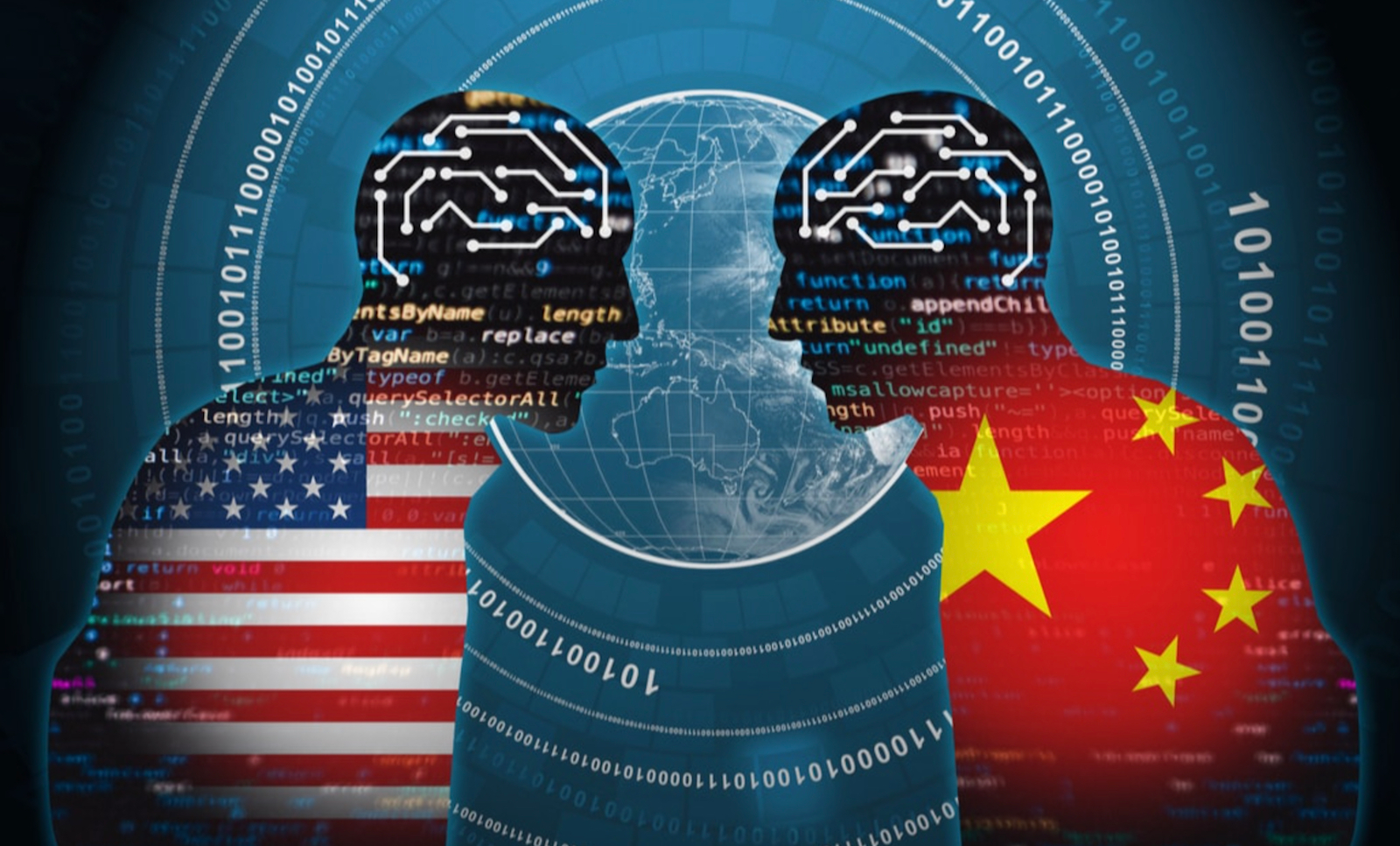
The race for new technology, throughout time, has been fuelled more by personal human ambitions than by genuine desire to innovate. In the bipolar world of the 1960s, there was the space race between the USA and USSR; now, in 2025, we are instead privy to a ‘global AI race’ taking place between the superpowers of the world.
On 1 September 2017, Putin, speaking to Russian school students, stated that “artificial intelligence is the future, not only for Russia, but for all humankind…Whoever becomes leader in this sphere will rule the world.” Over seven years later, AI has risen to the forefront of contemporary debate. It has found a way to fuse itself with the geopolitical aims of the world’s greatest superpowers. Though it is contested whether AI will ever be able to eclipse the abilities of the human mind, rivalries between the Chinese DeepSeek and OpenAI persist.
The Artificial Intelligence Summit was held in Paris from the 6 to 11 February, co-chaired by President Macron and Prime Minister Modi.
The Chinese AI model DeepSeek, with its R1 AI reasoning model built at a fraction of the cost of and computing power of that of OpenAI’s, clearly demonstrates fears of AI and innovation being weaponised by geo-politically powerful, significant countries being manifested.
With DeepSeek on the rise, the AI industries and efforts of countries such as India, rivals to China, have also been spurred into action, with Indian attempts to build AI models being sped up since the AI summit in Paris. The IndiaAIMission has been launched, and has earned over $1.2 billion in investment.
Yet the Global AI race is not only limited to countries such as India and China. In Asia-Pacific, for example, developed economies will see further growth, with greater proportions of the AI-complementary jobs. AI in Southeast Asia is also more closely linked to the state — AI Singapore is a national alliance of top Singaporean AI research centers, and is also a partnership between private AI startups and public research institutions, merging the two sectors. On the firm level, Southeast Asia is a location ripe for competition between American and Chinese AI firms to expand their regional growth.
Chinese tech powers such as Huawei and Alibaba are looking to invest hundreds of millions of dollars into constructing data centres in Southeast Asia to harbour AI development in later years. On 13 July 2023 was the first forum of the Chinese-ASEAN Artificial Intelligence Cooperation — demonstrating how China, in its quest for dominance on the global stage, is spreading its sphere of influence in the field of AI research.
Moreover, at the start of 2025, Putin ordered the Russian government as well as the largest Russian bank, Sberbank, to develop and build upon cooperation with China in the realm of AI. Partnership between Russia and the rest of BRICS in the realm of technological innovation and AI symbolises, above all, how AI is increasingly becoming a potent geopolitical tool, above all between China and the USA. By 2022, moreover, nearly half of top AI researchers worldwide have come from undergraduate institutions in China, demonstrating how China is at the forefront of the global AI race.
But any country’s prowess in the field of AI is more than just technological development, and also more meaningful than what we fear from the rise of artificial intelligence. Abilities in this field are broader echoes of the strength of a nation’s education, workforce, and cohesion in the realm of innovation. Computer scientist Geoffrey Hinton, often termed the ‘godfather of AI’ for his work in AI, which won him a Nobel Prize in Physics in 2024, resigned from his position at Google in 2023 to be able to more openly speak about threats posed by AI, expressing fears of what AI could do in the hands of ‘bad actors.’ It is perhaps clear that this is a technological force most potent when in the hands of global superpowers.
Photo from Asia Times Website
The views expressed in this article are the author’s own, and may not reflect the opinions of The St Andrews Economist.