
By George Davies
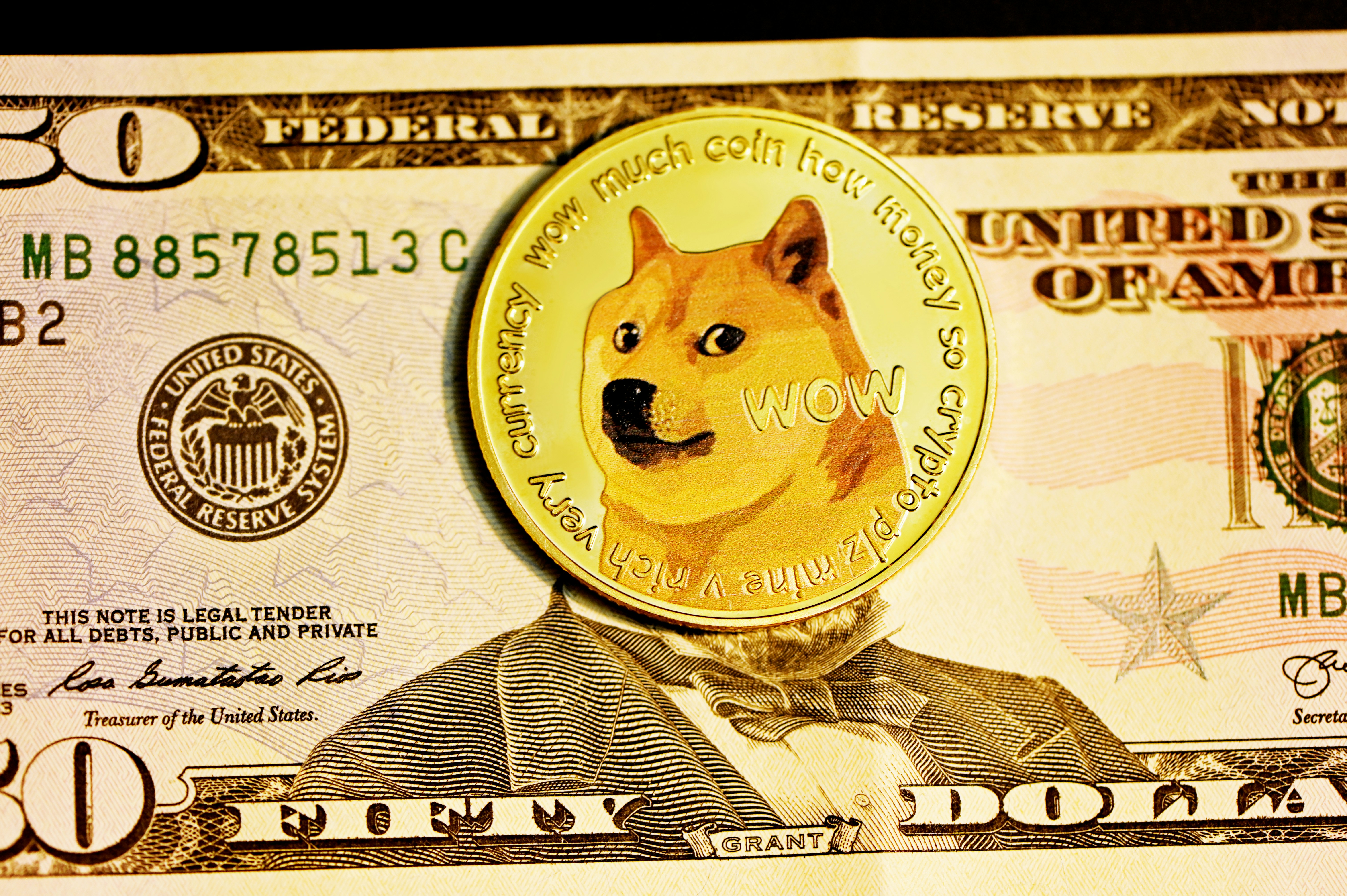
What does a 2010 Tumblr dog post have to do with the relationship between governments and international financial markets? A lot, apparently. Since Atsuko Sato, a young blog poster, captioned a photo of her pet with an ironic spelling of the word dog, the “Doge” meme has gone worldwide and spawned countless spin-offs. In 2013, it inspired the launch of Dogecoin, a parody cryptocurrency, the first of a growing group of meme coins and inspiration for Elon Musk’s Department of Government Efficiency (DOGE). The coins have grown from a playful in-joke to being a major part of the cryptocurrency movement. And as Argentina’s President Javier Milei recently found out, they can be significant political movers: meme coins are no joke when they lead to calls for your impeachment. So, what do meme coins really mean for our economy and financial system?
To understand their implications, we first need to understand what meme coins are. Meme coins are highly speculative cryptocurrency tokens based on blockchain databases. Cryptocurrencies are divided into two groups: Bitcoin (the first cryptocurrency) and altcoins (all other cryptocurrencies on the market). Meme coins fall into the latter category and are characterised by their origin in internet memes. Examples include the likes of: Gigachad, the hyper-muscular archetype; Moo Deng, the internet’s favourite baby hippo; and Pepecoin, of the eponymous cartoon frog.
While traditional securities are valued based on claims to underlying cash flows or productive real economic assets, the value of meme coins is derived from the cultural capital of the meme itself and investor sentiment around the coin (Ludwig 2025). Unlike stablecoins, cryptocurrencies which peg their value to another asset, meme coins lay no claim to a relationship with any real-world production.
Meme coins are now considered by some to be the fourth most valuable sector in cryptocurrency (BDC Consulting). Some hedge fund founders are even beginning to get involved in the meme coin trend, trading some of the more well-established coins using traditional analytical techniques.
The economic and financial implications of the meme coin trend aren’t immediately clear. For some commentators, the rise of meme coins reflects a new financial nihilism in young adults: if the economic and financial odds all seem stacked against you, why not bet it all on a joke? Proponents of meme coins argue that they are helping to democratize the financial system by offering potentially astronomical returns on digital assets more accessible than traditional financial products. Meme coins also are claimed to democratise the money-creation process, a power formerly held only by the state (Nani 2022). The evidence, however, suggests that meme coins are not as economically progressive as the crypto bros say. Meme coin projects often see small numbers of powerful investors capturing profits, with ‘pump-and-dump’ or ‘rug-pulling’ schemes that defraud retail investors.
A pump-and-dump is a form of coordinated market manipulation that organisers use to profit off meme coins generally with a smaller market capitalisation. After discreetly buying up coins at a low price, online PR campaigns in Telegram or Discord try to boost the price of the coin by creating hype and promising high returns if other traders get involved in the pump. The organisers can then sell off their position, crashing the coins’ price. Researchers have found that these schemes result in “substantial wealth transfers between market participants” (Dhawan and Putniņš 2023). Fast-acting traders can profit, but with their insider knowledge, it is the organisers of the scheme that consistently win from this market manipulation.
While these pump-and-dump schemes openly announce their intention to manipulate coin prices, rug-pulling schemes are less transparent. Meme coin administrators use celebrity endorsements (either fake or real), and sponsored content is used to generate hype before dumping all their assets and again leave retail investors out-of-pocket. This is often enabled by administrative privileges that allow scammers to block customers from transferring their tokens or even transfer customers’ tokens to their own wallets without their permission (Zhou et al. 2024). Both types of these schemes are common, with one analysis of the Ethereum block chain finding that 98% of tokens minted daily exhibited fraudulent characteristics (Kalacheva et al. 2024).
Even when meme coins are not outright scams, their ownership and transaction models favour investors who launch the coin over the less powerful retail traders. A study of the $TRUMP coin, launched by Trump on Truth Social, found that its highly centralised ownership structure (the coin’s developers held 80% of the token supply at launch) and transaction structure ($100 million of trading fees went to the developers in the first two weeks) favoured the creators and early movers (Krause 2025).
However, the identify of profit-making developers and early traders is not always clear. The exact ownership of CIC Digital and Fight Fight Fight LLC, who released Trumpcoin, is not wholly clear. Similarly, Haliey Welch, the namesake of the $HAWK coin, argued that she was not responsible for the launch and rug-pulling of the meme coin despite heavily promoting it on her social media. Meme coins, rather than democratising the financial sector, are transferring wealth from retail investors to unknown and unaccountable developers and traders.
There is some evidence that meme coins offer other benefits to the financial sector, even if its distributive effects are concerning. There is initial evidence to suggest that meme coins might offer hedging benefits against Bitcoin while other altcoins do not (Li et al. 2023). In giving cryptocurrency investors a diverse range of coin investment options, meme coins can help diversify risk in investor portfolios and potentially protect the broader cryptocurrency sector against crashes in Bitcoin’s price.
Yet this is not enough to resolve some fundamental questions about the role that meme coins should play in the financial sector in future. Meme coins have significant implications for questions around the definition of cryptocurrency, and whether market manipulators can be regulated in a new era of decentralised finance. Moreover, the current evidence casts significant doubt on the promise that meme coins will be a force for good in distributing the gains from the growing cryptocurrency sector. Kabosu, the original Doge, may no longer be with us, but her meme coin legacy will not be going away any time soon.
All views expressed in this article are the authors own, and may not reflect the opinions of The St Andrews Economist.
Photo by Kanchanara on Unsplash