
By Ariane O’Rourke
Chances are, if you were to take stock of your skincare and beauty products, a healthy proportion of them would have French descriptions and product names like “crème visage hydratante” or “eau de parfum.” Whether or not you speak French, the presence of the language evokes a certain je ne sais quoi. So, why do beauty brands consistently use French on their packaging? The answer lies in a nuanced blend of historical, cultural, psychological, and economic influences that intend to transform a basic skincare product into a symbol of opulence.
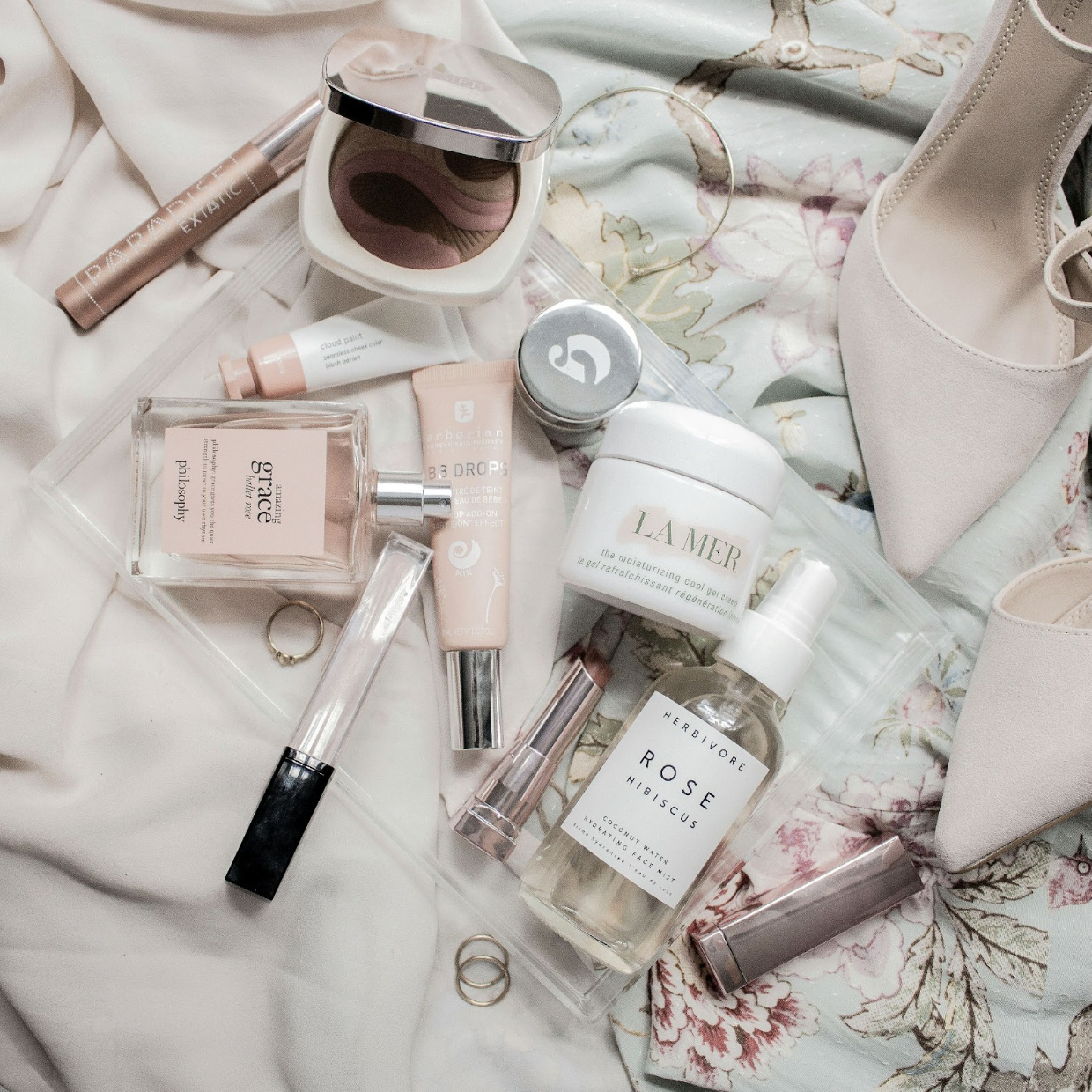
The connection between France and beauty runs deep, with roots stretching back centuries. In the 17th century, the French court under King Louis XIV became the epitome of style and luxury—a reputation that endures to this day. French cities like Paris and Grasse became renowned for their fashion houses and fragrance production, respectively, setting an aspirational standard that continues to influence the beauty industry globally. Iconic brands such as Chanel and Lancôme have capitalised on this rich heritage, crafting an image that connects their products to a centuries-old tradition of refinement and exclusivity. Even products without authentic French roots have capitalised on this heritage: La Mer is an example of a German-founded company now owned by an American conglomerate that presides under a French name, selling its signature moisturiser, Crème de la Mer, for just over £300 for 60 mL.
The French beauty industry’s history can be viewed through the lens of comparative advantage. France developed an early expertise in cosmetics and fragrance, gaining a significant competitive edge over other countries. By leveraging this historical expertise, French beauty brands have maintained a dominant position in the global market, commanding premium prices for products that carry the prestige of French craftsmanship. This differentiation has allowed these brands to tap into niche luxury markets, characterised by less price sensitivity and greater emphasis on quality and brand heritage.
Marketing hinges on psychology and the use of the French language is a masterstroke used by beauty companies to evoke particular emotions. French—often regarded as the language of love, sophistication, and elegance—is associated by customers with superior quality and heightened exclusivity, irrespective of their actual comprehension of the language. Luxury is most often about perception, and the allure of French creates a story and aura that elevates even the most modest products.
The concept of signalling, a well-known economic theory, is at play here. Signalling theory suggests that companies convey certain attributes of their products through external cues to differentiate themselves from competitors. French, as a linguistic signal, implies a superior product—whether or not the actual content justifies this impression. Consumers rely on these signals, especially in markets characterised by information asymmetry, where it is difficult for buyers to discern the true quality of products without cues provided by branding.
French labels thus enhance the perceived value of beauty products by positioning them as premium and exclusive: consider the difference between a “moisturising cream” and a “crème hydratante.” The latter suggests something more refined, and ultimately more desirable—even if the formula is identical. An experiment in the Journal of Marketing Research found that brands with French pronunciation were perceived as more hedonistic than similar brands with English pronunciation.
The concept of perceived value is critical here. This phenomenon refers to how consumers gauge the worth of a product beyond its functional benefits. French terminology amplifies this perceived value by linking products to a high-status culture, one that consumers are often willing to pay a premium for. This effect is further magnified by the “snob appeal” that often accompanies foreign-language labelling: products appear more exclusive, unattainable, and inherently desirable.
The use of foreign languages as a quality signal is not unique to beauty marketing. A parallel example is Häagen-Dazs, which used a pseudo-Scandinavian name to appeal to Denmark’s positive image in the United States as a result of its support of Jews during World War II. By using a name that sounded Danish, co-founder Reuben Mattus successfully positioned Häagen-Dazs as a premium product in the ice cream market, leveraging cultural associations to create perceived value.
The effects of this linguistic branding extend beyond individual consumer purchasing decisions, shaping broader market dynamics. It intends to create a disparity between mass-market and luxury beauty products, thus reinforcing the perception that true quality is reserved for those who can afford it. As global markets evolve, emerging beauty brands from non-French backgrounds may continue to trend towards similar strategies, or, conversely, challenge the status quo by embracing authenticity and local heritage in branding. The ongoing globalisation of beauty culture may eventually dilute France’s monopoly on prestige, but for now, the power of the “crème hydratante” remains as strong as ever.
So the next time you reach for a “crème visage” or a “sérum anti-âge,” remember that it’s not merely the ingredients you’re investing in. You’re buying into a story, a legacy, and an artfully crafted illusion of luxury—one that just happens to be written in French.
The views expressed in this article are the author’s own, and may not reflect the opinions of The St Andrews Economist.
Image Rights: Unsplash