
By Arnaz Mallick
February 2022 marked a turning point in the decided neutralities of several nations; Finland and Sweden joined NATO, ending their long standing policies of military neutrality. Switzerland put an end to its historically unaligned stance by condemning Putin’s invasion and joining the EU’s sanctions against Russia. The start of the Russo-Ukrainian War marked a pivotal turning-point in the 21st Century, characterised by the consolidation of NATO’s power (with Finland and Sweden’s affiliation forming an almost entirely NATO northern shoreline in the region of the Baltic Sea) and the end to the neutrality of several prominent countries.
Since the outbreak of war in Ukraine in February 2022, India under Modi’s leadership, however, has maintained a persistent neutrality towards Russia. While Indian foreign policy has emphasised striving for peace between Russia and Ukraine, India and several other countries outside the EU have been held to a different set of expectations regarding their stance on Ukraine. Since the start of war in Ukraine, several Western countries such as Germany, for example, have been criticised for inadequate support for Ukraine, and called upon to increase their military aid to Ukraine, as well as their amount of refugees taken in. India, while having been criticised, has nonetheless been held to a less scathing standard.
Dr S. Jaishankar, India’s Minister of External Affairs, has been outspoken on the topic of the West’s condemnation of India’s neutrality as hypocritical in its nature, as India decided to abstain on the UN vote to condemn Russia, and Modi stated that he ‘grieved the loss of life’ in Ukraine. Western response to India’s claims have been multifaceted — while, initially, there was plenty of pressure placed on India to take a more vocal stance against Russia, as war continued in Ukraine, pressures grew less and less upon Modi to take decisive condemnatory action against Putin, as India remains one of the largest Russian oil importers today.
What we see here is an interesting double standard of sorts; India is held in importance as one of the most significant players on the global stage today, with its rapidly developing economy and pertinent geopolitical role in the subcontinent. It fails, nonetheless, to be held to the same expectations as those placed upon western countries, to actively condemn and sanction Russia while sending military aid to Ukraine; Germany having just offered 1.4 billion euros in aid to Ukraine. This is expected — India is not a part of NATO, and Russia’s historical support of the nation far outnumbers anything countries that are members of NATO or the EU have done to ally themselves with India, whose past in socialism has given its relationship with Russia a strong, lasting foundation.
India’s ‘Putin neutrality’ has certainly been criticised — but it is interesting to note what India’s neutral stance and decision to abstain implies about the country’s role in the world. Does such a decision place India on par with developing countries of the global south that have actively voiced support for Russia, setting it apart from the developed world in a decision that several critics would deem ‘regressive’? Although this clearly seems to be a more mainstream mode of thought, India’s stance also signals its having reached an independence from the foreign policy and rhetoric of the West, namely the USA. Where Modi and his government, in recent years, have been moving towards strengthening relations with the USA — their divergence in foreign policy regarding Russia indicates a degree of autonomy and a willingness to ‘stand its ground.’
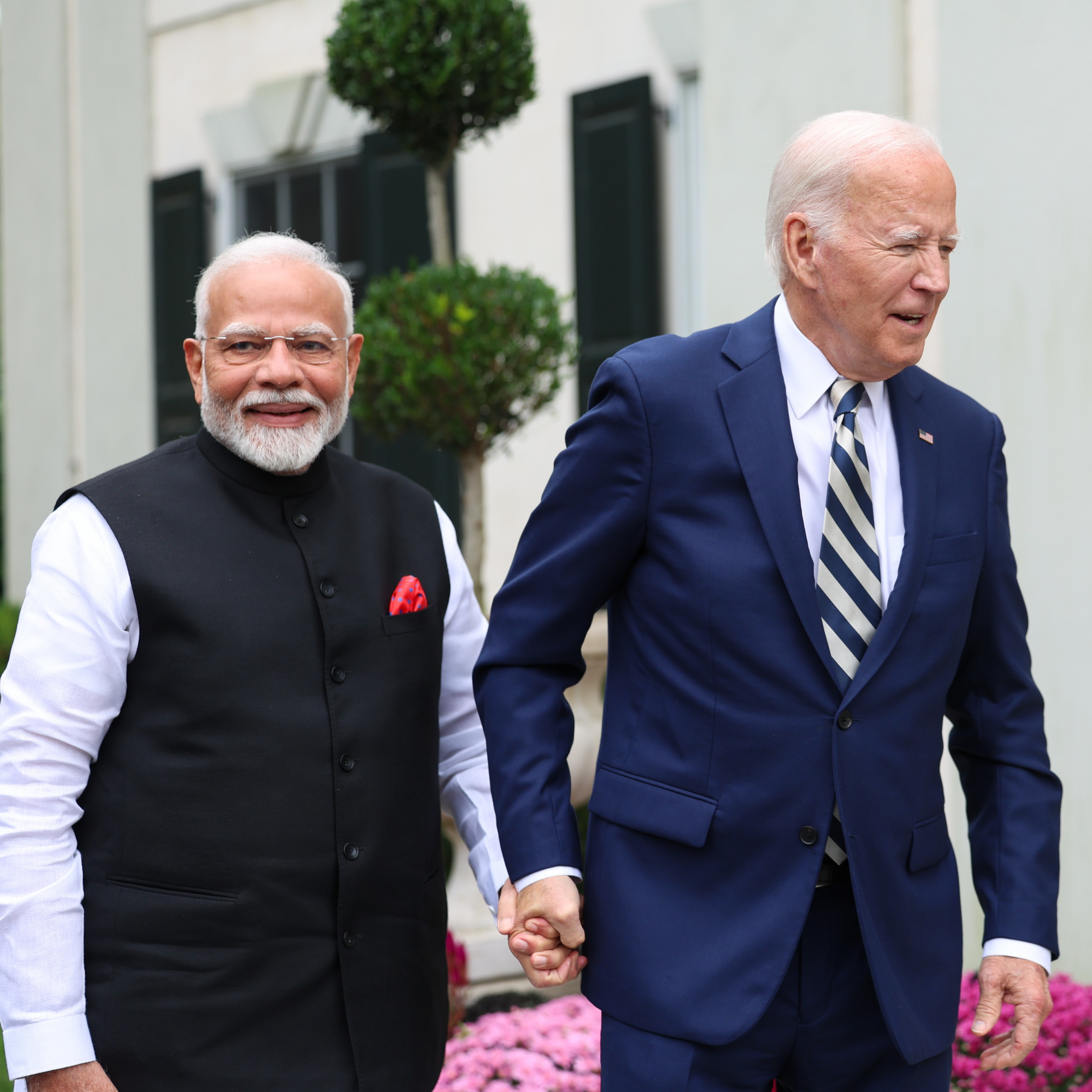
Central to India’s ‘dual’ foreign policy, treading the line between East and West, is the question of whether India can afford to ‘play the double game.’ Solely within the months of August and September, Modi made official visits to both Zelensky and Biden in Ukraine and Washington D.C. In his visit to Ukraine, Modi made the striking action of embracing Zelensky in a hug — a move that may be deemed questionable in light of India’s foreign policy of the last two years. The overt friendship displayed by both leaders towards each other is a strong indicator of how, while Zelensky has imposed searing criticisms on his neighbours for their lack of support, there are clearly different standards that Asian countries, India most prominently, are being held to.
Interestingly, other countries in BRICS have adopted a less neutral stance, with China’s position on the Ukraine War under pressure as sanctions, supply-chain shocks, and market instability all threaten its economic interests. Indeed, India is not the only prominent Asian country to adopt a neutral position on the war in Ukraine; countries like Vietnam, Laos, Thailand, and Sri Lanka abstained on the UN resolutions regarding Ukraine. What sets India apart from such countries is that, given its increasingly relevant economic and geopolitical role in the world, India can afford to play both sides, in a sense.
With Modi’s visits to Biden and Zelensky, at the frontline of anti-Russian foreign policy and aid for Ukraine, the West and its most prominent figures do not seem to have much of a problem with India’s amiability with Russia. And with BRICS in place, India is a large and increasingly influential ally that would be in Russia’s best interests to maintain. Both sides undoubtedly view India as an important country to befriend, but it is the West whose approach to the country is more striking. India is a country whose role is pivotal in the Indo-Pacific, ensuring against China’s economic and geopolitical expansion in the region as India becomes an increasingly definitive economic power and commercial partner.Tensions between India and China along their border in the Himalayas, and China’s economic support of Pakistan all point to the geopolitical rivalry existing between India and China. It is this rivalry that makes India a key potential ally for the West, as a bipolar system between the US/NATO, and Russia and China becomes increasingly apparent. India’s ambivalence on the Ukraine question is a measure that the Ukraine and the West are clearly willing to accept, for the sake of the country’s consistently developing power and presence.
Photo from WikiCommons