
By Oberon Theam
The views expressed in this article are the author’s own, and may not reflect the opinions of The St Andrews Economist.

Since China’s Reform and Opening Up (改革开放) in the late 1970s, the country has experienced remarkable economic growth that has transformed its global standing in the following decades. What started as an effort to correct the missteps of the Cultural Revolution and the Great Leap Forward, laid the foundation for China’s economic resurgence and the rise of a new world power. The nation’s leadership, under Deng Xiaoping, launched a series of reforms aimed at modernizing its economy, opening up to global markets, and transitioning from a centrally planned system to a more market-oriented approach. As a result, China has witnessed an unprecedented rate of economic and human development, but the cracks in its system have begun to unwind, as the nation grapples with challenges such as mounting debt, demographic decline, and growing international decoupling. Although for decades, the world has tended to pay attention to China’s rapid growth, competitive tech, manufacturing, and geopolitical ambitions, these grey rhinos are suddenly taking charge and the global impact of China’s hidden economic risks may be far greater than anticipated.
China’s debt has surged as many local government financing vehicles (LGFVs) have struggled to repay their debts. This began when local governments were impacted by the real estate crisis in 2021, and have seen their primary revenue source, land-related sales, collapse. After decades of a thriving property market, the sudden plunge in sales has caused a major revenue shock, threatening basic social services and funding for investment projects. Official figures place China’s public debt at 71 trillion RMB, or 69% of GDP by the end of 2023—comprising 30 trillion RMB (24% of GDP) in central government debt and 41 trillion RMB (32% of GDP) in local government debt. As a result, local governments have accumulated massive off-balance sheet liabilities through LGFVs, set up to circumvent debt issuance limits. The IMF estimates these contingent liabilities at 60 trillion RMB (48% of GDP) by 2023, up from 13% in 2014 which pushes China’s true government debt ratio to 117%, far above the official figure. Moreover, China’s government possesses considerable assets, including vast foreign exchange reserves and a large public sector, giving it some leeway to borrow further if needed. Still, the rapid rise in local government debt and the potential bailout costs have triggered warnings from credit rating agencies. Both Moody’s and Fitch placed China’s sovereign rating on negative watch in late 2023 and early 2024 and the slowdown in China’s consumption has not helped as it is deeply tied to the real estate slump, which in turn has undermined local government finances. As local governments scramble to raise revenue, especially from taxes and land sales, struggling businesses find little incentive to expand or hire, compounding consumers’ uncertainty over future income, leaving local governments in dire financial straits.
Ultimately, tax revenue has become a battleground for local governments as they struggle with their budgets. With the traditional reliance on land sales no longer providing substantial income, authorities are scrambling to find alternative revenue to fund public services and infrastructure projects. Although tax diversification is necessary as traditional revenue sources face challenges, it also has led to aggressive tax enforcement efforts that have sparked public outrage and further eroded business confidence. In addition, retail sales have barely recovered from their pandemic lows as consumer sentiment has relatively remained unchanged despite new government policy. The push to collect back taxes underscores the desperation and on top of this, analysts have warned that it may take up to five years for local government finances to stabilize which could prolong efforts to manage rising debt, further threatening the strained fiscal landscape.
While the government has loosened birth restrictions since the removal of the One Child Policy in 2015, effectively allowing couples to have more children, China’s looming demographic crisis deals with significant cultural and economic barriers that prevent this from having a meaningful impact. Currently, younger generations in China face steep housing costs, long working hours, and a fiercely competitive job market, all of which discourage them from starting families. In doing so, China’s current economic situation will result in a smaller workforce, rising healthcare costs, and a higher dependency ratio, which could not only drag down China’s domestic economy but also diminish its role as a driver of global growth.
In 2023, China lost its position as the world’s most populous nation to India as birth rates plunged, with fewer than 8 million babies born, down from 9.56 million in 2022. Such a decline signals that the country has entered the low-fertility trap after decades of restrictive policies. For centuries, China boasted the world’s largest population, but with it now shrinking at an unprecedented rate, the country’s future remains unclear. China has long relied on its young, mobile workforce to fuel its industrial powerhouse and now, as the number of retirees skyrockets and the workforce diminishes, the strain on China’s social safety net and healthcare system will grow exponentially. In 2023 alone, China’s population shrank by over 2 million, with 9 million births and 11.1 million deaths. Even if there is a slight rebound in 2024, the Year of the Dragon, a culturally auspicious time to have children, long-term prospects for reversing these trends are bleak. China’s fertility rate, currently around 1.0, is heading in the same direction as South Korea’s, which stands at 0.72, signaling a long-term population decline. Major Chinese cities such as Beijing, Shanghai, and others already have fertility rates far below replacement levels, and there is little evidence to suggest this will change.
China’s shrinking and aging population will have severe economic consequences as the country’s total population is expected to decrease by over 100 million by 2050, and by the end of the century, it may fall to less than 800 million. Since China is amidst a current restructuring to counteract the effects of the Covid-19 Lockdown and its subsequent economic slowdown, the demographic crisis could make policy interventions worthless as the number of people continue to decline. For example, efforts to stabilize the housing market will face challenges as the number of potential buyers decreases and the demand for new housing diminishes, leading to an oversupply of properties, declining property values, and reduced investments in real estate development. In terms of the larger economic picture, for a country still dependent on a large, affordable workforce to sustain the world’s largest manufacturing industry, the shrinking labor pool presents a challenge. As labor becomes scarcer and more expensive, the profitability of manufacturing will decline, reducing China’s competitiveness on the global stage. This could lead to a shift in manufacturing jobs to countries like India, as its working-age population grows in contrast to China’s. Another example is the potential strain on China’s pension and social welfare systems as the elderly population balloons and the number of working-age individuals shrinks, the financial burden of supporting retirees will grow exponentially. This could lead to either increased taxes on a smaller workforce or significant cuts to benefits, both of which would stifle economic growth. The growing healthcare costs associated with an aging population will further strain public finances, potentially reducing resources available for infrastructure, education, and innovation—areas crucial for long-term economic sustainability. China’s demographic challenges pose significant risks to its long-term economic growth, as a shrinking labor force, rising labor costs, and increased strain on social welfare systems could undermine the nation’s global competitiveness and economic stability. Without addressing these issues through policy reforms or innovative solutions, China may struggle to maintain its role as a global economic powerhouse in the coming decades.
China is increasingly experiencing economic decoupling from global markets, particularly from the U.S. and Western economies, over issues related to trade and national security. Since 2016, the exchange of tariffs between the U.S. and China has solidified the belief in the U.S. that decoupling is about reducing imports to protect domestic jobs and safeguard infrastructure. From China’s perspective, decoupling signals a strategic shift from pure economic growth to economic control. However, this trend poses significant risks to China’s future by disrupting supply chains, reducing foreign direct investment (FDI), and isolating the country from critical technologies and innovations that could hamper its economic development. For example, Chinese Premier Li Qiang has voiced concerns about these consequences, warning of a “vicious cycle” that could shrink the global economic pie and argued that decoupling, especially amid accusations of overcapacity and product dumping, could raise global costs and hinder growth.
Since China’s reopening, the country has long been integrated into the global supply chain as a manufacturing hub, but growing concerns over economic dependence have led Western companies and governments to reconsider their reliance on Chinese products and components. China’s attempts to control critical technologies and extract foreign know-how have deepened U.S. and European concerns and the U.S., in particular, has introduced measures to reduce its supply chain exposure to China, especially in strategic sectors like semiconductors, pharmaceuticals, and critical minerals. For instance, in the semiconductor and integrated circuits industries, exports from the EU and Taiwan to China dropped sharply in 2023 and as countries continue to impose export controls on key technologies, China risks being cut off from the advanced technologies it needs to innovate and compete on the global stage. This isolation could lead to a slowdown in technological progress and make it harder for China to achieve its ambitions of becoming a global tech leader and would also hamper China’s domestic industries, which still depend on imported components.
In the wake of rising tensions, Western companies are increasingly reluctant to expand operations or invest in China due to concerns about political risk, regulatory barriers, and potential government intervention. FDI into China collapsed in 2023, falling to less than one-tenth of U.S. levels and surveys of foreign firms in China reveal a sharp decline in those planning to expand their investment there. Moreover, many multinational companies are adopting a “China-plus-one” strategy, seeking alternative manufacturing bases in countries like Vietnam, India, or Mexico which could slow China’s economic growth and make it harder for China to achieve its goal of transitioning from a manufacturing-based economy to a high-tech, consumer-driven one. In sum, economic decoupling represents a significant threat to China’s ability to sustain economic growth, innovate, and remain competitive in a rapidly shifting global economy and could reverberate through China’s supply chains, technological development, and foreign investment flows, potentially stifling its long-term ambitions.
Understanding the significance of China’s ‘grey rhinos’ are crucial for assessing the nation’s future trajectory as each presents challenges that, if left unaddressed, could significantly undermine China’s economic stability and global standing. China’s escalating debt, particularly among LGFVs, poses a serious threat to its economic health as the reliance on debt-fueled infrastructure projects has led to unsustainable financial practices, increasing the risk of defaults that could ripple through the economy. At the same time, China’s demographic crisis threatens to strain social services and reduce the labor force, ultimately hindering economic growth. As the working-age population shrinks, the burden on younger generations increases, leading to potential social unrest and economic stagnation. Additionally, the trend of international decoupling, especially from Western economies, poses another significant risk with reduced dependence on China, the nation could face diminished access to key technologies, markets, and investment. This shift could stifle innovation and economic growth, isolating China in an increasingly fragmented global economy. In summary, addressing these challenges is essential for China to secure its economic future and maintain its position in the global landscape. Failing to do so could lead to a scenario where these risks converge, resulting in far-reaching consequences for both China and the world, threatening to destabilize both domestic and international markets in our globalized world.
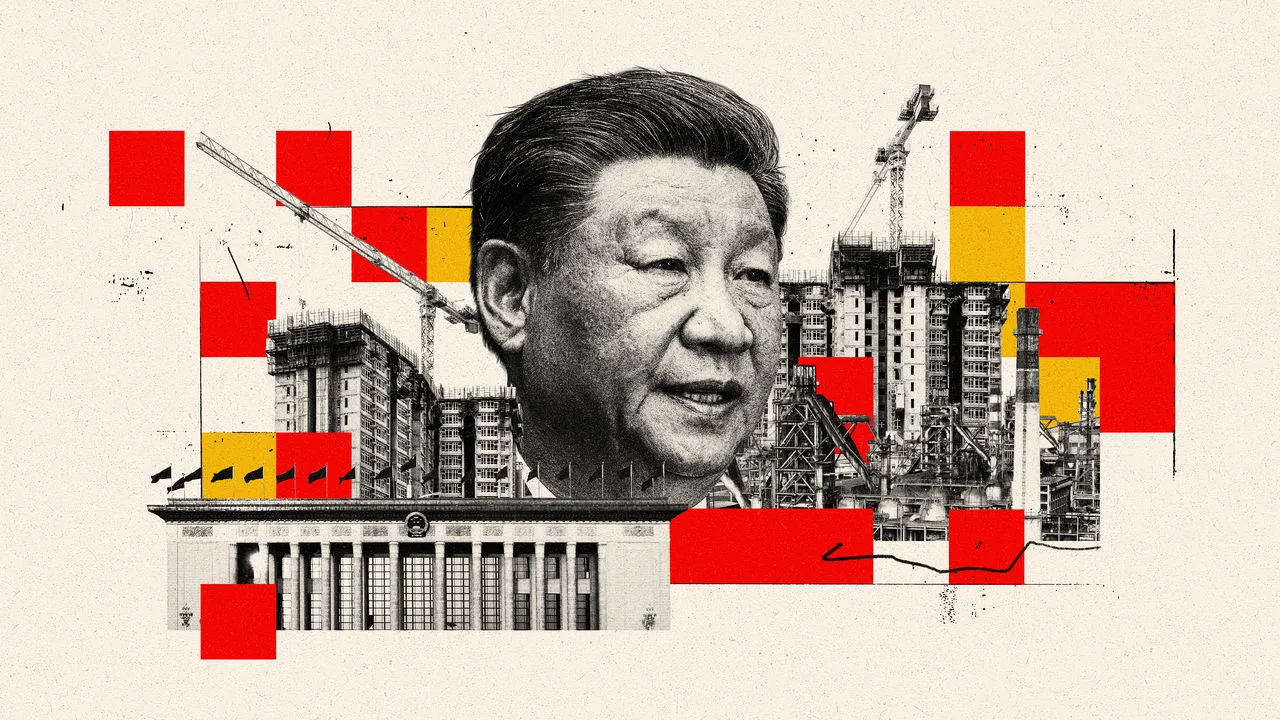
Image from the Economist website