
By Victoria Castro Garcia
The economy has stagnated. The model, once believed immortal and infallible, is drowning in a tidal wave of obstacles, and the market can no longer rely on cheap Russian energy, Chinese imports, or military protection from the United States. Growth has slowed, trade patterns have shifted, and energy security has deteriorated, eroded by past reliance on an untrustworthy Russia. Demographic challenges aggravate the rapid ageing of policies that will soon endanger the economy. The system is entrenched and the report heralding economic cataclysm has been turned in.
Welcome to the European Union.
The report that could shape the Union’s future from 2024 to 2029 was submitted to the European Commission on September 9th. Mario Draghi, former President of the European Central Bank and Primer Minister of Italy, sounded the alarm by anticipating the EU’s failure to safeguard its position on the global stage with his report on The Future of European Competitiveness. Setting out his intention to save the Union’s economy before the problems that he points out create irreparable damage, he categorises the issues haunting the economy into three main battles and details how to overcome them. The report outlines 170 proposals that, while not entirely novel, are ambitious in scope; they build upon Enrico Letta’s Report on the Future of the Single Market by adding a previously missing strategic element. These proposals advocate for market integrity, economic revitalisation, and the integration of new technology, energy, and geopolitics into the European landscape. However, despite the report’s apparent clarity, the EU remains divided.
From the outset, the report places emphasis on the necessity to deal with productivity gaps, and then goes on to summarise the problems of the economy in three goals that the Union must aim to fulfil:
- To close the innovation gap with the USA,
- To equilibrate decarbonisation and competitiveness, and
- To increase economic security and reduce dependence on other states.
So, not everything in the report solely signals impending doom — in planning for salvation from the potential crises, Draghi places the focus on increasing public and private investment and improving the continent’s governance as requirements to strengthen the economy.
In regards to the first issue, Draghi’s concerns lie in the European Brain Drain. While the EU has the power to innovate, many (if not most) companies move their headquarters abroad, particularly to the US, to evade the regulatory and financial barriers that the EU would otherwise impose on them. Draghi thus suggests increasing the support for domestic power by offering financial incentives, improving regulatory and worker formation systems, simplifying the R&D framework and increasing the investment in technological and academic infrastructure. He advocates for strengthening employee formation in and out of their companies, in order to generate a greater number of skilled European workers and to match the advantages offered by foreign companies. In other words, he aims to reduce the opportunity cost between staying in the EU and leaving.
In terms of decarbonisation, the first step towards improving European competitiveness must be to address it as a source of competition in itself, borne from the fact that companies face greater energy costs in the EU than in the US. The competitive stigma of higher energy costs in the EU reduces competitiveness, and so galvanises the dreaded Brain Drain: companies benefit from moving abroad since they cut energy spending and are able to adopt the costs corresponding to those of their rivals. Thus, its improvement goes hand in hand with that of increased competition. Draghi highlights that European competitiveness and innovation in decarbonisation is key. The energy market must be reformed, concludes Draghi’s report, and innovation must be supported to ensure that the EU ceases its reliance on foreign technology, in particular that of Chinese battery technology; far back must be left the old European vehicles and pharmaceuticals.
Finally, the report points out that the EU must become independent in terms of economic and military security. Draghi advocates for a sturdy defence by implementing a joint tendering system that reduces fragmentation. It suggests two solutions, of which one is an increase in defence spending and the collaboration of participating countries and, the other, is the introduction of an active foreign economic policy with commercial agreements made to diversify risk. This would entail the adoption of ‘free’ trade within the EU and allied countries, the issuance of common EU debt, the creation of a successor for the NextGenEU programme, and an increase in the presence of high-risk, strategic projects in the EIB; in other words, to expand the portfolio of the EU’s investments to emphasise the possibility of higher returns from high-risk and long-term projects while remaining protected by other sets of conservative initiatives.
The most urgent question, then, is that relating to the financing of this proposal: how much money will the EU need to face the issues standing in its path?
Draghi, of course, gives clear estimates in his report: the Union will need an additional 800 billion euros in annual investment (approximately 5% of its GDP) from both private and public sources to avert catastrophe. He further suggests issuing joint European debt as a starting point – a suggestion that, unsurprisingly, is not gaining much support, especially from northern countries. This issuance would enable it to adopt joint investment projects, raise more funds, integrate capital markets and start building on the NextGenEU model. Additionally, it proposes reducing costs by adopting a simpler and more flexible regulatory system that protects SMEs and the digital sector, relying on a regulatory pause and a revision of competition policy to prioritise innovation and the joint European project.
Therefore, with a methodical approach and financing in place, Draghi’s report presents a robust plan for growth and progress on the path to realisation. The challenges facing the EU are categorised into three critical battles, each addressed with a tailored solution and substantial funding suggestions to ensure their success. Its clarity is almost painstaking, raising the question: what, then, is holding the Union back from tackling these challenges? The answer lies in political obstacles that the report must overcome before it can be implemented.
The innovation that Draghi’s report is supposed to entail for the EU is not courtesy of its myriad of policies (it largely re-emphasises initiatives and plans already being carried out), but of its plight for reform in European institutions. While it is clearly aligned with the current working disposition of the European Commission, it arrives at a moment with little support towards deep change or the entrenching of innovation.
Key states (such as Germany, France, and Italy) find themselves torn when faced with the apparent solution to the Union’s problems, and the current economic and political conditions of the European panorama do not contribute to the report’s support. Draghi emphasises that his proposal can only be carried out if the correct “political and institutional conditions are in place”, and it is precisely this that poses the first obstacle to his report. The Netherlands and Germany, moved by monetary conservatism, have quickly rejected the report; in contrast, Spain (one of the greatest beneficiaries of NextGenEU) and France (with President Emmanuel Macron stressing it is necessary to finance investment) have expressed their support. The countries affected are divided between trust in a strategically independent economy led by Brussels and the belief that the US is the essential guarantor of the security so urgently needed. Since the EU does not have enough on its plate, it seems that only another economic shock — whether a recession, international conflict, or a crisis — will unite the member countries and enable them to reach a positive consensus on Draghi’s ambitious proposal.
From here, protected by the seaside cliffs bordering St Andrews and the economic stability that permeates a university high up in the rankings, there is little we can say, other than hoping Draghi’s report — if nothing else — will be supported and carried out if the EU wants to brighten the image of its future.
The views expressed in this article are the author’s own, and may not reflect the opinions of The St Andrews Economist.
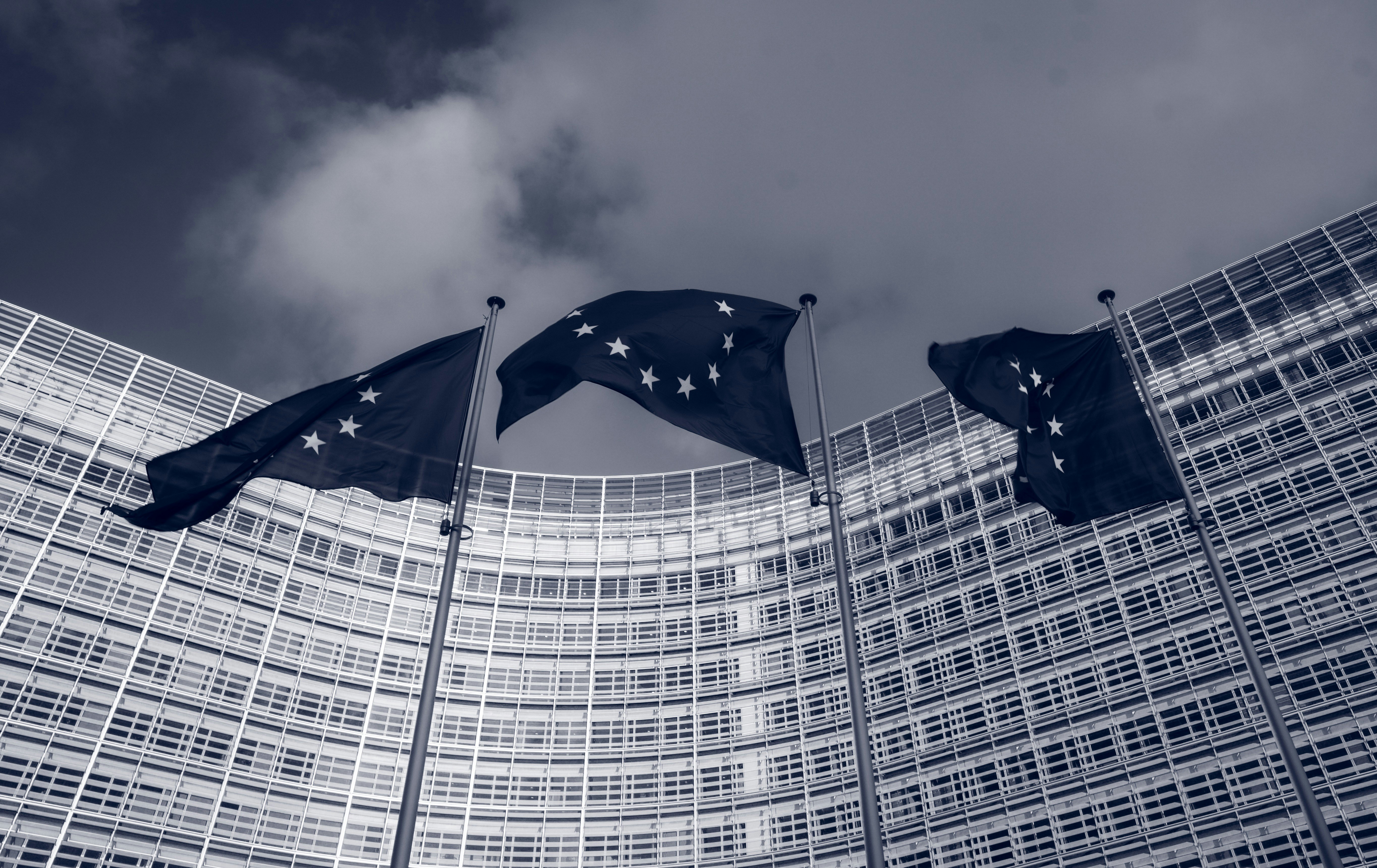
Photo by Christian Lue on Unsplash