
By Isabella Checkley
From corporate cover-ups to price hikes and illegal sewage dumps, as put by Lib Dem Calum Miller at Starmer’s first PMQs in July, “Britain’s water system is broken.”
With most of Britain blaming privatisation, pointing the finger at shareholders for poking holes in the system by prioritising company wealth over public health, it is no wonder that 69% of Britons see renationalisation as the only way to fix the system’s almighty leak.
However, handing back control of water to the government will likely achieve little more than easing the nation’s moral qualms over the private sector’s commodification of a basic human right.
Public or private and regardless of its owner, the system has always suffered from underinvestment and mismanagement, and is now at breaking point – but if privatisation did not cause the leak, then what did, and crucially, can it be fixed?
Residents in England and Wales are right to be angry with the state of their water system. Since the industry was privatised by Thatcher’s government in 1989, £72 billion has been pocketed by shareholders.
Meanwhile, ordinary Brits are set to pay 40% more for water that is not always safe to drink, with ‘Boil It’ notes and half-hearted apologies issued by profiteering water companies becoming commonplace – deeply ironic seeing as Britain was once known for its revolutionary sanitation projects.
Privatisation was supposed to mean greater investment in Britain, but instead the only investment has been in the lavish lifestyles of company bosses.
Whilst some improvements in the privatised system must be acknowledged, they must not be solely credited to it.
A report by Ofwat found that in the early 2000s, the system met peoples’ needs, with all the major water companies achieving high Ofwat overall performance assessment scores, with leakage down by a third since the mid-1990s, with two thirds of beaches classed as excellent compared with less than a third a decade earlier.
Government policy and epidemiological research undoubtedly contributed to this progress, masking the fact that the amount of shareholder money in water companies has actually reduced in real terms.
But with hospitalisation due to waterborne diseases rising by 60% since 2010, it is clear that public health is now at stake as a result of shareholder underinvestment in water. Something must be done – so why not renationalisation?
Water provision in England and Wales has not always been a private matter. Before 1989, under the 1973 Water Act, the government retained ultimate responsibility for the full range of the industry’s functions.
Politics dripped into the supply for the better, with the government using water provision as a means of addressing social welfare issues, by averaging bills within authorities rather than reflecting the different unit costs of supply for rural and urban areas. Water prices were low, and people were happy.
Unfortunately, as is often the case, this was too good to be true.
Operating on a cost recovery basis, the water authorities raised capital to meet investment requirements by borrowing from the government, but when inflation was high and the economy down, the government was unwilling to increase borrowings and charges to customers to meet capital investment, and so the public system cracked – as the late 70s and early 80s revealed.
The government certainly held the purse strings too tightly when it came to water. In 1982 for example, it permitted the water industry to spend around half of the total capital investment incurred in 1974.
In 2024, with the government facing a “black hole” in public finances according to chancellor Rachel Reeves, renationalising water risks history repeating itself.
Underinvestment, it seems, was as much a hallmark of the public industry as it is of today’s private one. Whether it be in the interest of prioritising profit or keeping bills to a minimum, it is the real source of the system’s leak. Serious investment could patch it up, but such an undertaking would require compromise and cooperation between both sectors.
However, underinvestment is not the only thing causing the leak. The system’s regulation – or rather, lack thereof – is also to blame.
Only now, after water companies have been discharging raw sewage into British waterways more than 1000 times per day on average for years, that OfWat – the regulator – “has finally woken up to the scale of the public’s outrage,” says River Action founder Charles Watson.
Despite rumours that the watchdog has become overly cosy with investors and water companies circulating in the media, Dieter Helm, professor of economics at Oxford University, claims that regulation of the water industry was flawed from the get-go, in that it “provided no checks to financial engineering and excessive borrowing.”
The regulators let the water companies get away with gearing up their balance sheets and paying out extra dividends, not to mention failing to ensure that the infrastructure itself – from pipes to sewage treatment plants – was looked after.
Mismanagement is trickling through the system, all the way from the regulatory bodies at the top to the water providers on the ground.
An integrated systems-based regulatory regime could remedy this, but ultimately regulations – unlike investors’ purse strings – need to get tighter. This should hopefully motivate water providers to finally start cleaning up their s**t, rather than encouraging them to dump it in British waterways.
When it comes to fixing Britain’s broken system, renationalisation is certainly “a red herring.” No government is willing to spell out uncomfortable truths about the cost to the taxpayer of overhauling a system that requires billions of pounds in investments and regulatory reform.
With a to-do list longer than their arm, the government does not need the added responsibility of overseeing the water industry right now.
Hence why we must stop debating whether ownership of the water system should be public or private, and start patching up the almighty leak by addressing underinvestment and tighter regulations, before the pipes burst for good.
The views expressed in this article are the author’s own and may not reflect the opinions of The St Andrews Economist.
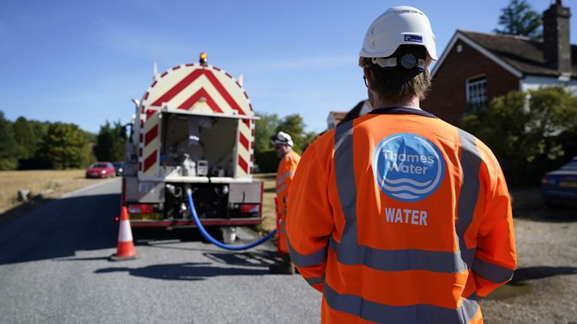
Image Source: Sky News (29th May 2024)