
By Charlotte Plaskwa
The intricate relationship between the pharmaceutical industry and the environment is increasingly recognized as a significant factor in ecological health. This article delves into the multifaceted impacts of pharmaceutical pollution, encompassing both the direct consequences of manufacturing processes and the more insidious, long-term effects of pharmaceutical waste products on wildlife and ecosystems.
The production processes of the pharmaceutical and healthcare industries are highly demanding in terms of resource-utilisation, with significant ramifications for ecological systems and global climate patterns. The medical sector is responsible for almost 5% of global greenhouse gas emissions and has a carbon footprint equivalent to 514 coal-fired power plants. If the sector were a nation, it would be the fifth largest polluter on Earth. The sector’s energy demands, notably the thermal regulation of medical facilities, contribute substantially to this footprint. Similarly, the manufacturing, delivery, consumption and disposal of products and services adds up to an estimated 60 to 70 per cent of the healthcare sector’s global footprint. The consumption of single-use medical items has become an even bigger concern with the onset of the COVID-19 pandemic, as healthcare professionals wear disposable personal protective equipment (PPE) to decrease the risk of infection. The first 20 months of the global COVID-19 response generated an estimated 87,000 tonnes of PPE and 144,000 tonnes of additional waste from vaccines (such as syringes and needles), highlighting the critical need for a reassessment of waste management practices in the healthcare system. The implications of these practices on the environment create a cyclical dynamic, in which changes to the climate exacerbate medical conditions. For example, the increasingly poor air quality can cause respiratory problems and worsen existing conditions such as asthma and make people more vulnerable to diseases. In turn, this escalation in health problems necessitates more healthcare interventions, creating a self-perpetuating cycle of ecological harm.
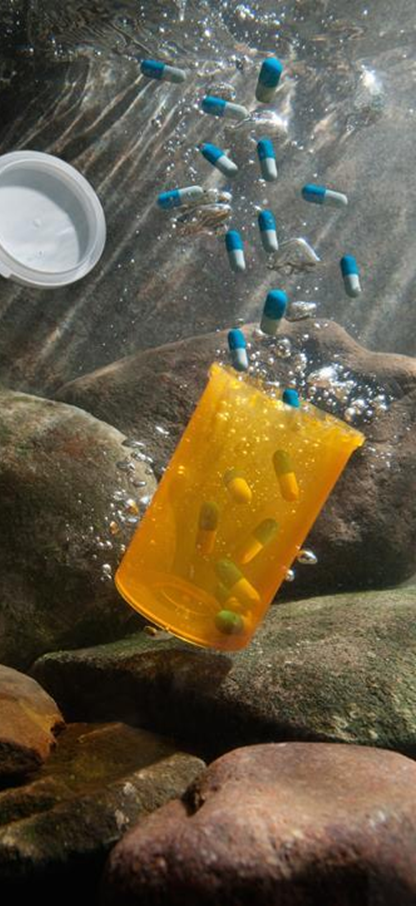
Beyond the immediate environmental footprint of their production, pharmaceuticals continue to affect the environment long after their useful life ends. Medications that are excreted by humans and animals, or improperly disposed of, enter wastewater systems and natural water bodies, where they can persist and bioaccumulate. The presence of these substances in the environment, even in trace amounts, poses a significant threat to wildlifebehaviour and physiology, and disruptions to reproductive systems and biodiversity because of pharmaceutical pollution. One study by the Aquatic Toxicology Laboratory exposed juvenile fathead minnows to a range of pharmaceutical chemicals, including the opioid pain relief oxycodone, the antidepressant fluoxetine and the sleep-aid temazepam. Juvenile fathead minnows exposed to the pharmaceuticals suffered from reduced growth and altered escape behaviour. This means that, when faced with a threat, the minnows did not escape as efficiently as they normally would, increasing the chances they would be preyed upon, ultimately translating to population level effects. Similarly, larval exposure to specific enzyme inhibitors have shown to disrupt normal sexual development in amphibian species. Another study conducted by the Florida International University found that all the tested cohort of fish contained pharmaceuticals. An average of 7 drugs were detected per bonefish and one bonefish sampled in Key West tested positive for 17 pharmaceuticals – eight of them antidepressants that were up to 300 times above the human therapeutic level. The study concluded that pharmaceutical exposure in south Florida’s bonefish was widespread and concerning. The researchers also studied 125 animals that bonefish prey on, including shrimp, crabs and small fish. Each contained an average of 11 pharmaceutical contaminants, indicating that the contamination is not limited to bonefish or the primary consumers of the medication. This demonstrates how ecosystems and the organisms within them are also at risk, as these substances can be transferred through the food chain, leading to broader ecological consequences. This begs the question of the long-term health implications for humans, as pharmaceuticals bioaccumulate in our food-chain. The persistence of pharmaceuticals in the environment underlines the need for improved waste management practices, sustainable manufacturing processes, and comprehensive environmental monitoring.
The effects of pharmaceutical contaminants are not limited to aquatic environments. One of the clearest cases of pharmaceuticals causing population-level effects occurred on the Indian subcontinent, where the consumption of carcases of livestock that were medicated with the anti-inflammatory drug diclofenac resulted in over 95% of vultures dying of kidney failure through consuming it via dead cows. In this way, pharmaceutical reform is necessary to not just reduce carbon emissions and waste, but also in animal conservation.
Addressing the environmental impact of the pharmaceutical industry requires a multifaceted approach. Regulatory frameworks need to be strengthened to ensure that pharmaceutical companies adhere to stringent environmental standards. The US Food and Drug Administration (FDA) requires environmental risk assessments of human and veterinary medicines on the effects on aquatic and terrestrial organisms before they allow a product to enter the market, and the EU introduced similar requirements in 1997. Government initiatives are also imperative to reduce the carbon footprint of this sector. For example, in 2020, NHS England became the world’s first national health service to announce a plan to become a net-zero health system. This means striving for ‘net zero’ greenhouse gas emissions when accounting for all contributions and offsetting. Similarly, innovative waste treatment technologies and greener manufacturing processes can reduce the ecological footprint of pharmaceutical production. Public awareness and proper medication disposal practices are also crucial in minimising the release of pharmaceuticals into the environment. For example, the pharmaceutical company Astra Zeneca introduced a Safe Discharge Programme for the removal and regulation of medical waste.
In conclusion, the pharmaceutical industry plays a critical role in human health, but its environmental impact cannot be overlooked. A comprehensive understanding of the convoluted relationship between pharmaceuticals and the environment, coupled with concerted efforts to mitigate adverse effects, is essential for safeguarding ecological health and ensuring the sustainability of both the industry and the planet.
The views expressed in this article are the author’s own, and may not reflect the opinions of The St Andrews Economist.
Image Courtesy of ChemistryWorld via Getty Images