
By: Laki Palaniappan
“I’m not a businessman, I’m a business, man.” After founding his own record label, rapper Shawn “Jay-Z” Carter made this braggadocious statement on one of his signee’s songs (an up-and-coming artist at the time called Kanye West). Having amassed a net worth of $2.5bn, it is fair to say that there is some credit to the New York rapper’s claim. His contribution to developing the financial scope of hip-hop, which initially began as an outlet and a voice for deprived African American youths, is just one example of the industry’s impact on individuals around the world and the global economy.
First, let’s further explore the case of Jay-Z, who was raised in a public housing project in Brooklyn, where he sold crack cocaine and was shot at three times. 40 years later, his wealth is in the billions and has more than doubled since 2020. This is despite not releasing an album since 2017 and not intending to do so anytime soon. Instead, it is the business empire he has built during his rapping career that has driven this rise. In particular, his world-renowned liquor brand, Armand de Brignac (AKA Ace of Spades), which was valued at more than $600 million following the sale of 50% of the business to LVMH. However, Carter’s first ventures date decades earlier, founding his label Roc-A-Fella Records in 1994, followed by Roc Nation, an entertainment and sports management agency valued at $140 million in 2021, and several more businesses spanning various industries.
Therefore, it is not the music itself that has put the highest-earning rappers in the position they are in, but more importantly what they have built from their brand. This idea is innate within hip-hop, as cultivating a following around a rapper doesn’t simply correlate with the quality of the music they release, but more heavily with the culture, aesthetic and lifestyle associated with them, making the industry distinct from many others. Leveraging this, as Jay-Z did by building businesses around his luxurious lifestyle and connections in sports (Ace of Spades and Roc Nation respectively), can result in significant gains in popularity, industry influence and ultimately wealth. Furthermore, notice that despite covering several industries, Carter carefully invested in those that the public already associates him with.
This strategy is not strictly limited to the hip-hop industry, however. A pioneering example of this is Red Bull, whose business model focuses on using psychological techniques to indirectly create a specific image around their energy drink, with its marketing budget estimated to comprise 25-30% of its revenue in 2022. By strategically investing in extreme sports, for example, consumers constantly see Red Bull advertising worn by high-performance athletes attempting audacious stunts and feats, associating drinking Red Bull with exhilaration, adrenaline and pushing boundaries, giving its consumer ‘wings’.
The hip-hop industry may provide scope for individuals to build substantial riches, but can similar impacts be seen on entire societies and the wider economy?
This appears to be the case. One of hip-hop’s most defining characteristics is its deep-rooted connection with the African American community, with roughly 35% of black Americans listening to hip-hop as opposed to just 7% of white Americans. The growth of the hip-hop industry has therefore unsurprisingly resulted in gains for black communities in various ways, especially from an economic standpoint. The industry contributes over $15 billion annually to the U.S. economy, playing a significant role in job creation, with opportunities across various sectors such as music production, marketing and event management.
Furthermore, rappers themselves are not only building generational wealth (a topic Jay-Z has discussed several times throughout his discography), but they also use their riches to invest in the communities that nurtured them. For example, Nipsey Hussle – another rapper who emphasised financial empowerment in his songs – was renowned for his philanthropy, opening a combination co-working space and STEM centre in his hometown. As well as this, he renovated basketball courts and playgrounds, bought shoes for disadvantaged students, generated employment opportunities for the homeless, and funded funerals for local families and victims of gun violence. Several rappers have used their platforms and fortunes to make similar impacts on the communities that raised them, including 21 Savage, J. Cole, Missy Elliott and Big Sean. Given that so many artists in the hip-hop industry share such deprived backgrounds, the potential for the industry to serve as a beacon of financial inspiration is undeniable, and the ability for them to tangibly uplift their communities economically is also evident.
Additionally, the discussion of such profound topics by influential rappers like Jay-Z and Nipsey in their music provides guidance which many underprivileged communities would otherwise not be exposed to. Although this may not be equivalent to a finance degree, encouraging the youth to reflect on financial matters early on and, further, to inspire them to be successful despite their humble beginnings is a huge step forward. This is especially true in a country where over 56% of adults admit thinking about their financial situation makes them anxious.
Hip-hop at its inception was a response to the pressing social, economic and political challenges faced by African Americans. Its evolution since then reflects the (unfinished) progress that has been made in these areas, with rates of entrepreneurship among black adults now about 50% higher than that for white adults, for example. This extends hip-hop’s significance far beyond the realm of music, establishing it as a mechanism for depicting and fostering economic diversity within communities. Indeed, 58% of black adults say supporting black businesses or “buying black” is an extremely or very effective strategy for reducing inequality in the U.S.
However, accrediting the influence of music on global business solely to rappers may be a narrow and simplistic perspective. For example, world-renowned pop artist Taylor Swift has likely increased the value of the U.S. economy by over $10bn with her latest tour. This is due to increased streaming numbers (peaking at over 110 million monthly listeners on Spotify), concert ticket sales and the travelling expenses incurred to attend them. Her influence alone has been dubbed ‘Swiftonomics’ – a testament to the impact the music industry has on global business. The mass cult following that the pop superstar has cultivated (often referred to as ‘Swifties’) is largely comprised of women who have experienced wage rises coming out of the COVID-19 pandemic. The timing of Swift’s tour was therefore well-calculated despite the ongoing cost of living crisis, and her fans’ eagerness to see their idol was also at an all-time high following global lockdown restrictions, demonstrating perfectly executed ‘Swiftonomics’. Indeed, many fans deemed attending the tour a necessity, with an average of 54,000 fans at each concert on the tour’s first American leg at an average price of $254 per ticket, about 73% higher than the average monthly electricity bill in the U.S. at $146.45.
From a macroeconomic standpoint, U.S. household spending increased by 4% during Q3 2023 largely due to Beyoncé, another pop giant, also touring at the same time as Swift according to analysts. Since personal consumption expenditures accounted for 67.5% of the country’s GDP during this time, the two artists alone increased the value of the U.S. economy by about 2.7% during this period, a staggering figure.
Yet, the longevity of hip-hop must be questioned. Being a relatively new genre (with its 50th birthday being celebrated earlier last year) and having experienced a decline in market share, it is uncertain whether or not the blueprint Jay-Z laid out is still relevant to this day. The reduced impact of hip-hop, and music in general, on global business limits the scope for rappers to build a brand image and therefore grow their own corporate presence, meaning we may not see another Jay-Z for the foreseeable future.
There has also been significant discussion about whether the positive economic outcomes of the hip-hop industry are enough to justify the negative aspects inherent in its culture, including gang violence, drug abuse and misogyny. These themes are not only prevalent in rappers’ lyrics, but also manifest in the broader hip-hop culture and become tangible aspects of the community. The previously mentioned philanthropic rapper Nipsey Hussle was shot and killed at the age of 33 outside Marathon Clothing – a business that he himself founded.
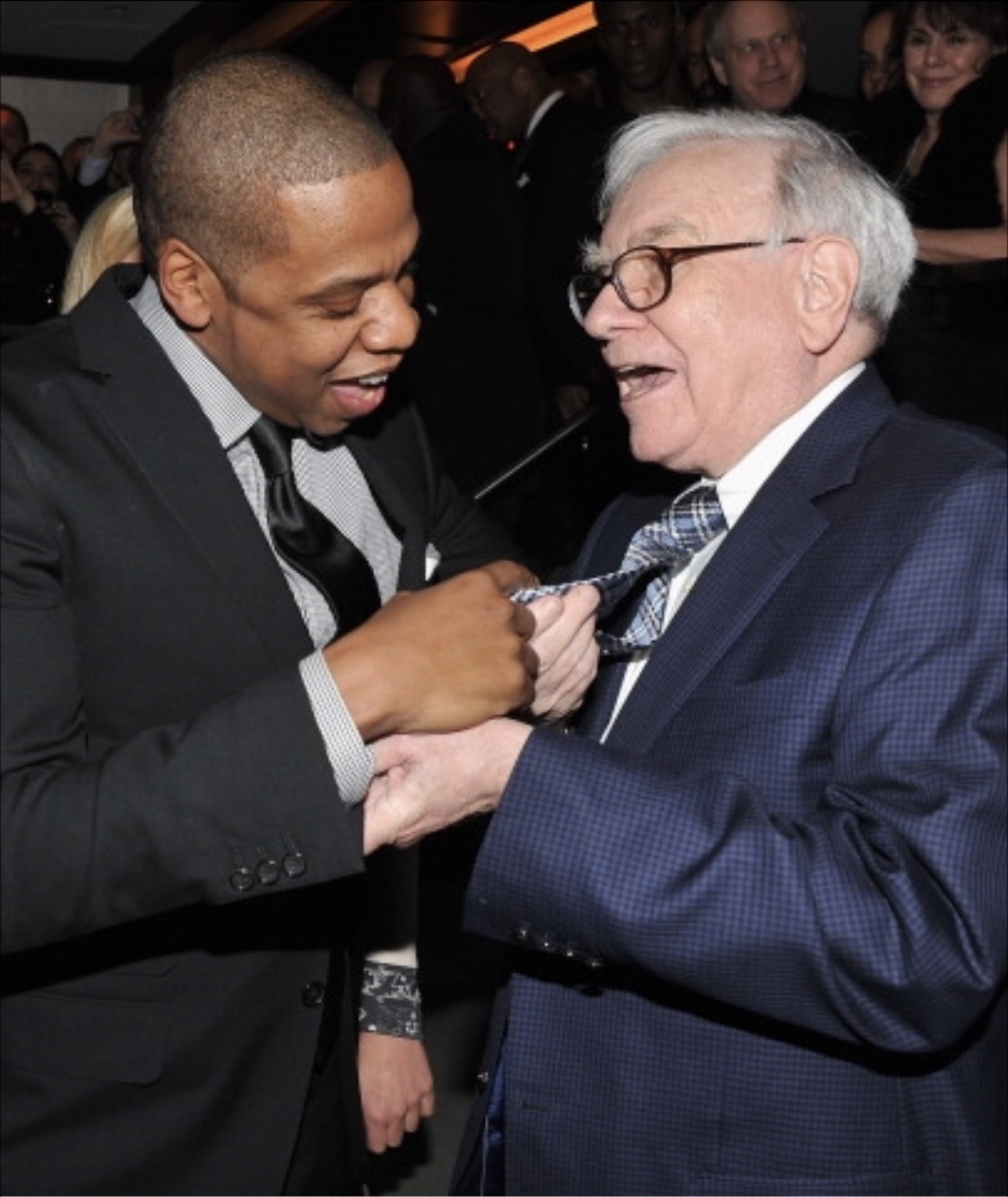
Although the negative imagery associated with hip-hop culture will forever be raised in discussion, the impact it has had on business is undeniable. Hip-hop “broke that notion that an artist can’t think about money as well,” Jay-Z told Warren Buffett. Indeed, for an industry which was built primarily on its cultural significance to change the economic livelihood of an entire group is incredibly unique, proving that its influence reaches far beyond the confines of music.
The views expressed in this article are the author’s own, and may not reflect the opinions of The St Andrews Economist.