
by Lily Bolash
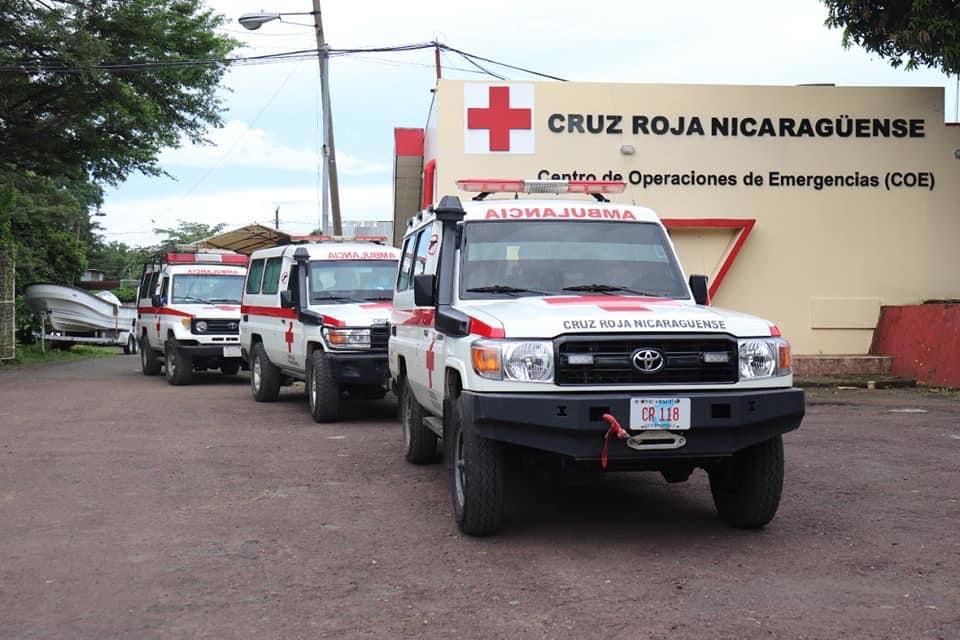
‘It’s time to learn to swim,’ reads the last post from @CruzRojaNic on X, the social media platform formerly known as Twitter. The tweet, posted at 14:17 on 8 May 2023, includes a photo advertisement for the Red Cross’ lessons and concludes with an affirmative slogan: #SomosCruzRojaNicaraguense (We are the Nicaraguan Red Cross). Just days later, the Nicaraguan government ordered the dissolution of the organisation. More recently, the Supreme Court of Venezuela has mandated the ‘restructuring’ of its own national Red Cross branch. While these decisions differ in scope and severity, their close timing – and advent under two dictatorial regimes – warrants concern for the status of humanitarianism in the region.
Uncertain times
The attack on the Red Cross in Nicaragua numbers among hundreds of similar anti-civic group actions undertaken by the national government. This widespread ‘crackdown’ first started following the anti-government demonstrations that 3,000 organisations have since been closed down, many of which provided essential health and social services to the Nicaraguan people. To do so, the Nicaraguan government has weaponized its Foreign Agents Law – for example, the Red Cross was accused of failing to submit required financial records.
As further justification, the government claimed that during the 2018 protests, the Red Cross’ response violated its own principles of ‘humanity, impartiality, and neutrality.’ The incriminating response in question? – Treating protestors injured by government forces. It is clear that the Nicaraguan government thus identified the Red Cross as an enemy of the state, and, regardless of the dozens of productive projects it operated within the country, added it to the “hit list” of civic organisations.
The law that closed the Red Cross was passed by the Nicaraguan National Assembly, a body overwhelmingly dominated by the Sandinista National Liberation Front, the political party of the country’s dictator, Daniel Ortega. In the law, the government decreed that all Red Cross properties would be ‘transferred’ to the Ministry of Health. It also authorised the Ministry of Health to form a replacement agency; however, as public health expert Ana Quirós noted in El País, any such agency would not only be inherently political, but subject to government interference and bias. Effectively, there is no longer an independent health care organisation in the country.
‘Actividad mafiosa’
In Venezuela, the activity of the Red Cross is promised to continue, according to the August 2023 Supreme Court tribunal that ordered the restructuring. The crux of that order called for the dismissal of Mario Enrique Villarroel, long-standing president of the Venezuelan Red Cross, as well as certain members of the board of directors. Formally, the Supreme Court accused Villarroel of mistreating Red Cross employees; informally, Diosdado Cabello, a prominent politician in the United Socialist Party of dictator Nicolas Maduro, alleges that Villarroel was conspiring against Maduro and exhibited ‘mafia-style activity’ related to the Red Cross budget.
In a video posted to X on 11 August 2023, Villarroel denounces the government’s decision as an ‘illegal intervention’ based on ‘false imputations.’ He further claims that the ‘defamatory news’ about him was created to justify manipulating the Red Cross branch. To his credit, Villarroel also did not hesitate to highlight the speed with which his denouncement was followed by the Supreme Court motion against him, implicating that the Venezuelan government denied him the right to due process and presumption of innocence.
The Venezuelan government has been widely decried for its attack on Villarroel and the Red Cross as a whole. The International Federation of Red Cross and Red Crescent Societies published a statement on their website on 9 August 2023, which reads: ‘Any State intervention in our National Red Cross and Red Crescent Societies raises serious concerns regarding their independence and principle-based humanitarian work.’ The Vice President of the Venezuelan Red Cross, Miguel Villarroel – son of the former president – called directly on Maduro himself, imploring that he ‘not allow arbitrary action by a state entity to stain the 128 years of life of our institution.’ Likewise, other human rights experts have expressed concern over the precedent set by such outright government interference in an independent humanitarian agency. Venezuela is certainly experiencing activity akin to the mafia – and it appears that the primary culprit is its own government.
Partners in crime?
Both Nicaragua and Venezuela are led by entrenched dictatorships, much to the detriment of their people. In the former , the regime of Daniel Ortega and Rosario Murillo – who are not only president and vice president, but husband and wife – dates back to 1979, when Ortega first gained power through a military coup. The Venezuelan president, Nicolas Maduro, has been at the helm for a considerably shorter, though no less potent, period of time; following the death of Hugo Chávez, Maduro came to power through a special election in 2013.
Both regimes are guilty of extensive human rights abuses. In their 2022/2023 report on human rights worldwide, Amnesty International described Nicaragua as experiencing ‘a crisis of human rights,’ with severe restrictions on free expression, arbitrary detention and torture, and lack of protection for indigenous communities. In Venezuela’s report, Amnesty identified these and a number of other alarming trends related to political repression, extrajudicial executions, and access to essentials like food, water, and healthcare.
Both Ortega and Maduro share similar foreign policy positions. For one, the two dictators each support Russia in its illegal war against Ukraine and are becoming increasingly cosy with China. Neither country has good relations with the United States; this reality once prompted John Bolton, then National Security Adviser under President Donald Trump, to call the two nations – alongside Cuba – Latin America’s ‘troika of tyranny ’ in a 2018 speech.
In addition to such similarities, Nicaragua and Venezuela also frequently engage in bilateral diplomacy. Venezuela even finances the Ortega government’s anti-poverty programs, which are accused of being a facade to buy himself voters and weapons for loyal paramilitary groups. Thus, the fact that both regimes have turned against their Red Cross within mere months of one another is worth raising the metaphorical international eyebrow.
Fight or flight
Separately, the actions of both the Ortega and Maduro regimes are alarming abuses of power that call into question the ability of non-governmental humanitarian organisations to operate under dictatorial and undemocratic regimes in the region. It is perhaps too zealous to label them a coordinated attack against the Red Cross as an institution. Nevertheless, both dictators benefit from dismantling and undermining the services it provides. With one less organisation able to treat injured protestors or help solve food and water crises, both Ortega and Maduro gain exponentially more chaos, need, and fear they can use to manipulate the electorate.
The first stage of drowning is fight or flight – the natural response to extreme physical stress. It is certainly comparable to what the Red Cross is experiencing in Latin America’s dictatorial swamp. Regardless of what is yet to unfold in Venezuela, any degradation of an institution that is so highly respected worldwide and heavily relied upon by civilians deserves great lament.
The views expressed in this article are the author’s own, and may not reflect the opinions of The St Andrews Economist.
Image Rights: Nación article, CRN Facebook