
by Agnes Keefe
On Monday 3 July, the US National Centers for Environmental Protection reported a global average temperature of 17.01°C, marking the hottest day in official record.
This news comes after the Met Office had announced Britain’s warmest June since temperatures were first recorded in 1884, and nearly a year after the country’s 40°C heatwave.
Scientists argue that El Niño weather patterns are partly responsible for this summer’s warmer-than-average temperatures. These existing patterns coupled with greenhouse-gas induced warming, they say, are pushing temperatures to record-breaking extremes. Beyond these seasonal anomalies, global temperature data from the past decade presents a troubling pattern: the Earth is getting hotter.
High temperatures increase demand for air-conditioning, especially in office spaces, putting further strain on Britain’s National Grid. Not only is energy demand necessarily higher on these days, but that additional need is being met by non-renewables. Surges in demand force the Grid’s Electricity System Operator (ESO) to supplement its normal energy output with natural gas and, in rare instances, coal, as we have seen on weekend of 12 June, when national temperatures that weekend reached 30°C for the first time this year. That day, gas met over 40% of Britain’s electricity needs, while wind, otherwise rivaling gas as the country’s largest energy contributor, only produced 7%.
It is important to note that cooling currently accounts for a small fraction of Britain’s total electricity demand, namely because so few households (<5%) rely on some kind of cooling system. As a heating-dominated country, demand historically peaks in winter and falls during summertime. For scale, electricity generated during the July 2022 heatwave still only emitted half the carbon a typical winter week had a decade ago, when much of the country’s electricity came from coal.
Cooling demand, however, is expected to grow as summers become hotter and heatwaves more frequent. In fact, the Department for Business, Energy, and Industrial Strategy devoted half its 2021 report anticipating this increase. The report finds households will overtake offices as the primary source of cooling-related energy demand by the end of the century. Should current emission trends continue, this will create a greater burden on the grid.
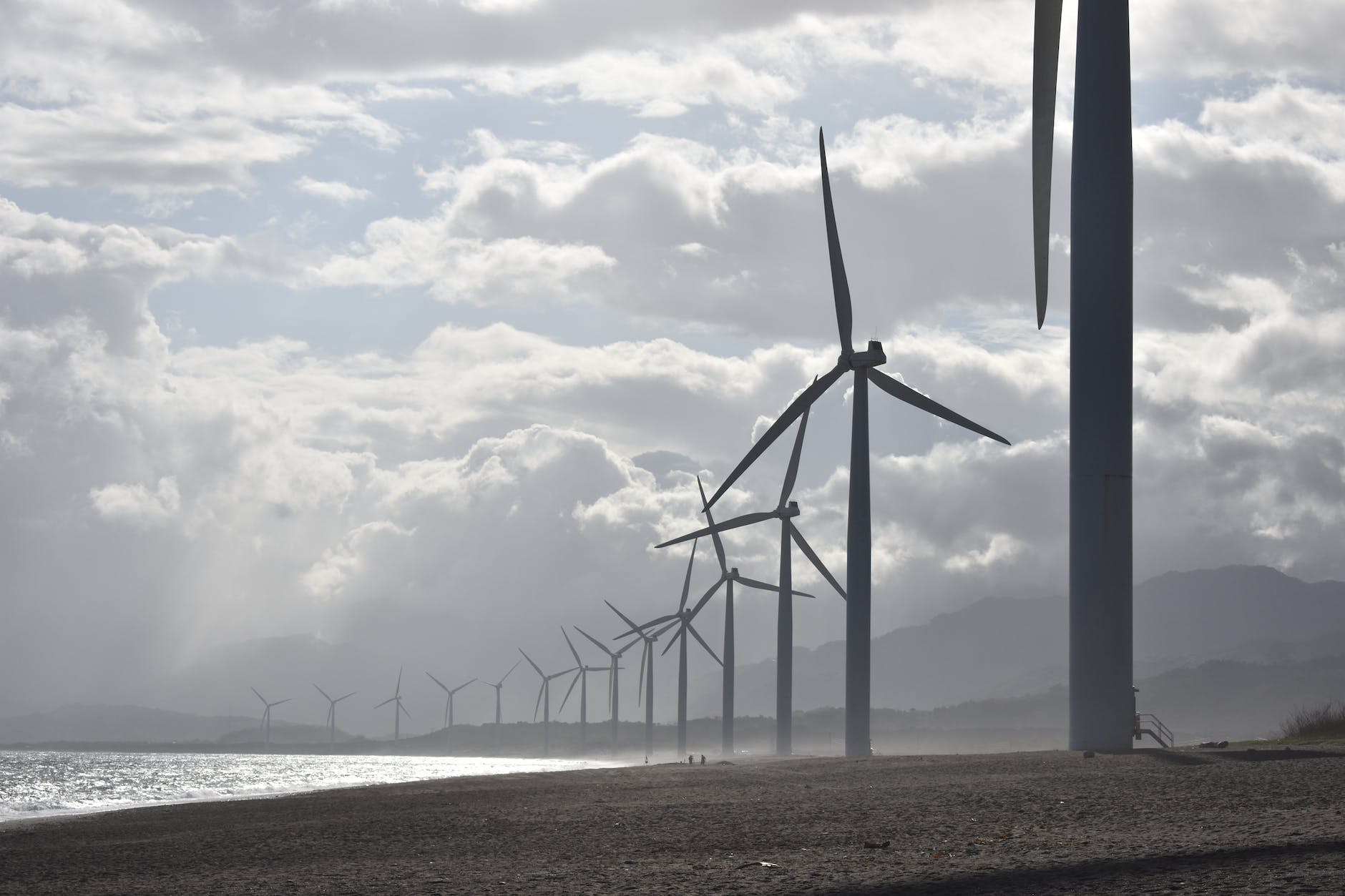
It is clear renewables will increasingly shoulder this burden as the UK shifts to a renewable energy mix. A trickier question remains: which renewables will meet this expected increase in cooling demand? Britain’s renewable infrastructure is currently dominated by wind. At winter’s peak sustained winds, turbine-generated power can meet over half of electricity demand, but does not perform as well in the summer. To close this growing supply-and-demand gap, the National Grid must increase output capacity for other forms of renewable generation, such as solar and hydropower.
More sunshine-hours during summer months make solar an ideal candidate to meet seasonal demand and yet, it consistently accounts for under 10% of generation during the summer months. Solar has not achieved the same success as wind for reasons rooted in market conditions and government regulations. Initially, feed-in tariffs in the early-2010s helped solar break into the market by incentivizing new solar projects. However, when the government watered-down tariffs in 2016, the number of new solar projects plummeted and never fully recovered. Under current market conditions, solar projects remain more expensive to contract per megawatt hour (MWh) than offshore wind projects, though not by much.
Though solar is making a promising comeback, projects still face barriers on where they can construct new solar panels. In October 2022, Liz Truss’s Government restricted the construction of solar photovoltaics on farmland (a dual-use practice known as agrophotovoltaics, or Agri-PV).
Bordered by ocean, the UK also holds immense potential to harness tidal energy. Tidal has the potential to produce over 10% of the UK’s electricity. Unlike solar however, tidal technology is still in its infant stages. With few projects currently in the works and little precedent, the risks and returns of this technology remain unknown. Coupled with high project start-up costs, it is likely tidal energy will not contribute substantially to Britain’s electricity mix for at least another decade.
Hot days (and more of them) threaten to keep gas and coal alive until renewable infrastructure catches up. Ami McCarthy, speaking on behalf of Greenpeace UK, said in a statement,
“In summer, we should be turning to solar power, yet we currently have renewable energy going to waste because our grid cannot transmit the power, and hundreds of renewables projects which are on hold because they can’t get connected.”
The “hold” McCarthy refers to is a large obstacle to Britain’s 2050 Net-Zero target. Over a thousand renewable projects (worth an estimated £200 billion) remain on hold because the grid does not have the capacity to support them. To complicate matters, the Climate Change Committee (CCC) predicts five times as much solar and four times as much wind capacity is needed to achieve full decarbonization by 2035. Many of the projects needed to achieve this goal will have to wait up to 10 to 15 years before they can go online.
Expanding the grid to support a fully electrified and net-zero future will be costly, however. Some forecasts estimate as much as £54 billion in investments are required to bring the infrastructure up to speed. Meanwhile, consumers fear they will inevitably have to bear some of these costs, making such sustainability measures unpopular. While Rishi Sunak and his Government honors the current net-zero protocols in place, he hesitates to take such measures the extra mile for fear of alienating both his constituents and the British public as a whole, already feeling the pinch from the cost-of-living crisis. A lukewarm strategy, however, will only stall the transition to a fully electrified grid and net-zero. Data published by the Department of Energy Security and Net Zero shows the UK will continue to emit around 400 megatons of CO2 for the foreseeable future, unless the government pursues a stronger course of action. Inducing investment could be a proactive first step to improving these outcomes.
Until more renewable projects can be linked to the Grid, natural gas will continue to play a role into Britain’s renewable future. Implementation challenges, along with anticipated cooling demand, call into question the short-term feasibility of Net-Zero as a policy goal.
The views expressed in this article are the author’s own, and may not reflect the opinions of The St Andrews Economist.
Image Rights: Pexels