
by Giorgio Corrias
Sportswashing — the practice of using sports to ameliorate a country’s public image by investing in or sponsoring a sporting team or event — is hardly a new phenomenon. Yet, in light of the 2022 World Cup hosted in Qatar, Manchester City’s recent Champions League triumph, and the imminent PGA Tour – Saudi backed LIV Golf merger, the term has once again proved relevant in today’s close knit world of business and politics.
This century, sportswashing has mostly taken place in the past 15 years, where many authoritarian governments, most notably Russia, China, Saudi Arabia, and Qatar, began funneling large sums of money into sports. Countries whom all of which have internationally faced accusations of human rights abuses.
In the past decade, the Olympic Committee was lambasted following its decision to host the Winter Olympic Games in Sochi (2014) and Beijing (2022); while football’s governing body FIFA had been the subject of criticism in 2010 for granting Russia and Qatar World Cup hosting rights in 2018 and 2022, respectively. This decision brought attention to the Qatari regime’s repression of women and LGBTQ+ persons, in addition to its exploitation and inhumane treatment of hundreds of thousands of migrant workers.
Within some years, almost all of the 22 members of the committee who had participated in the World Cup vote were either accused of or charged with corruption.
Nevertheless, Qatar would soon undertake a $220 billion construction project, encompassing not only stadiums as one would imagine, but a metro system, airport expansion, roads, bridges, and a bulk of high end hotels. Doha — Qatar’s capital city — tripled in size since FIFA’s decision in 2010. As New Yorker reporter Sam Knight eloquently puts it: “The Qatari Investment Authority, which manages an estimated $450 billion, didn’t build a stage for a soccer tournament; it built a city to encompass the stage.”
In return, this act of sportwashing not only burnishes Qatar’s reputation to the international community, but unifies neighboring countries to take advantage of spillover tourism and support each other’s teams. To the Western world, this tournament not only showcases a Qatari regime heading in the right direction, but one where its leaders can try to remodel their authoritarian political system deriving from a non-Western culture. This provides an alibi to Western countries and businesses sponsoring the tournament who — similar to the Qatari regime — benefit from the exploitation of migrant labor that made the event possible.
Other visible instances of sportswashing include recent Middle Eastern takeovers of European football clubs, namely a Qatari takeover of Paris Saint-German (PSG) in 2011, an Abhu Dabi takeover of Manchester City in 2008, and the sale of Newcastle United to PIF, Saudi Arabia’s sovereign wealth fund, in 2021.
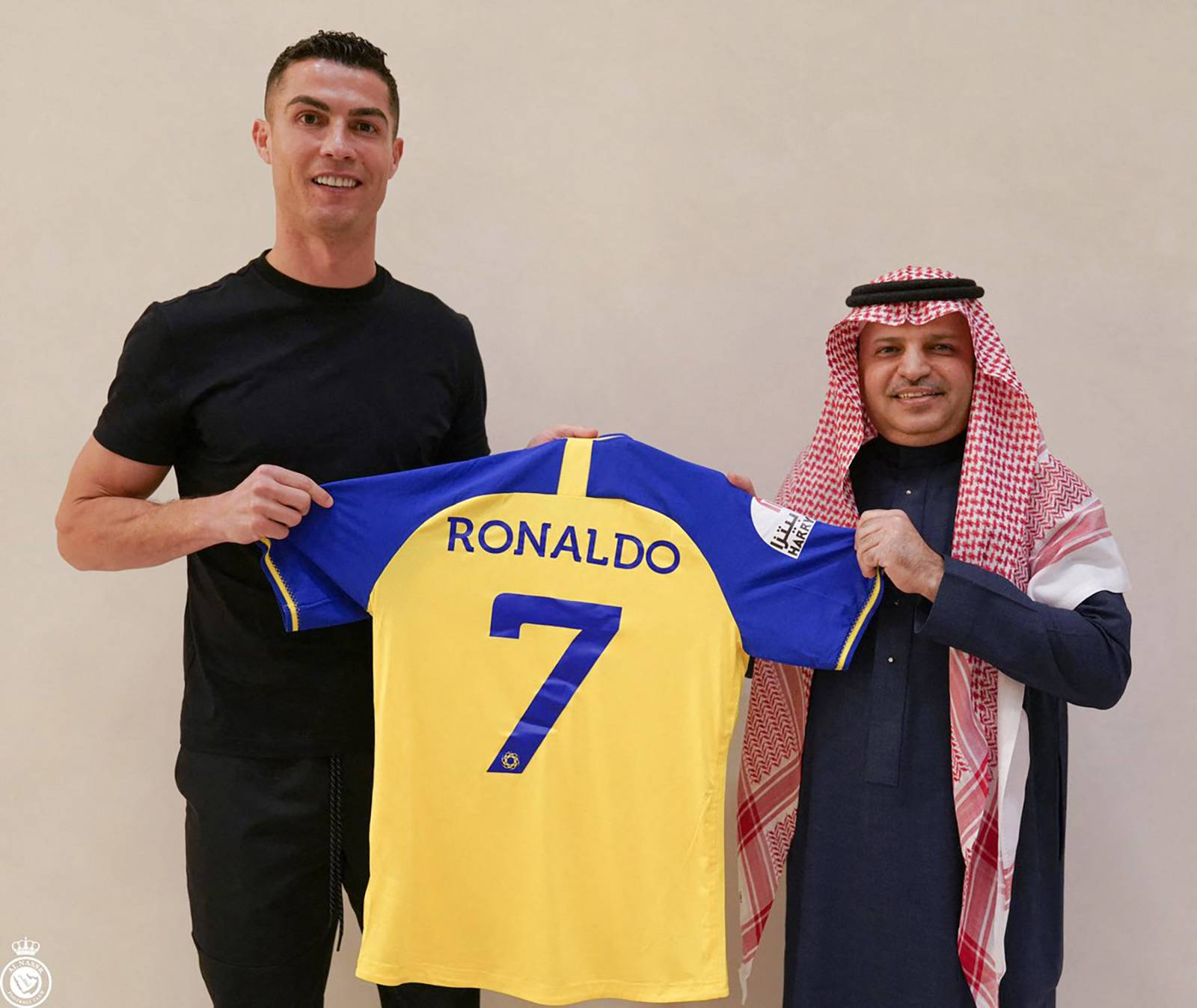
Granted this practice necessitates a large quantity of financial investments, sportwashing has led to the creation of sporting market bubbles, where asset prices rise above their fundamental values. PSG’s transfers of Neymar for €230 million in 2017, and Mbappe for €180 million in 2018 have inflated the football transfer market. Contracts given in the Saudi Pro League to phenoms Cristiano Ronaldo and Karim Benzema worth $200 million and $107 million per year, respectively, pose the same threat. Not to mention just recently, on July 23rd, Saudi club Al Hilal offered PSG a record breaking fee of $332 million while proposing Mbappe a one year salary worth a whopping $776 million, though the player rejected the offer and refused to negotiate with the club. Golf is seemingly heading in a similar direction. Much like in the Saudi Pro League, in 2022 Saudi-backed LIV Golf International Series courted major winners Phil Mickelson and Brooks Koepka, among others, away from the PGA Tour with lucrative salaries.
Sportswashing also raises environmental concerns. The practice sees oil and gas companies avoid liability for any environmental harm instigated, as the majority of countries who practice sportswashing — Russia and Qatar, for instance — are petrostates. More importantly, it permits states who violate human rights to shield themselves from accusations and accountability.
The value of the Saudi’s sports event industry is estimated to be worth $3.3 billion by next year, rising from $2.1 billion in 2018 and growing by 8% each year. Behind Saudi’s growing sporting ambitions lies sportswashing: where Saudi can use sports as a tool of soft power — the ability to attain preferred outcomes through appeal and attraction — all the while diversifying and bolstering its economy.
This does not wash away its human rights record, however. In the past year and a half, Saudi Arabia has executed 81 men in a 24 hour period on charges of terrorism and for holding “deviant beliefs.” It has also sentenced a woman, Salma al-Shebab, to 34 years in prison for merely following and retweeting dissidents and activists. Additionally, Human Rights Watch reports that abusive practices comprising torture, mistreatment, and prolonged arbitrary detention remain prevalent in detention centers.
While these cases should make us sick to our stomachs, ultimately — for the majority — sporting success eclipses human rights issues. Sports fans are easily bought off. If somebody buys their team and has the capital to improve it, they will support them, as in the cases of Manchester City and Newcastle. They will do so even if the owner happens to be an authoritarian government violating human rights.
Occasionally, sportswashing arrangements become so indefensible that change follows. Russia’s invasion of Ukraine in February 2022 has caused much of the sporting world to ponder over their relationship with Russia, culminating in canceled sponsorships, and the banning of several athletes and teams from competitions. Nevertheless, despite this new precedent, Saudi Arabia’s involvement in the Yemen Civil War has not affected its PGA Tour merger, nor its ability to attract European football players to the Saudi Pro League.
Yet, to buck this trend, big governing bodies must take a public stance against sportswashing. FIFA President Gianni Infantino’s rush to defense of the World Cup and the International Olympic Committee’s hosting decisions however demonstrate that they are not prepared to do just that.
Meanwhile, Saudi’s grasp and influence in sports will only continue to grow. Professional golfer Rory McIlroy painfully acknowledged that PIF and the Saudis want to spend large sums of money on golf, and are unlikely to stop anytime soon. “Would you rather have one of the biggest sovereign wealth funds as a partner or an enemy? At the end of the day money talks, and you’d rather have them as a partner,” the former champion argued.
Though quite cynical, McIlroy’s statement reminds us of a tale as old as time: money wins, and everyone has a price at which they will conduct business. Ultimately, wherever the Saudis go next, it will be difficult to decelerate, let alone reverse, the sportswashing phenomenon.
The views expressed in this article are the author’s own, and may not reflect the opinions of The St Andrews Economist.
Image Rights: Getty Images / Al-Nassr Football Club